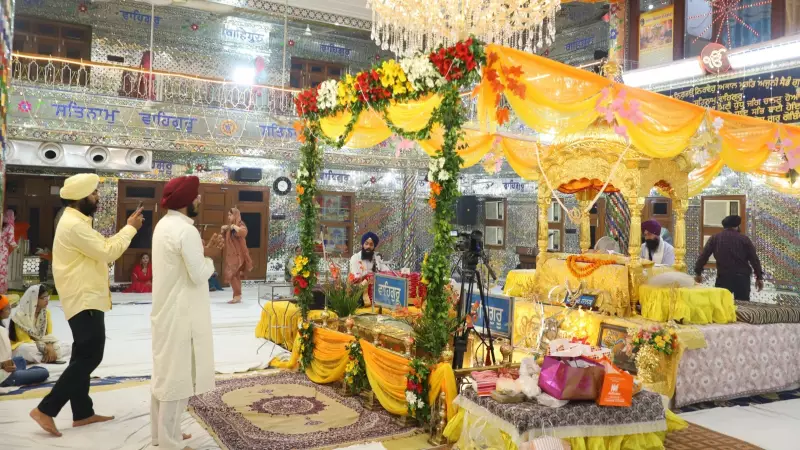
The Uttar Pradesh government has embarked on a significant initiative to boost religious tourism by focusing on the development of facilities around the historic Yahiyaganj Gurdwara in the heart of Lucknow. The plan aims to enhance visitor experience while strictly preserving the sanctity of the 17th-century Sikh shrine, which houses priceless relics.
Preserving Sanctity While Enhancing Infrastructure
Officials have emphasized that the core objective is to develop the gurdwara as a prominent Sikh heritage and tourism site without making any alterations to the religious structure itself. A sum of Rs 2 crore has been initially sanctioned for this project. The focus will be on creating visitor-oriented infrastructure to improve comfort, accessibility, and the flow of people within the area.
An official involved in the planning stated that Sikh heritage sites in Uttar Pradesh have historically not received concentrated tourism attention. This project aims to highlight Awadh's deep historical connections with Sikh religious history and represents a growing recognition of minority heritage sites in the state's broader tourism strategy.

Historical Significance and Priceless Relics
The Yahiyaganj Gurdwara, nestled in the congested lanes of its namesake locality, is a site of immense spiritual and historical importance. According to gurdwara records and Sikh tradition, Guru Tegh Bahadur, the ninth Sikh Guru, stayed at the site for three days in 1670 during his journey from Patna Sahib to Anandpur Sahib. Furthermore, Guru Gobind Singh, the tenth Guru, visited in 1672 and resided there for over two months.
The gurdwara's most treasured possessions include two rare "hukamnamas" (edicts) attributed to Guru Tegh Bahadur and Guru Gobind Singh. It also safeguards a handwritten manuscript of the Sri Guru Granth Sahib. The custodians note that the opening folio of this manuscript bears the Mool Mantar, traditionally attributed to Guru Tegh Bahadur. These collections are considered exceptional archival records of great spiritual value for devotees and scholars alike. The complex also features an art gallery depicting key episodes from Sikh history.
Planned Amenities for Devotees and Tourists
The development plan outlines a series of upgrades designed to cater to the thousands of devotees who visit, especially during festivals like Prakashotsav. The project seeks to improve the approach to the gurdwara from major transit points like Charbagh Railway Station and Chaudhary Charan Singh Airport.
The key components of the plan include:
- Developing a dedicated tourist rest room facility for visitors.
- Proposing the installation of two elevators to aid elderly devotees and persons with limited mobility.
- Improving internal movement with organized pedestrian pathways, kerbstones, benches, and dustbins.
- Installing a stormwater drainage line to tackle the issue of waterlogging during the monsoon season.
- Enhancing lighting and carrying out basic beautification work for a better overall experience.
While the gurdwara is popular among Sikh pilgrims, it remains relatively less known to the general tourist circuit in Lucknow. This initiative aims to bridge that gap.
Part of a Broader Religious Tourism Push
The Yahiyaganj Gurdwara project is not an isolated effort. Over recent months, the Uttar Pradesh government has actively worked on improving amenities at several religious sites across the state. Earlier in December 2025, it approved Rs 1 crore for developing facilities at the Digambar Jain Temple in Lucknow's Indira Nagar to strengthen the city's Jain heritage.
In September 2025, the government identified Kampil in the Farrukhabad district for development under its "Mahabharata Circuit." Historically known as Kampilya, the birthplace of Draupadi, the site received a Rs 4-crore project for upgrading basic amenities and restoring structures to attract pilgrims and heritage tourists.
The development of the Yahiyaganj Gurdwara thus fits into a concerted strategy to showcase Uttar Pradesh's diverse religious heritage and position it as a premier destination for spiritual and cultural tourism.