Have you ever imagined a single nation that physically belongs to two different continents? This geographical rarity is a reality for Turkey, officially known as the Republic of Türkiye. It stands as a unique bridge where the distinct worlds of Europe and Asia converge, creating a fascinating blend of cultures, histories, and landscapes that make it one of the most intriguing countries on the planet.
A Geographical Marvel Spanning Continents
Turkey's landmass covers a vast 783,562 square kilometres, strategically positioned to connect Western Asia and Southeastern Europe. This link is facilitated by the critical Turkish Straits and the Sea of Marmara. Geographically, the nation presents an intriguing split: approximately 97% of its territory lies in the Anatolian peninsula in Asia, while the smaller European part, Eastern Thrace, is home to roughly 10% of the population.
The country's position is further emphasised by its borders with eight different nations and its coastline along three seas: the Aegean, the Black Sea, and the Mediterranean. Turkey is divided into seven major regions—Marmara, Aegean, Central Anatolia, Black Sea, Eastern Anatolia, Southeastern Anatolia, and Mediterranean. These areas showcase incredibly diverse terrains, from the imposing Pontic and Taurus mountain ranges to the serene Lakes Region, which includes prominent bodies of water like Lake Beyşehir and Lake Eğirdir.

A Living Museum of Civilisations
Turkey's location has made it a central meeting point for civilisations for over 11,000 years. This deep history is etched into its soil, from the monumental stone pillars of Göbekli Tepe, recognised as the world's oldest known temple, to the legendary ruins of the ancient city of Troy. The layers of history left by the Hittites, Greeks, Romans, Byzantines, and the long-reigning Ottoman Empire are integral to the national identity.
Nowhere is this historical layering more visually striking than in Istanbul. The city's iconic skyline is a powerful testament to its dual heritage, where the majestic Hagia Sophia—a structure that has served as a Byzantine cathedral and an Ottoman mosque—stands proudly amidst modern skyscrapers and bustling centuries-old bazaars.
This fusion extends vibrantly to Turkish cuisine, which mirrors the nation's diverse geography and history. It masterfully blends the nomadic cooking traditions of Central Asia with the refined flavours of the Middle East, the Mediterranean, and the Balkans. From succulent slow-cooked kebabs and delicate, syrup-drenched baklava to the ever-present steaming glass of Turkish tea, every dish tells a story of cultural exchange and centuries-old culinary artistry.
Strategic Importance and Breathtaking Contrasts
Beyond its cultural and historical wealth, Turkey holds significant strategic and economic importance. It acts as a crucial energy and trade corridor, linking European markets to the natural resources of Central Asia and the emerging economies of the Middle East through an extensive network of gas and oil pipelines and transcontinental railroads.
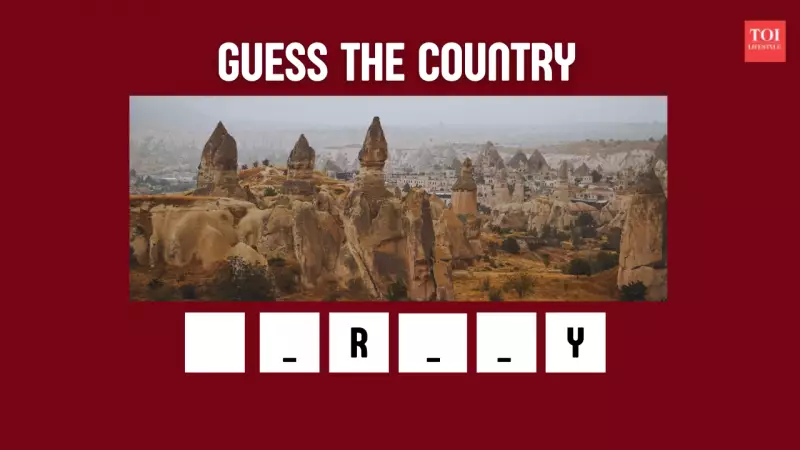
On the ground, Turkey is a land of spectacular and surreal contrasts. It offers an astonishing variety of landscapes that can captivate any traveller. One can witness the snow-capped summit of Mount Ararat, wander through the otherworldly 'fairy chimney' rock formations of Cappadocia, and relax on the golden, sun-drenched beaches of Antalya. Here, ancient archaeological sites coexist with dynamic modern cities, and the meeting of East and West is not just a line on a map but a palpable experience in daily life.
Turkey's unique position as a transcontinental nation ensures its enduring role as a geographical, historical, and cultural bridge, making it a perpetually compelling destination for the world.