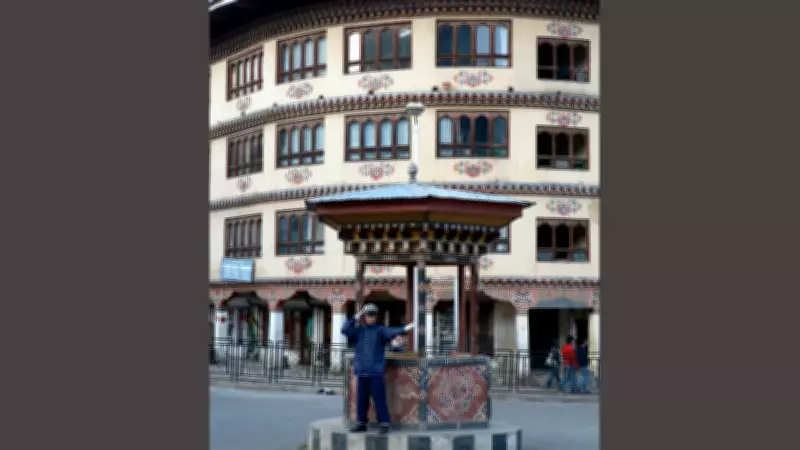
Thimphu: The Capital City That Operates Without Traffic Lights
For residents of bustling metro cities, imagining a place without traffic lights might seem impossible. However, there is a remarkable exception to this rule: Thimphu, the capital of Bhutan, famously functions without a single operational traffic light. This distinctive feature sets it apart as one of only two national capitals worldwide to eschew automated signals entirely.
Manual Traffic Management: A Human-Centered Approach
Instead of relying on electronic signals, Thimphu's busiest intersections are managed manually by uniformed police officers. These officers stand inside decorative white booths, using precise and almost choreographed hand gestures to direct traffic with impressive efficiency. According to the Royal Bhutan Police, this manual control system ensures a smooth flow of vehicles and promotes vigilant driving among motorists.
The preference for human-directed traffic reflects Bhutan's broader philosophy of prioritizing human-centered approaches in governance and urban management. This system is not merely a practical choice but a cultural statement aligned with the country's renowned Gross National Happiness index.

A Brief History: When Traffic Lights Were Installed and Removed
Interestingly, traffic lights were briefly installed in Thimphu during the late 1990s. However, public reaction was overwhelmingly negative. Residents found the automated signals impersonal and unnecessary, leading to their removal before they could become operational. The city swiftly returned to its traditional method of police-directed intersections, a practice that continues to this day.
This decision underscores the community's appreciation for personal interaction and the visible presence of law enforcement in daily life, contrasting sharply with the impersonal nature of automated systems.
Thimphu's Traffic Flow and Cultural Significance
Thimphu is not a sprawling megacity; its population is relatively small compared to other Asian capitals, which contributes to manageable traffic levels. The absence of traffic lights has ceased to be a logistical problem and has instead become a point of cultural pride. At major junctions like Norzin Lam, visitors often pause to watch the traffic police in action.
Officers, dressed in crisp uniforms and white gloves, expertly direct vehicles, pedestrians, and turning cars through carefully timed gestures. The scene resembles a synchronized performance more than a chaotic rush-hour scramble, adding a unique charm to the city's ambiance.
What Travelers Need to Know
For visitors to Thimphu, navigating the city is straightforward. Local drivers are well-accustomed to manual traffic control, and road discipline is generally strong. Pedestrians should wait for clear signals from officers before crossing, especially at busy intersections.
It is important to note that the lack of traffic lights does not imply a lack of regulation. Bhutan enforces traffic laws strictly, and the constant police presence ensures compliance. Fines and penalties are imposed for violations, maintaining order on the roads.
Public Transportation and Future Plans
In addition to its unique traffic management, Thimphu offers reliable public bus services throughout the day. There are also proposals to introduce tram services in the near future, which could further enhance urban mobility while preserving the city's distinctive character.
Thimphu in a Global Context
In an increasingly automated world, Thimphu stands out as a remarkable exception. As a capital city where humans, not computers, give instructions, it challenges conventional urban planning norms. This approach not only fosters a sense of community but also aligns with Bhutan's commitment to sustainable and happiness-oriented development.
The city's traffic system serves as a testament to the idea that technology is not always the answer to modern challenges. Sometimes, a human touch can be more effective, efficient, and culturally resonant.