Singapore has suddenly become a hot topic among Indians again. This time, the conversation has nothing to do with politics or breaking news. Instead, a travel video shared by popular Indian influencer Tanya Khanijow has captured widespread attention online. The video went viral for a straightforward reason. It presents observations that feel genuine and relatable. They sound exactly like the things any ordinary person would notice while exploring a foreign city.
Viral Video Sparks Comparisons Between Singapore and Indian Cities
As Tanya Khanijow's video gained millions of views, many Indian viewers started drawing comparisons. They began wondering how such a compact nation manages its urban infrastructure so effectively. People openly discussed the differences between Singapore's systems and those in major Indian metropolitan areas.
A Crowded City That Feels Surprisingly Orderly
In her video, Tanya points out that Singapore is actually smaller than Mumbai. Yet it accommodates a significant population density. She admits she expected to encounter chaos and overcrowding. Instead, she discovered a calm and remarkably well-organized urban environment.

"It sounds like it should be chaotic, but instead you find clean air, clean water, and clean roads everywhere," Tanya explains in her video. She particularly emphasizes how green the entire city feels. This greenery extends beyond designated parks. Buildings, streets, and public areas all incorporate plants and trees into their design.
"This country is so green that even their buildings have trees growing inside them," she adds with noticeable admiration.
Historical Connections to India's Urban Heritage
Tanya also touches upon Singapore's early post-independence history. She explains that the country's founding leaders once looked toward India for inspiration during their initial city planning phases. Kolkata specifically served as a reference point. Over subsequent decades, Singapore developed its own distinct systems and approaches.
She highlights public transportation as a prime example. Singapore's system runs with notable punctuality and operates smoothly. This stands in contrast to the public transport experiences many Indians encounter in their home cities.
Systems That Function With Remarkable Efficiency
A substantial portion of Tanya's video focuses on Singapore's resource management strategies. She explains that owning a private vehicle in Singapore is neither easy nor affordable by design. This deliberate policy aims to reduce traffic congestion and promote alternative transport.
She also discusses waste and water management systems in detail. According to her observations, most waste gets converted into electricity through advanced processing. The water recycling efficiency has reached such high standards that even international space agencies have studied Singapore's methods.
These practical points made numerous viewers pause and reflect on infrastructure possibilities.
Strict Regulations With Serious Enforcement
Tanya does not shy away from discussing Singapore's famously strict legal framework. She notes that fines are substantial and rules get enforced consistently. Simple infractions like littering or failing to flush a public toilet can result in significant financial penalties.
She suggests this consistent enforcement contributes directly to the cleanliness and order visible in public spaces throughout the city-state.
Multiple Cultures Coexisting in Close Proximity
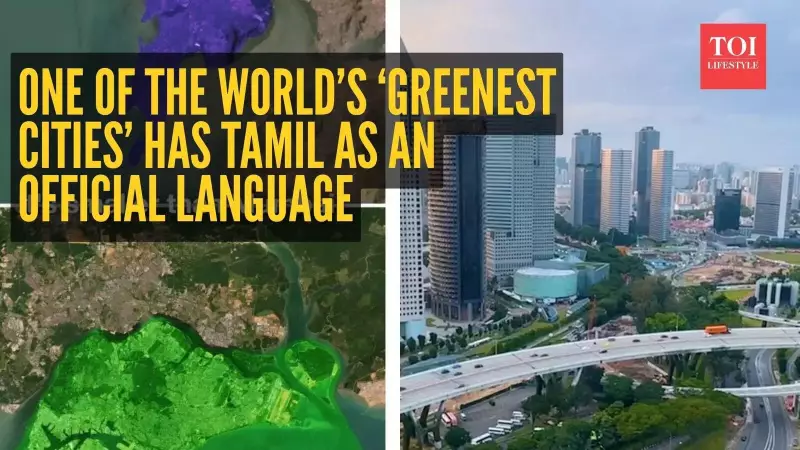
One aspect that clearly impressed Tanya was Singapore's cultural diversity. She mentions how distinct cultural districts like Little India and Haji Lane exist practically next to each other. She also highlights that Tamil holds status as one of Singapore's four official languages. This particular fact caught the attention of many Indian viewers engaging with her content online.
An Airport That Becomes a Conversation Piece
Toward the conclusion of her video, Tanya showcases Singapore's Changi Airport. She focuses on the massive indoor waterfall and the trees growing inside the terminal building. She points out how greenery appears everywhere, even on upper floors, yet feels completely integrated into the environment.

Online Reactions Reveal Widespread Engagement
As view counts climbed, comment sections filled with reactions from people across India and beyond. One user wrote, "Blessed to have my Singapore passport." Another commented, "India should seriously consider adopting Singapore's water recycling system." A third viewer reflected, "Kolkata must have been truly magnificent during those earlier planning days."
Many comments addressed cleanliness directly, with statements like "Way cleaner than what we typically see in India." Others shared personal connections, mentioning they currently live in Singapore or feel fortunate to have experienced it.
The video's power lies in its simplicity. Tanya Khanijow makes no grand claims or bold political statements. She simply documents everyday observations. This authentic approach is precisely why the content resonated so deeply. It brought Singapore back into casual, everyday discussions among Indians in a meaningful way.
Disclaimer: This article derives from a social media video and subsequent public reactions. The views and opinions expressed do not necessarily reflect any institutional position.