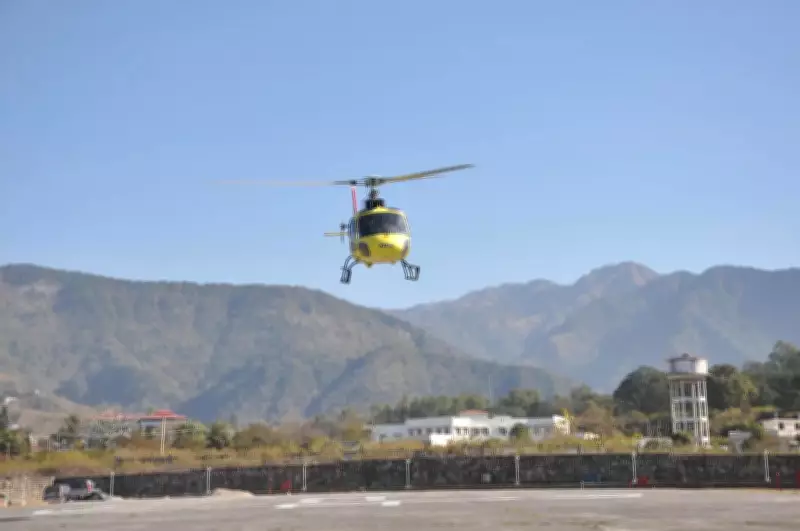
Dehradun: More than 4,000 helicopter tickets for the Kedarnath yatra have been cancelled so far this season as authorities continue to operate services cautiously amid erratic weather and heightened safety monitoring along the pilgrimage route.
This year’s Kedarnath yatra began on April 22, and around 12,000 pilgrims have used helicopter services to reach the shrine in May so far. Officials said operations are being closely regulated following a series of chopper accidents last year in which 13 people lost their lives.
Intermittent rain, snowfall and rapidly changing weather conditions in May have frequently disrupted flight schedules. As a precaution, helicopter services are suspended during adverse weather, leading to repeated cancellations and delays. Officials said all cancelled tickets are being refunded as per norms. At present, eight helicopter operators are running services from helipads at Sirsi, Guptkashi and Phata.

Rudraprayag tourism officer Rahul Chaubey said, “Earlier, we had to assess weather conditions manually, but now air traffic control systems have been installed at Kedarnath and Sitapur. All choppers have to pass through the narrow Sitapur stretch, making accurate weather updates critical.” “Around 40% of chopper flights had to be cancelled due to poor weather conditions. There has been a slight improvement in weather since Wednesday,” he said, adding that the situation continued to be monitored closely.
According to tourism department data, 8.67 lakh pilgrims had undertaken the Char Dham yatra till May 6, of whom 3.82 lakh visited Kedarnath.
Authorities tightened monitoring of helicopter operations after multiple incidents last year. On June 15, seven people were killed in a helicopter crash near Kedarnath, while another crash near Gangnani in Uttarkashi district on May 8 claimed six lives, including that of the pilot. Other incidents included an emergency landing near the Kedarnath helipad due to a tail rotor fault and a helicopter blade striking a vehicle at the Badrinath helipad.
Following the incidents, authorities issued a standard operating procedure (SOP) for helicopter operations, including regular technical inspections and deployment of pilots experienced in Himalayan flying conditions.