The Odisha state government has unveiled an ambitious plan to develop a comprehensive unified Buddhist heritage circuit that will connect five of the region's most significant historical sites. This strategic initiative aims to firmly position Odisha on the global spiritual tourism map, attracting both domestic and international visitors interested in Buddhist history and culture.
Strategic Development by OBCC
The Odisha Bridge & Construction Corporation Ltd (OBCC) has been entrusted with the responsibility of rolling out this visionary project. The corporation will oversee all aspects of planning, coordination, and execution with the primary objective of reconnecting Odisha's rich Buddhist history with contemporary cultural tourism and global spiritual networks. This represents a significant step in preserving and promoting the state's cultural heritage while boosting its tourism economy.
Circuit Design and Site Development
The proposed circuit will feature Udayagiri as the central hub where visitors will begin their spiritual journey. OBCC plans to reorganize this area into a welcoming cultural zone with carefully curated spaces that introduce travelers to Odisha's Buddhist narrative before they proceed to explore the adjoining heritage clusters. This thoughtful approach ensures visitors gain proper context before experiencing the historical sites.

Focus on the Diamond Triangle
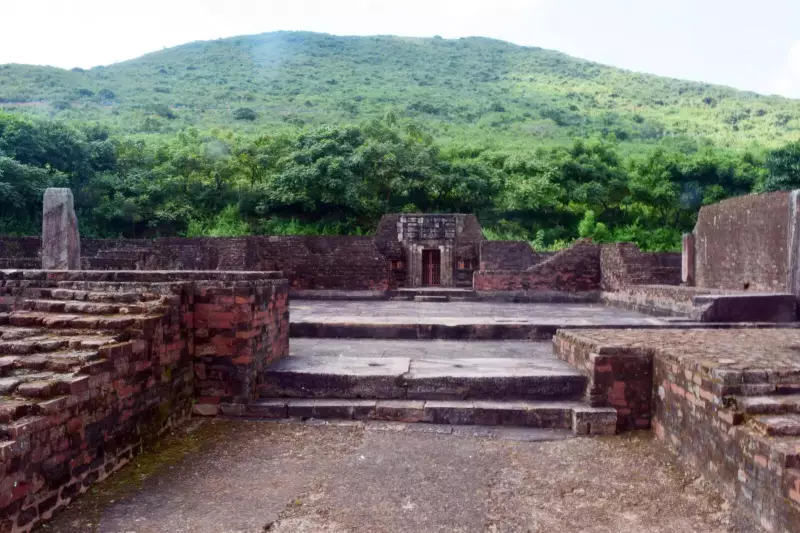
The renowned 'Diamond Triangle' comprising Udayagiri, Ratnagiri and Lalitgiri will receive special attention to enhance its visibility and visitor appeal. Each of these sites, celebrated for their ancient monastic remains and exquisite Buddhist art, will undergo development to offer calmer, more engaging, and more accessible experiences. The improvements will respect the archaeological significance while making the sites more visitor-friendly.
Infrastructure and Visitor Experience Enhancements
OBCC's comprehensive vision includes improved public spaces, comfortable rest areas, interpretive elements, and sensitively designed pathways that preserve the tranquility of the historic hills. "We have floated a global tender to select a consulting firm which will provide a detailed design and master plan for the project," confirmed OBCC managing director Omkar Hota, highlighting the international approach to this development.
Dhauli Peace Park Development
At Dhauli, the historic landscape associated with Emperor Ashoka's transformation following the Kalinga War, OBCC plans to create a peace park celebrating messages of compassion and non-violence. The area will be reimagined with contemplative spaces, walking trails, and culturally enriched storytelling zones that bring Ashoka's legacy to life for modern visitors.
Coordinated Implementation Approach
As an established infrastructure and heritage development agency, OBCC brings significant experience to this project, having already managed key initiatives such as Ekamra Kshetra in Old Town and Parikrama in Puri. The corporation will coordinate with tourism bodies, conservation agencies, cultural experts, and local communities to ensure the project's successful implementation while respecting all stakeholders.
Balancing Preservation and Accessibility
The corporation's mandate includes ensuring that each site retains its authentic archaeological character while offering an elevated visitor experience suitable for global audiences. "Odisha is known for its Buddhist heritage and the government has rightly planned to promote it at a greater level," noted historian Nibedita Panigrahy, emphasizing the importance of this balanced approach.
Expected Outcomes and Vision
Once fully developed, the integrated circuit is expected to provide a cohesive and meaningful journey from the monastic clusters of the 'Diamond Triangle' to the message of peace at Dhauli. Officials emphasize that the ultimate aim is to transform the Buddhist landscape into a vibrant, living cultural corridor that inspires both visitors and local communities alike, creating lasting connections between past heritage and present experience.