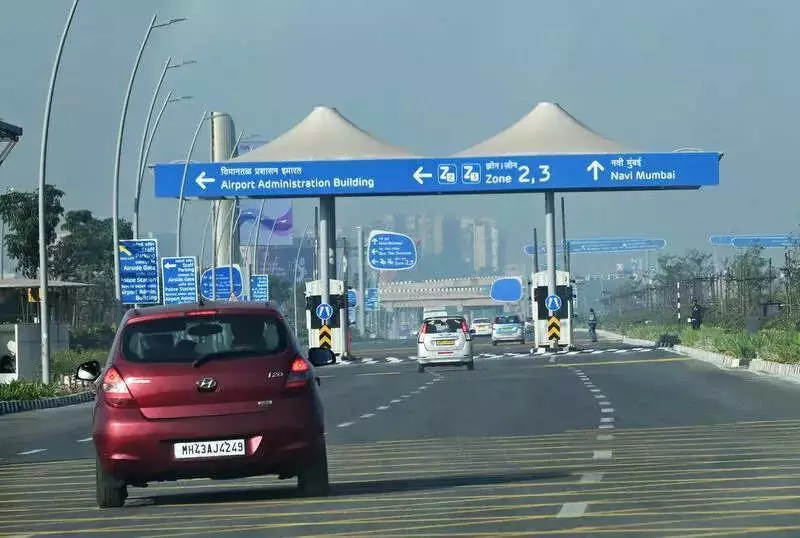
The much-anticipated Navi Mumbai International Airport commenced operations, but its first day was marked by a clear preference for private taxis over public transport. Despite the launch of dedicated bus services, most passengers opted for cabs, leaving the newly introduced air-conditioned buses largely empty and raising immediate questions about last-mile connectivity.
Public Transport Fails to Attract Flyers
The Navi Mumbai Municipal Transport (NMMT) had rolled out services on five specific routes connecting key suburban railway stations to the airport. These included links from Targhar, Belapur, Nerul, Kharkopar, and Khandeshwar stations, with buses scheduled at intervals of 20 minutes and fares kept affordable between Rs 15 to Rs 25. However, this reliable and budget-friendly option found few takers. The convenience of point-to-point drop-off offered by taxis appeared to outweigh the cost savings for most travellers.
The auto-rickshaw stand presented a similar picture of neglect, standing deserted for much of the day. Ahmedabad resident Manoj Patel experienced this firsthand, waiting outside the airport for nearly 30 minutes for an auto to reach Ulwe. He also cited mobile network issues compounding the problem. While autos charged a standard Rs 50 for the short ride to the nearest Targhar station, the service remained underutilized.

Navigational Hurdles and Infrastructure Woes
Passengers faced significant challenges even before reaching the terminal. Many reported confusion due to unclear or missing road signage at crucial junctions, leading several to mistakenly drive to the cargo terminal instead of the passenger terminal. This error resulted in wasted time and extra travel costs.
Flyer C Valsan, who took an evening flight to Kochi, shared his ordeal: his cab driver was unsure of the route, leading them to the cargo terminal first. Furthermore, the approach roads to the airport were described as bumpy, with JCB machines deployed for repairs and widening work, slowing down traffic. The taxi and auto stands were not fully operational, forcing arriving passengers to depend on app-based cab aggregators, who charged around Rs 700 for trips to nearby areas like Nerul and Vashi, a distance of just 7-8 km.
Passenger Feedback and Official Response
Travellers from Mumbai suburbs highlighted the comparative distance, with Matunga resident Dinesh Gandhi noting the 35 km journey was much longer than to the Mumbai airport. He also pointed out poor signage on the Atal Setu. Many suggested that clearer bus schedules and better road signages could boost public transport usage.
In response to the low ridership, an NMMT spokesman stated that the operator would review passenger patterns and adjust schedules if necessary. Meanwhile, taxi drivers reported a steady flow of customers but hinted at potential regulatory gaps that needed attention.
The opening day also attracted curious locals, though strict security protocols requiring a valid air ticket for entry prevented many from exploring the new facility. Panvel resident Kishore Raut was turned away when he tried to enquire about future flight schedules. Despite the hiccups, some passengers, like Shivdasan Iyer who travelled from Vapi, expressed excitement about experiencing the new airport. Young Navika Nandkumar Thakur from Ulwe was thrilled about the prospect of easier travel to Goa with family and friends.