Nature's Wild Surprise: The Namib Desert's Unreal Landscape
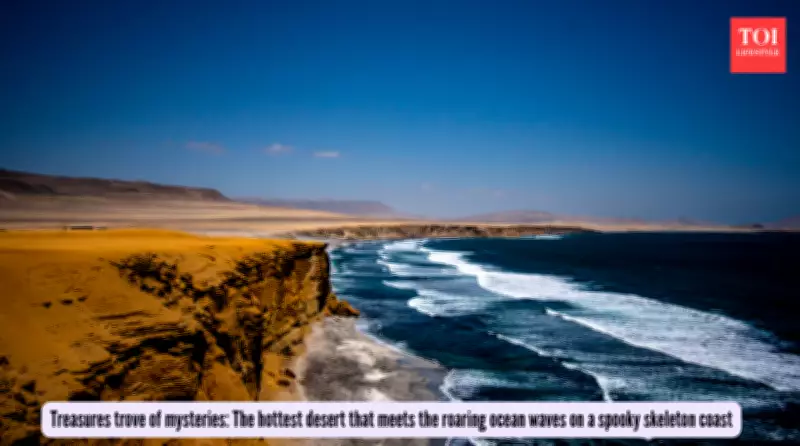
Nature often crafts its most astonishing surprises in environments where survival seems impossible. The Namib Desert in Namibia stands as a prime example—a breathtaking expanse of fiery red dunes that collide dramatically with the foggy Atlantic coastline. This region defies expectations with scorching daytime temperatures soaring up to 45°C and frigid nights, yet resilient animals like oryx and zebras thrive as if it were an ordinary habitat. The landscape is dotted with eerie ghostly shipwrecks along the shore and mysterious circular patterns in the grass, which locals attribute to ancient tales of "god's footprint." Welcome to one of Earth's most surreal and captivating terrains, where the desert literally meets the ocean.
Where Ocean Crashes Into Desert: A Geographic Marvel
The Namib Desert stretches along Africa's southwest coast like an endless wave of crimson sand. Here, cold winds from the Benguela Current clash with hot inland air, generating dense fog that rolls in almost daily. Rainfall is exceedingly scarce, with some areas receiving less than 2 mm annually. Along the haunting Skeleton Coast, massive dunes spill directly into the sea, surrounded by rusting shipwrecks and ancient whale bones. This stark beauty has earned it the local moniker "the land God made in anger," and explorer Diogo Cão famously labeled it "The Gates of Hell" in 1486. The description is both dramatic and accurate, capturing the desert's formidable allure.
Life That Refuses to Give Up: Resilient Desert Wildlife
Despite the harsh conditions, the Namib Desert teems with life that has adapted ingeniously. Oryx survive by extracting moisture from roots and can endure weeks without drinking water. Hartmann's zebras navigate steep, rocky slopes with agility akin to mountain goats, while ostriches employ physiological tricks to minimize water loss. The wide gravel plains are home to springbok, cheetahs, hyenas, and ostriches, demonstrating that life persistently finds a way even in the most challenging environments.

Secrets of the Skeleton Coast: A Haunting Stretch
Extending approximately 500 km from Angola through Namibia, the Skeleton Coast is renowned for its eerie atmosphere. Thick fog frequently disorients ships, leading to numerous wrecks over the centuries. The shoreline is littered with twisted metal, broken hulls, and bleached whale bones, creating a haunting vista that inspired the coast's ominous name. This area remains a stark reminder of nature's unpredictable power.
The Giant Sossusvlei Dunes: A Natural Wonder
Deep within Namib-Naukluft National Park, the burnt-orange dunes of Sossusvlei rise impressively between 200 and 400 metres high. Their vibrant colour results from iron-rich sand that has rusted over millennia. Dune 7, one of the tallest, reaches about 400 metres and feels more like a mountain than a sand hill. As one of Africa's largest national parks, this area attracts adventure enthusiasts who come to climb, slide, and marvel at its grandeur.
The Fairy Circle Mystery: An Unsolved Enigma
Scattered across the desert plains are strange bare patches known as fairy circles. From an aerial view, they resemble giant polka dots, ranging from 2 to 12 metres in diameter, with some even larger in parts of Namibia. Similar patterns discovered in Australia's Pilbara region in 2014 have only deepened the mystery. Theories abound: some attribute them to termite activity, others suggest underground plant competition for water, and a few propose that certain dead plants poison the soil. With no consensus, these circles add a layer of magic and intrigue to the Namib's already fascinating landscape.