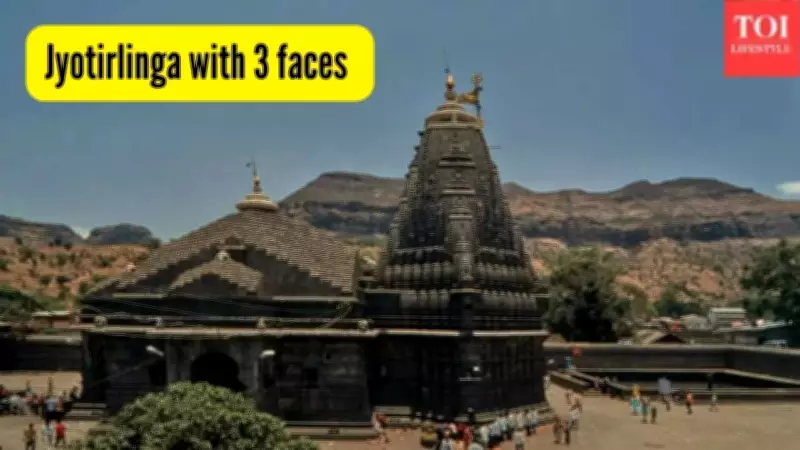
Some journeys commence with meticulous planning, while others unfold through sheer faith, crafting narratives that remain etched in memory forever. My recent pilgrimage from Mumbai to the revered Trimbakeshwar Temple, home to one of India's most distinctive Jyotirlingas featuring three divine faces, began as a serene monsoon retreat. The sun playfully peeked through scattered clouds, and the Western Ghats exuded a crisp, refreshing aroma. Accompanied by my parents and my peacefully sleeping two-year-old toddler, I felt a deep sense of contentment. Little did we anticipate that within hours, this tranquil expedition would morph into a harrowing tempest, challenging our endurance, bravery, and spiritual conviction.
The Unique Three-Faced Jyotirlinga
Trimbakeshwar stands as no ordinary sanctuary. Nestled near Nashik in Maharashtra, this hallowed pilgrimage site holds a singular distinction: it is the only Jyotirlinga temple globally where Lord Shiva is venerated in a three-faced manifestation. These faces symbolise Brahma, the creator; Vishnu, the preserver; and Mahesh, the destroyer, embodying cosmic equilibrium. Unlike conventional temples with vertical lingams, devotees here bow before three subtle protrusions encased within a silver crown, a profound emblem of balance.
For ardent followers of Lord Shiva, Trimbakeshwar radiates deep sanctity. For inquisitive travellers, it represents a confluence of mythology and natural splendour. The temple town rests at the base of the Brahmagiri range, the sacred source of the Godavari River, enhancing its spiritual aura.

The Scenic Drive from Mumbai
The approximately 180-kilometre drive from Mumbai to Trimbakeshwar typically spans five to six hours, winding through the picturesque Kasara Ghat. Upon arrival at noon, we were greeted by delightfully pleasant weather, with gentle breezes tousling our hair. A profound calm enveloped us as we effortlessly parked in the temple's designated area. The town's natural setting captivated me instantly—majestic mountain vistas, the lively chatter of devotees, and shopkeepers beckoning from quaint stalls created a vibrant atmosphere.
Locals informed us that queues were manageable, promising straightforward darshan. We initially joined the regular line, but soon realised a three-hour wait lay ahead. Concerned for my mother's knee issues, which made prolonged standing arduous, and mindful of our toddler's needs, I opted for VIP tickets to expedite our visit. The weather had begun to shift, growing increasingly windy, adding urgency to our decision.
A Sudden Turn into Turmoil
Upon inquiry, I learned the VIP counter was about a kilometre from the temple. Leaving my parents and baby sheltered in a restaurant, I embarked on what became one of the trip's most ill-fated choices. As I wandered uncertainly, the sky darkened abruptly, transitioning from a drizzle to a terrifying storm within moments. Coastal winds howled like warning sirens, and rain descended with ferocious intensity, plunging the area into chaos.
Metal utensils from nearby shops soared through the air, and tin-roofed stalls rattled violently, some collapsing entirely. Unaccustomed to coastal storms, fear gripped me as I found myself separated from my family. Recalling they were in one of the precarious tin-roofed eateries, I sought refuge under an ATM structure. For nearly half an hour, the town seemed locked in a fierce struggle with nature, streets echoing with shouts and pounding rain.
Divine Intervention Amidst the Storm
As the rain momentarily subsided, I ventured out, only to confront a towering statue of Lord Ganesha shielded by a tin sheet on three sides. Suddenly, the storm resurged with renewed vigour, causing the tin to sway and creak alarmingly. Terror seized me as the sheet threatened to detach, potentially injuring bystanders. Yet, it held firm, anchored by the Ganesha idol beneath it. In that heart-stopping instant, the massive statue served as a protective barrier, evoking a sense that Lord Ganesha himself stood guard, dispelling fear with faith.

Reaching the ticket centre, I discovered passes could be easily booked online—a realisation that underscored my earlier haste. After securing digital tickets, we entered the temple, where the atmosphere transformed entirely. Despite waterlogged surroundings, winds stilled, and peace prevailed as if the preceding turmoil had never occurred. Chants of "Om Namah Shivaya" filled the air, and centuries-old stone walls, darkened by devotion, imparted a timeless serenity. A priest blessed my child and offered me a coconut filled with water. Amidst the crowd, I felt a solitary connection before the three-faced Jyotirlinga—an ineffable experience beyond mere description.
Reflections on Family Pilgrimages
Travelling with a toddler alters one's perception of places, amplifying sounds and perceived dangers. Yet, observing my child joyfully dancing, oblivious to the storm's severity, rendered the moment profoundly beautiful. It illuminated why families undertake pilgrimages together: not solely to seek blessings, but to transmit belief across generations. My devout parents later reflected, "These are the moments that make faith personal," a sentiment that resonated deeply.
Rituals and Souvenirs
Adjacent to the temple lies the sacred Kushavarta Kund, a tank linked to the Godavari's origin, where devotees perform rituals. Vibrant markets offer rudraksha beads, copper vessels, puja items, incense, and famed Godavari Shiva Lingams. I acquired souvenirs, including a Shiva Lingam, as mementoes of our spiritual journey.
Practical Travel Information
By Road: Trimbakeshwar is well-connected from Mumbai and Nashik via regular buses and private taxis.
By Train: Nashik Road Railway Station, approximately 30 kilometres away, serves as the nearest major railhead.
By Air: Mumbai's airport is the closest; from there, road travel is optimal.
We returned to Mumbai weary yet emotionally enriched and blessed, carrying memories of a pilgrimage where faith triumphed over nature's fury.