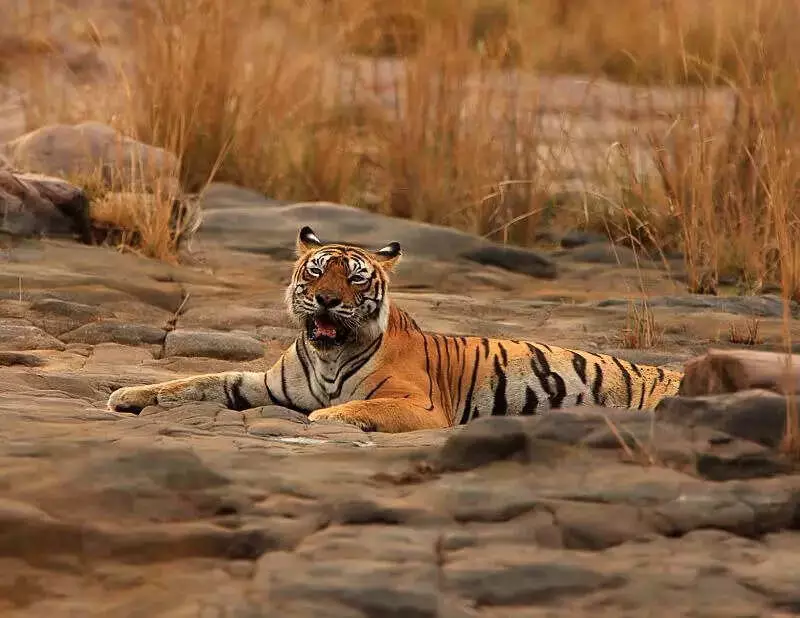
In a significant move for wildlife conservation in Rajasthan, the state's forest department is gearing up to introduce a male tiger from the famed Ranthambore National Park into the Mukundra Hills Tiger Reserve (MHTR). This strategic translocation aims to bolster the reserve's striped population and create conditions for natural breeding.
Strategic Translocation Receives Green Light
The ambitious relocation proposal has secured all necessary statutory approvals, including a crucial clearance from the National Tiger Conservation Authority (NTCA). Senior forest officials indicate that the animal's shift could be executed within the coming weeks. The tiger is slated to be initially placed in the Darrah range of MHTR before its proposed final release into a forest area spanning nearly 82 square kilometres.
Creating a Foundation for a Growing Population
This translocation is a top priority for the department as it seeks to stabilize the tiger population in Mukundra Hills. Currently, MHTR has only one free-ranging tigress, named Anvi, popularly known as Kankati, who was herself relocated from Ranthambore earlier. The forest department has a phased strategy to further strengthen the base population.

Plans are also in place to release a second female tiger into MHTR. This tigress is currently housed in a five-hectare enclosure at the Abheda Biological Park in Kota. Once these moves are completed, the reserve's hard enclosure system will host two tigresses and one male tiger, setting the stage for a conducive environment for natural breeding and population growth.
Kota's Rewilding Initiative Paves the Way
This latest effort builds upon Rajasthan's first rewilding initiative witnessed in Kota back in November 2022. At that time, two tiger cubs—one male and one female—were brought from Ranthambore to Abheda Biological Park. As part of the department's careful, phased strategy, the female cub was subsequently released into MHTR in December 2024, while the male cub was transferred to the Ramgarh Vishdhari Tiger Reserve. Both animals are currently being monitored in temporary enclosures as part of their acclimatization process.
The upcoming translocation of the male tiger from Ranthambore marks a critical next step in ensuring a viable and sustainable future for tigers in the Mukundra Hills landscape, reflecting a continued commitment to proactive conservation management in the region.