Khirai: The Floral Heartbeat of Bengal During Saraswati Puja
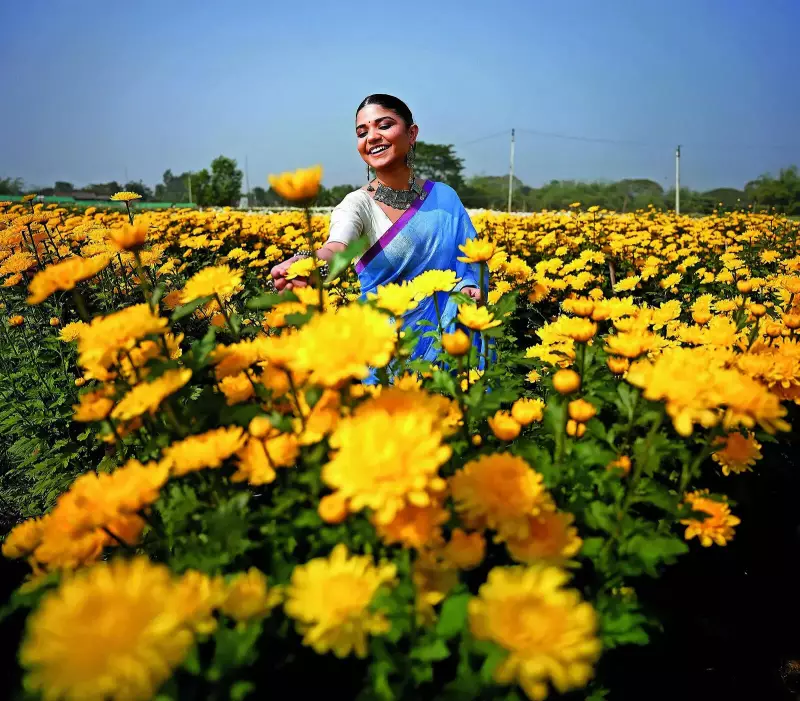
Nestled along the serene banks of the Kangsabati river, Khirai in East Midnapore district has emerged as the ultimate destination for Saraswati Puja celebrations, thanks to its breathtaking fields bursting with marigolds, chrysanthemums, and dahlias in spectacular, riotous colors. This region, often called the Flower Valley of Bengal, becomes particularly vibrant during the festive season, attracting visitors from across the state and beyond.
The Economic Blossom: From Local Fields to National Markets
While exact statistics remain elusive, local farmers estimate that nearly 8 lakh flowers of each variety leave Khirai daily during peak seasons. The period stretching from Saraswati Puja through Valentine's Day represents the most hectic phase for these agricultural entrepreneurs. Beyond supplying Kolkata's massive demand, this floral hub extends its reach to major cities including Allahabad, Ahmedabad, Hyderabad, and occasionally Delhi.
The biggest revenue streams for Khirai's flower economy come from flower exhibitions and wedding celebrations, where demand for specific varieties has evolved significantly in recent years.

Changing Consumer Preferences: The Instagram Effect
Lakshmi Samanta, a seasoned flower vendor operating at the Khirai flower exhibition, observes a noticeable shift in buyer preferences. "People now mostly want flowers that look good in pictures," she explains, pointing toward her collection of vivid dahlias and rainbow-hued roses. Bright colors and unusual shades currently dominate market demand, particularly among photographers and social media enthusiasts who visit the fields.
While traditional festival staples like marigolds and chrysanthemums maintain steady demand, colored dahlias and roses have gained remarkable popularity. "We usually color these flowers in the evening," Samanta adds, revealing part of the preparation process that enhances their visual appeal.
Beyond Khirai: The True Flower Belt
The actual flower cultivation extends well beyond Khirai's immediate boundaries into surrounding villages including Paschim Kolla, Jakpur, Radhamohanpur, and Janabar. Susanta Samanta, a farmer from Janabar, clarifies this geographical reality: "Khirai may host the flower exhibition and see the most visitors, but it's these surrounding villages that nurture the blossoms."
This interconnected agricultural network forms what locals proudly call "the gateway of flowers" – a region where floral cultivation represents both economic livelihood and cultural identity.
The Human Element: Farmers with Wit and Wisdom
Around Khirai, the villagers' dry, homespun humor proves as memorable as their floral displays. During visits, locals often engage in witty exchanges, like asking guides whether visitors have come "to buy flowers or land" – a pointed commentary on camera-toting tourists. At exhibitions, when questioned about women predominantly running stalls, quick retorts like "Would you take flowers from boys' hands, or would they wear them?" showcase their sharp wit.
Despite occasional exasperation with vloggers and selfie-seekers trampling their plots, the farmers maintain remarkable kindness. Departing visitors often receive generous flower bunches with warm invitations to "take these home for your household."

A Day in the Life: The Flower Farmer's Rhythm
- Pre-dawn: Farmers enter misty fields at first light, blooms heavy with morning dew
- Early morning: Tending, watering, and inspecting rows with agricultural precision
- Late morning: Returning home for household chores and brief rest periods
- Afternoon (around 2 pm): Back in fields as sunlight softens; cutting mature blooms while nurturing new buds
- Dusk: Harvested flowers gathered and carried home for processing
- Evening: Manual stringing of flowers into decorative garlands
- Nightfall: Bundles of chrysanthemum, marigold, and gladiolus loaded onto trucks and trains destined for urban markets
Agricultural Innovations and Challenges
Farmers employ clever techniques to maximize yields, including fencing plots with rows of light bulbs that illuminate fields after sunset. Ranjit Maity, an experienced farmer, explains this method: "When the sun dips, the bulbs flicker on, bathing the blossoms in light and coaxing them to keep blooming."
However, significant challenges persist. Manabindra Jana, another local farmer, voices concerns shared by many: "It's hard work with little support from the government. The climate has become so unpredictable – you never know when it will pour and when it will be unbearably hot." This combination of uncertain earnings and changing weather patterns has made younger generations hesitant to continue the trade.
Visitor's Guide: Experiencing Khirai's Floral Magic
Best time to visit: Late December through mid-February, when peak bloom coincides with Saraswati Puja festivities
Optimal hours: Arrive between 7–9 AM for soft photographic light and smaller crowds
Exploration tips: Fields remain easily walkable from the railway station. While strolling to enjoy colors and fragrances, always respect working plots by asking permission before entering and avoiding stepping on flowers
Photography etiquette: Always seek permission, particularly for close-up shots. Polite interactions often lead to invitations for deeper field access
Pro tip: Weekday mornings offer quieter experiences than weekends, allowing more meaningful conversations with farmers and leisurely enjoyment of the blooms
Floral Varieties: From Traditional to Exotic
- Coron or Corona flowers
- Pink star or Pentas lucky star
- White and yellow Chandramalika
- Roses in multiple varieties
- Yellow Mulga
- Chrysanthemum in traditional colors
Sulekha Mal, a flower-seller at Khirai, notes additional dimensions of the visitor experience: "Saraswati Puja to Valentine's Day is peak bloom and tourist season. Visitors can learn how to make tiaras or simply tie flowers here. Many find the activity very therapeutic."
The region has also witnessed growing demand for exotic flowers, particularly Thai varieties, mainly for wedding decorations and special events. This diversification reflects both changing consumer tastes and farmers' adaptability in a competitive market.