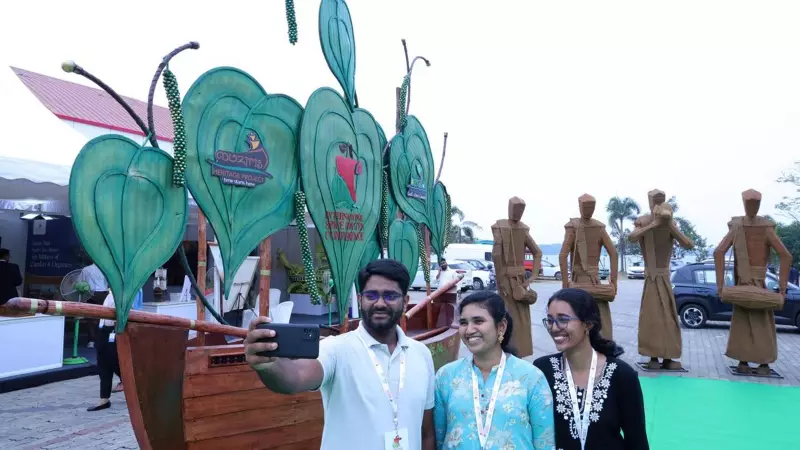
The historic Bolgatty Palace in Kochi, a structure built by Dutch traders in 1744, became a global crossroads once again this week. It hosted the inaugural International Spice Routes Conference, a first-of-its-kind gathering that drew historians, researchers, policymakers, and cultural experts from across India and around the world.
A Confluence of Cultures and Histories
Delegates from 22 countries, about 38 international participants, converged in Kochi for the three-day conference. Their mission was to revisit the ancient maritime networks that once made Kerala, and specifically the legendary port of Muziris, a pivotal hub in global commerce. The conference, organized by the Muziris Heritage Project in collaboration with the Kerala Tourism Department, aims to forge new paths for heritage conservation and responsible tourism by re-examining this shared past.
Kerala Tourism Minister PA Mohammed Riyas inaugurated the event via video link. He emphasized the profound cultural exchanges facilitated by these ancient routes. "Movements of people brought deep, underlying cultural and material commonalities across cultures in areas such as faith, language, food, agriculture, and clothing," he stated. He noted that the Muziris Project seeks to identify and revive the cultural, social, religious, and commercial potential of these historical networks for the present day.

Pepper, Identity, and Global Exchange
The opening session, titled 'Spice Routes: People, Goods and Ideas in Motion', set the thematic tone. Historians presented logbooks and personal accounts to illustrate ancient interactions. Eminent historian Pius Malekandathil highlighted how the pepper trade shaped identities across continents. He explained that traders involved in this lucrative commerce began to be intrinsically identified with it.
"This fetched for them the surname of Pfeffer (pepper) in Germany and Hungary. Similarly in Portugal, the surname Pimenta got allocated to some people, obviously as an identity marker, indicating their linkage to the pepper trade," Malekandathil elaborated. This detail underscores how a commodity from Kerala's hills influenced personal identities in faraway Europe.
The conference delves into the legacy of Muziris, a port active between the 1st century BC and 4th century AD. Located at the mouth of the Periyar river, Muziris was a crucial nexus, linking Southeast Asia, Africa, West Asia, and Europe. It exported pepper, beads, and silk, while importing gold coins and grain. Though the port eventually vanished from maps, the cultural influences it ushered in endured.
Charting a Shared Future Through the Past
Over three days, panel discussions are covering a vast spectrum of topics. These include linguistic and cultural fusions, indigenous food systems, colonial interventions, diasporic networks, and the future of heritage interpretation. The goal is to use historical understanding to envision collaborative futures.
The venue is also hosting three photography exhibitions in association with Aazhi Archives: 'Chavittu Nadakam' by KR Sunil, 'Seeing is Believing' by Biju Ibrahim, and 'Migrant Dreams' featuring archival photographs. These visual narratives complement the academic and policy discussions, offering a poignant look at the human stories within the grand narrative of trade.
Presided over by K N Unnikrishnan, MLA, with Manal Ataya, Director General of the Sharjah Museums Authority, as chief guest, the conference represents a significant step in positioning Kerala's spice route heritage as a living, relevant dialogue for global connection, cultural understanding, and sustainable tourism development.