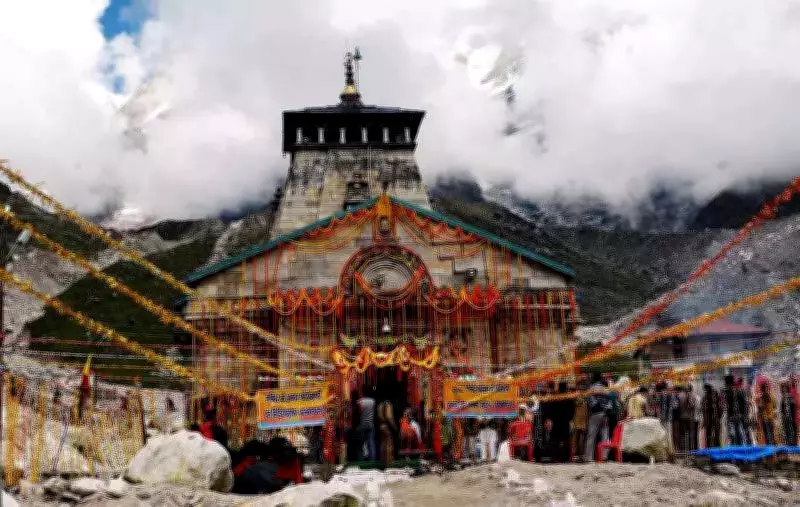
Historic Kedarnath Trekking Route Set for Pilgrim Return After Decade-Long Reconstruction
In a significant development for Hindu pilgrims, the original trekking path to the sacred Kedarnath temple via Garud Chatti – which was devastated during the catastrophic 2013 flash floods – is poised to reopen during the upcoming pilgrimage season. This 15.3-kilometer trail, once the primary approach to the Himalayan shrine, has undergone extensive reconstruction and is now in its final preparation stages.
Restoration Nears Completion After Natural Disaster
The Garud Chatti route, rendered completely impassable when torrential floods severed critical segments and obliterated supporting infrastructure eleven years ago, represents a shorter alternative to the current 16.3-kilometer path through Lincholi. According to district officials, while some final utilities including drinking water facilities and toilets remain pending, preparatory work has reached its concluding phase.
"Some minor work is left, but we are optimistic that this route will be in use during the yatra," confirmed Nandan Singh Rajwar, Rudraprayag's district disaster management officer. "It is more suitable for trekkers." The administration is considering designating the Garud Chatti path exclusively for foot trekkers while directing pony traffic to the wider Lincholi trail.

Mythological Significance and Structural Adaptations
Kedarnath temple holds profound spiritual importance within Hinduism, believed to be connected to the Pandavas who sought Lord Shiva's blessings here following the Mahabharata war. The shrine was later revived and reestablished by the philosopher Adi Shankaracharya in the 8th century.
Laxmi Narayan Jugdan, a purohit at Kedarnath, explained the reconstruction challenges: "The reconstructed route is slightly different to the original one as it was difficult to make it exactly the same. The bends have also been widened, as a result the new route is roughly 1.5 kilometers longer than the original route."
Phased Reconstruction and Infrastructure Improvements
The Public Works Department and District Disaster Management Authority executed the damaged route's restoration in systematic phases. Initial completion focused on the 3.3-kilometer stretch between Kedarnath and Garud Chatti, followed by the critical 5.3-kilometer segment connecting Garud Chatti to Rambada – one of the most severely impacted locations during the 2013 disaster.
Officials have verified that a crucial bridge at Rambada, serving as a vital connection along the trail, will be operational before the pilgrimage commences. Once fully restored, devotees will have dual route options: the revitalized Gaurikund–Rambada–Garud Chatti–Kedarnath path or the existing Gaurikund–Rambada–Lincholi–Kedarnath alternative.
Due to necessary realignments in certain sections, the distance between Rambada and Kedarnath has increased moderately from the original 7 kilometers to approximately 8.6 kilometers.
Pilgrimage Context and Historical Tragedy
Kedarnath Dham annually attracts over 1.5 million visitors, making it one of India's most significant pilgrimage destinations. While Badrinath Dham's opening date has already been announced, the Kedarnath schedule will be declared on Mahashivratri.
The 2013 Uttarakhand flash floods – triggered by unprecedented cloudbursts and glacial lake outbursts – wreaked havoc across the Kedarnath valley, demolishing roads, bridges, and pilgrimage infrastructure. The disaster resulted in over 5,700 presumed fatalities, with the Rambada region suffering particularly catastrophic damage.
The impending reopening of the Garud Chatti route symbolizes not just infrastructural recovery but spiritual resilience, offering pilgrims a renewed connection to one of Hinduism's most revered shrines through its historic approach path.