Kashmiri Travel Vlogger's Perilous Journey Through War-Torn Iran
When Umar Iqbal, a 27-year-old travel vlogger from Jammu & Kashmir's Pulwama district, entered Iran on February 21, the region was teetering on the brink of war. The military buildup had created palpable tension, yet strangers greeted him with unexpected warmth while urgently advising him to leave before conflict erupted.
A Journey Interrupted by Geopolitical Tensions
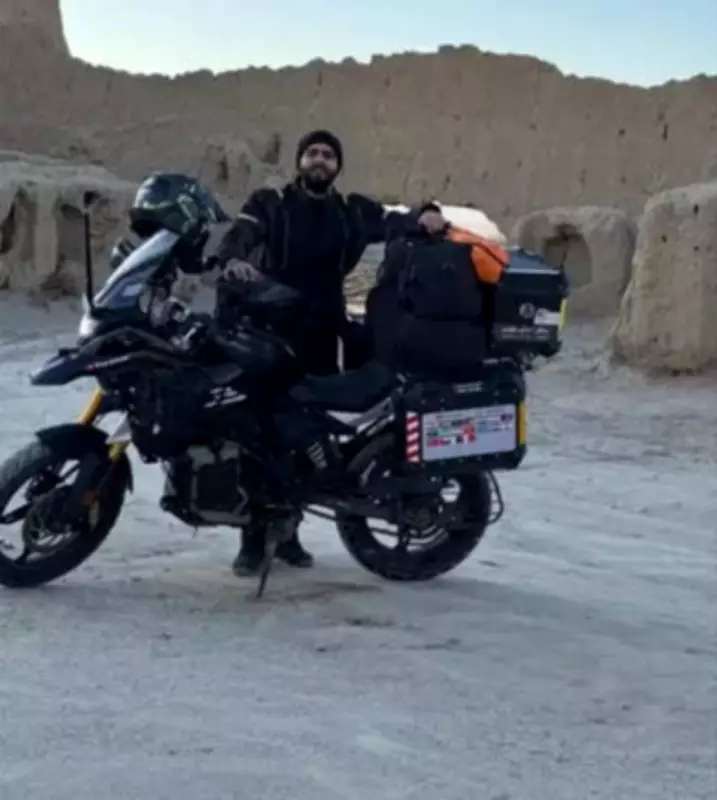
Iqbal, a BSc nursing graduate who turned to motorcycle travel and vlogging three years ago, had been on an ambitious overland journey through the Middle East. Having already traversed UAE, Saudi Arabia, Jordan, and Iraq, his plan involved continuing through Iran toward Central Asia. However, as his Iraqi visa neared expiration, the escalating military situation created uncertainty about his next move.
The Iranian embassy in Baghdad initially refused his visa application, citing the dangerous war-like situation. This left Iqbal with limited options: returning to Jordan meant a grueling 900-1,000 kilometer ride back, Turkey wouldn't grant him a visa from Iraq, and Syria remained inaccessible due to its ongoing civil war.

With persistence, the vlogger—who boasts over six lakh followers across YouTube and Instagram—returned to plead his case. After extensive scrutiny of his travel accounts, Iranian authorities granted him a 12-day visa with a stern warning: "Be extremely cautious and leave the country as soon as possible because of safety concerns."
Witnessing War's Onset from Within
Iqbal reached Khorramabad on February 21, spending three days there before moving to Qom for four additional days. Even before hostilities officially began, he noted that Iranians seemed to anticipate imminent change. "Each person who greeted me also asked me to leave as soon as I could," he recalled. "There was kindness, but there was also concern for my safety."
The conflict erupted on February 28 while Iqbal was in Qom. The following day, he resumed his journey toward Tehran, though friends from Jammu & Kashmir living there warned him against entering the capital due to intense strikes. Instead, he rode 400 kilometers toward Damghan, traversing increasingly empty and exposed landscapes.
Near the ancient Tepe Hissar site, he camped overnight, watching missiles streak across the sky. "I saw missiles flying overhead through the night," he described. By March 2, when he reached Damghan, the situation had deteriorated further.
Rescue Efforts and Extraordinary Hospitality
Checking into a local homestay, Iqbal experienced a powerful blast landing just hundreds of meters away. Residents rushed toward the damaged multi-story residential building, and he joined their rescue efforts, sustaining minor injuries in the process.
"I also got injured, but that felt insignificant before the love and affection people there showed me despite the war," he emphasized. His host family cared for him with increasing urgency as bombing intensified, eventually pleading with him to stay rather than risk the dangerous roads.
With his visa expiring, the family arranged a mini-truck to transport his motorcycle toward Taybad near the Afghan border—a 750-kilometer journey. Traveling at night with the sky still flashing from explosions, both Iqbal and the terrified driver feared their vehicle might become a target. At one point, Iqbal took over driving for more than half the journey when the driver's legs trembled uncontrollably.
Escape and Reflection
Reaching Taybad on March 6, Iqbal crossed into Afghanistan the next day, having overstayed his Iranian visa by two days. "Only when I crossed over did I feel a big sense of relief," he confessed, though he immediately recognized the irony: Afghanistan itself remained embroiled in conflict with Pakistan.
In Herat by March 7, he finally contacted his family after days of communication blackout in Iran. "When I called home, I heard them crying because they had been so worried," he shared emotionally.

Despite planning to continue through Afghanistan toward Tajikistan and Central Asia, Iqbal's most enduring memory isn't the missiles, blackouts, or empty roads. "I will never forget the hospitality I received in Iran," he stated, highlighting how human kindness persisted amid devastating conflict.
This remarkable journey underscores how ordinary people maintain their humanity even as geopolitical tensions escalate into violence, with a Kashmiri traveler finding unexpected sanctuary from Iranian families who prioritized his safety above their own during wartime.