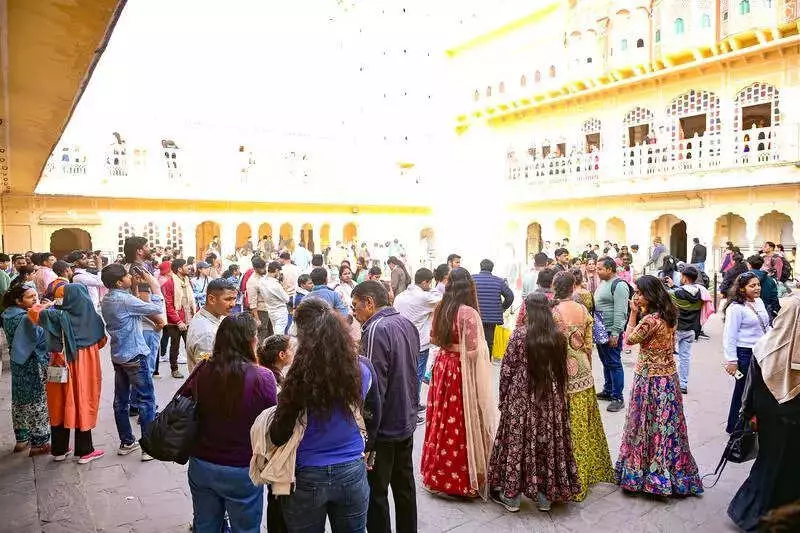
As the winter tourism season and New Year festivities attract record crowds, Jaipur's historic Walled City is grappling with an unexpected and serious crisis: a severe shortage of public toilets. While thousands of visitors flock to iconic sites like the Hawa Mahal, City Palace, and Jantar Mantar, the basic sanitation infrastructure is failing to keep pace, creating daily struggles for tourists and locals alike.
Tourist Influx Overwhelms Single Facility
The scale of the problem is stark. The Walled City area receives between 20,000 to 25,000 visitors on an average day, a figure that nearly doubles during peak tourist weeks. Despite this massive daily footfall, there is only one functional mobile public toilet serving the entire heritage zone, located near the Hawa Mahal. This gross inadequacy is turning a basic human need into a major challenge.
Shopkeepers and residents in the bustling markets report that the situation has become a daily ordeal. Ramesh Sharma, a local handicrafts trader, explained the reality on the ground. "Tourists spend hours exploring the monuments and markets. When they cannot find toilets, they repeatedly ask us for directions or rush into lanes searching for facilities. This creates significant discomfort and raises serious hygiene concerns," he said.

Women, Elderly Among the Worst Affected
The lack of facilities disproportionately impacts women and the elderly. Local resident Renu Devi highlighted their plight. "Many people, especially women and older visitors, are forced to walk long distances or return to their hotels and cafés just to use a restroom. It completely spoils their experience of the Pink City," she stated. This basic inconvenience threatens to tarnish the overall visitor experience in one of India's premier tourist destinations.
Tourists themselves are voicing their frustration. Lindsay, a foreign visitor, expressed surprise at the oversight. "Jaipur is incredibly beautiful, but the absence of sufficient public toilets is shocking. For a world-renowned heritage city that attracts global visitors, this should be a fundamental facility," she remarked. Urban planners echo this sentiment, warning that the absence of adequate sanitation for the thousands of daily pedestrians, shoppers, and vendors affects overall cleanliness and damages Jaipur's international image.
Official Promises vs. Ground Reality
In response to the growing crisis, officials from the Jaipur Municipal Corporation (JMC) have stated that proposals to install more mobile and permanent public toilets within the Walled City are under active consideration. However, these plans remain on the drawing board. On the ground, the struggle continues unabated, highlighting a persistent gap between administrative planning and the urgent reality faced by people in one of Rajasthan's busiest tourist hubs.
The situation underscores a critical infrastructure gap at the heart of a major cultural and economic center. As tourist numbers continue to break records, resolving the sanitation crisis in the Walled City has become imperative not just for visitor comfort, but for public health and the preservation of Jaipur's global reputation.