India's reputation as a wildlife paradise is well-earned, boasting one of the planet's most biodiverse landscapes. With over 90,000 recorded animal species, the subcontinent offers thrilling encounters. Yet, for every majestic tiger or elephant seen, a host of other creatures remain frustratingly out of sight, even for expert trackers. The reason lies in evolution: these animals have mastered the art of invisibility through camouflage, nocturnal lifestyles, remote habitats, and critically low population numbers.
Masters of Disguise and Darkness
Let's delve into the world of India's most elusive inhabitants and uncover the secrets behind their vanishing acts.
The Ghost of the Mountains: Snow Leopard
Earning its spectral nickname, the snow leopard reigns over the high-altitude realms of Ladakh, Himachal Pradesh, and Uttarakhand. Its pale, rosette-covered coat provides perfect camouflage against the rocky, snowy terrain, rendering it nearly invisible. The extreme and inaccessible elevations it calls home make human expeditions arduous, turning a sighting into a rare and celebrated event.

The Canopy Phantom: Clouded Leopard
One of India's rarest big cats, the clouded leopard, inhabits the dense, moist forests of the Northeast, particularly Arunachal Pradesh. An arboreal expert, it spends most of its life high in the forest canopy. This cat's secretive, nocturnal nature and preference for thick, undisturbed woodland make encounters extraordinarily rare.
The Silent Fisher: Fishing Cat
Living surprisingly close to wetlands and human settlements in eastern India, the fishing cat is seldom seen. This medium-sized wild cat is primarily nocturnal, most active at dusk and night. It hunts silently along riverbanks and marshes, and its spotted coat offers excellent concealment amidst tall reeds and grasses.
The Scaled Recluse: Indian Pangolin
The Indian pangolin is among the country's most elusive mammals, almost entirely nocturnal. Covered in protective keratin scales, it faces a tragic irony: these very scales have made it one of the world's most trafficked mammals, pushing it to the brink of extinction. It spends days in deep underground burrows, emerging only at night to feed on ants and termites, and rolls into an impenetrable ball when threatened.
The Ghost of the Grasslands: Indian Wolf
Distinct from the Himalayan wolf, the Indian wolf prefers open grasslands and scrub forests. It actively avoids human contact, moving at dawn, dusk, or night. Its grey-brown coat blends seamlessly with arid landscapes, and it covers vast distances quietly, making consistent sightings unlikely.
The Nocturnal Primate: Slender Loris
Found in southern India's forests, the small slender loris is a nocturnal primate. With its slow, deliberate movements, strong grip, and large, curious eyes, it blends perfectly into branches and foliage. It avoids noise, freezes when disturbed, and the scarcity of night safaris in most parks means it remains largely unseen.
The Canopy Acrobat: Malabar Giant Squirrel
Inhabiting dense forests of central and southern India, the Malabar giant squirrel is surprisingly hard to spot despite its large size. It is arboreal, spending its life high in the canopy, moving swiftly between trees. Its dark fur and preference for thick foliage make it easy to miss from ground-level safari vehicles, though keen observers in the Western Ghats of Goa, Kerala, and Tamil Nadu might catch a glimpse.
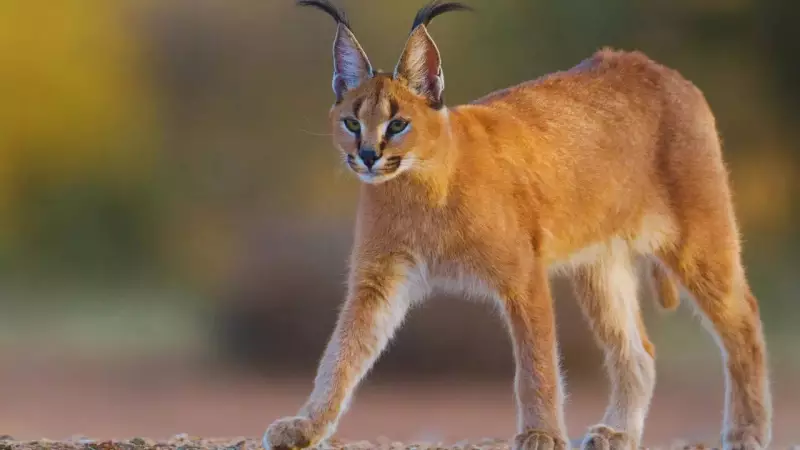
The Desert Shadow: Caracal
Once widespread, the caracal is now extremely rare in India, restricted to arid landscapes in Rajasthan and Gujarat. This solitary, nocturnal wild cat is exceptionally cautious. With very low population numbers spread across vast territories, the chance of an encounter on safari is slim. The forests of Sariska Tiger Reserve and Ranthambore National Park offer a faint hope for the lucky few.

The Rarest of the Rare
The Vanishing Scale-Bearer: Chinese Pangolin
Even rarer than its Indian cousin, the Chinese pangolin is now found in only a very small pocket of northeast India, such as Manipur's Tamenglong district. A fun yet sobering fact: there are eight pangolin species globally—four in Asia and four in Africa. All are victims of rampant trafficking, cementing pangolins' status as the world's most trafficked mammals.
Spotting these elusive animals is a testament to patience, luck, and the enduring wild mysteries of India's incredible ecosystems. Their rarity underscores the critical importance of continued conservation efforts to ensure these masters of stealth continue to thrive, even if unseen.