Malang Gad Hill's Remarkable Transformation with India's Longest Funicular Railway
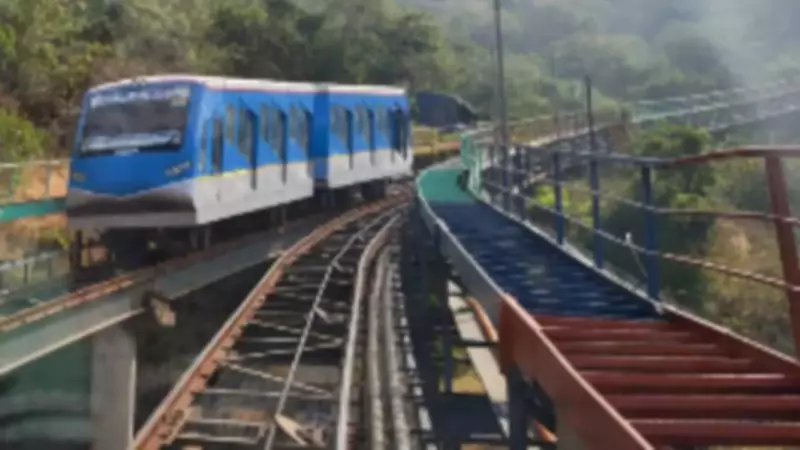
Malang Gad hill, widely revered as Haji Malang, has undergone a dramatic transformation following the inauguration of India's longest funicular railway last month. This innovative infrastructure project has significantly enhanced accessibility to the hill, drawing a surge of devotees and tourists alike. The development is providing a substantial boost to religious tourism and revitalizing the local economy in unprecedented ways.
Visitor Numbers Skyrocket Four- to Five-Fold
The introduction of the funicular railway has led to an extraordinary increase in footfall, with visitor numbers rising four- to five-fold for both pilgrimage and sightseeing purposes. In just the first three weeks of operation, approximately 72,000 passengers have utilized the railway. On average, daily ridership stands at around 3,500 passengers, with peak days witnessing figures surpassing 8,000 visitors.
Economic Revival for Local Residents
The sharp rise in tourism has created a wave of economic opportunities for the 2,500 to 3,000 residents living on Malang Gad hill. Many locals depend on livelihoods tied to the shrine, such as selling flower garlands, operating hotels and guest houses, and managing shops in the vicinity. The increased visitor traffic has directly translated into higher income and expanded business prospects, fostering community prosperity.

Enhanced Capacity and Future Plans
Officials managing the railway have confirmed that due to overwhelming public demand, plans are actively being developed to increase the frequency of trips. The funicular railway boasts an impressive daily capacity of up to 16,000 passengers, ensuring it can accommodate growing visitor numbers in the coming years without compromising service quality.
Religious Significance and Dual Heritage
The shrine, situated at an altitude of 2,590 feet, holds profound religious importance for multiple communities. Muslims revere it as the dargah of Sufi saint Haji Malang Baba, while Hindus regard it as the samadhi of Baba Machindranath. Despite ongoing legal considerations, devotees from both faiths continue to visit in large numbers, highlighting the site's unique spiritual harmony.
Popular Trekking Destination and Adventure Appeal
Beyond its religious allure, Malang Gad is a favored trekking destination, attracting adventure enthusiasts to nearby Balekilla, a fort located at 3,200 feet. Visitors enjoy trekking and sightseeing activities, making the hill a versatile attraction that appeals to both pilgrims and adventure tourists seeking natural beauty and physical challenges.
Journey Time Reduced from Hours to Minutes
The funicular railway has drastically cut travel time, reducing the journey from nearly two-and-a-half hours on foot to a mere seven minutes. Despite this convenience, many tourists and trekkers still opt for the traditional route, climbing 2,600 steps to experience the full trekking adventure and connect with the hill's heritage.
Engineering Marvel and Construction Details
Implemented through the Public Works Department (PWD) and constructed by Supreme Infrastructure India Limited, the funicular railway spans 1,174 meters, securing its status as India's longest. Company Director Pankaj Sharma emphasized the project's scale and technical achievements, underscoring its role in enhancing regional connectivity.
Environmental Compliance and Construction Challenges
Chief Operating Officer Zaheer Sheikh Ahmed, who has been associated with the project for 13 years, noted that construction faced numerous challenges. Work had to strictly adhere to guidelines from the Forest Department, Matheran Eco-Sensitive Zone, Ministry of Environment and Forests, and the Central Empowered Committee, ensuring environmental protection throughout the process.
Manual Labor and Logistical Hurdles
Construction materials were manually transported using local labor, often under difficult weather conditions, requiring immense effort and coordination. The project successfully balanced technical precision with environmental compliance, resulting in a fully operational railway that stands as a testament to sustainable development and community collaboration.