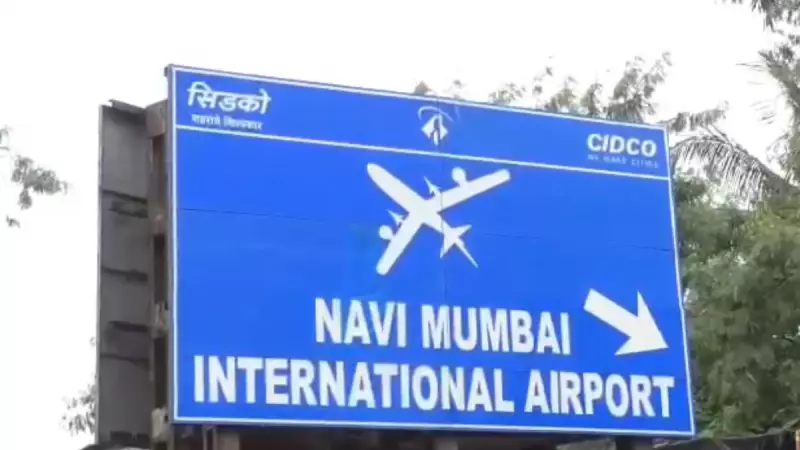
The upcoming Navi Mumbai International Airport (NMIA) is set to become a major aviation hub, promising to decongest the existing Chhatrapati Shivaji Maharaj International Airport. With its strategic location in the Ulwe node of Navi Mumbai, understanding the various transport options to reach this new gateway is crucial for future travelers. This comprehensive guide details all the planned connectivity via road, rail, metro, and even water, ensuring you can plan your journey seamlessly when the airport becomes operational.
Road Connectivity: Highways and Expressways
Road transport will be a primary mode of access to the Navi Mumbai International Airport. The airport's connectivity is being bolstered by several major infrastructure projects designed to ensure smooth vehicular movement from Mumbai, Pune, and other key regions.
The Mumbai Trans Harbour Link (MTHL), also known as the Atal Setu, is a game-changer. This 21.8 km sea bridge connects Sewri in South Mumbai to Chirle in Navi Mumbai. Once you exit the bridge, you can connect to the NH-348 (Sion-Panvel Expressway) and proceed towards the dedicated airport access road. This route is expected to significantly reduce travel time from South Mumbai to under an hour.

From the western suburbs and mainland Mumbai, the Mumbai-Pune Expressway (NH-48) remains a key artery. Travelers can take this expressway, exit at Kharghar or Panvel, and then use the local road network leading to the airport complex. Additionally, the Belapur-Uran railway line road and the Palm Beach Road extension will provide crucial last-mile connectivity from various nodes within Navi Mumbai itself.
Rail and Metro Networks: The Backbone of Public Transport
For efficient and high-capacity public transport, rail connectivity is being developed on a war footing. The aim is to integrate the airport directly with the city's suburban railway and metro systems.
The Central Railway's Harbour Line is being extended to the airport. A new station, Navi Mumbai Airport Station (NMAS), is under construction near the terminal. This extension from the existing Belapur-Uran line will allow commuters from stations like Panvel, Vashi, and even from South Mumbai via the Harbour Line, to alight directly at a station connected to the airport terminal, likely via a skywalk or shuttle.
Furthermore, the Mumbai Metro Line 8 (Gold Line) is planned to connect the airport with the city's expanding metro grid. This line is proposed to run from the airport to the NMIA station and further integrate with other metro lines, providing a seamless interchange for passengers from across the Mumbai Metropolitan Region (MMR).
Water Transport and Future-Forward Options
In a unique initiative, the authorities are also planning a water transport terminal at the airport. This ferry service is envisioned to connect the airport to locations like Gateway of India, Mandwa, and other points along Mumbai's coastline. This option could offer a scenic and congestion-free alternative, especially for passengers heading to South Mumbai or the Alibaug region.
Beyond traditional modes, the master plan includes provisions for dedicated airport shuttle services from key pickup points across Navi Mumbai, Thane, and Mumbai. Ride-hailing apps and taxi services will, of course, have designated areas. The airport is also being designed to be future-ready for potential Urban Air Mobility (UAM) services like air taxis, with designated vertiports in the planning stages.
The development of the Navi Mumbai International Airport is not just about a new runway and terminal; it is about creating a multimodal transit hub. The integration of road, rail, metro, and water transport aims to make the airport accessible, reduce reliance on private vehicles, and set a new benchmark for airport connectivity in India. As the December 2024 operational target for its first phase approaches, finalizing these transport links is pivotal for its success and for offering travelers a hassle-free beginning and end to their journeys.