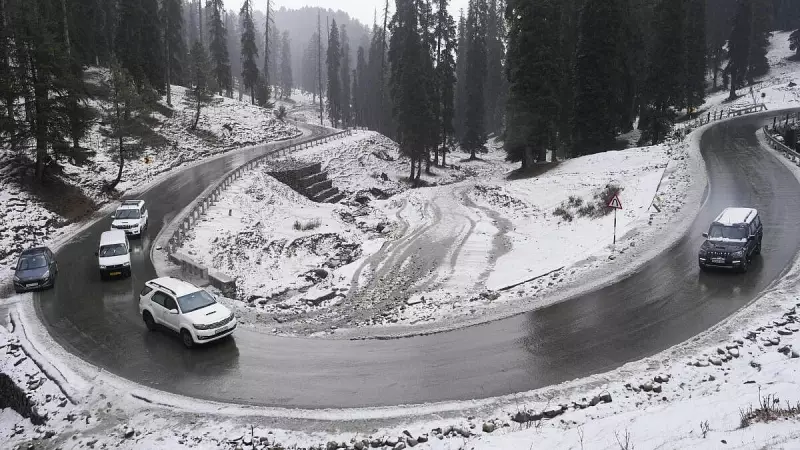
The onset of the harshest winter period in Kashmir, known as Chillai Kalan, has been dramatically announced by heavy snowfall across the valley. This significant weather event, while causing travel disruptions including the cancellation of all flights at Srinagar's airport, has simultaneously injected fresh hope into the region's winter tourism sector.
Flight Groundings and Travel Disruptions
The snowfall, which began on a Sunday and intensified, led to the complete suspension of flight operations at Srinagar International Airport. All 48 scheduled flights for Monday were cancelled due to poor visibility and accumulation of snow on the runway. Officials confirmed that the decision was made for passenger safety, with efforts to clear the runway ongoing. Road connectivity was also severely impacted, with the crucial Srinagar-Jammu National Highway and other major routes closed for traffic, effectively cutting off the valley.
Meteorological department officials noted that the plains of Kashmir, including Srinagar, received between 4 to 6 inches of snow, while higher altitude areas like the famous ski-resort of Gulmarg were blanketed under a much thicker layer. The snowfall is a hallmark of the 40-day Chillai Kalan period, which started on December 21 and is known for its intense cold and frequent snow.
A Welcome Boost for Winter Tourism
Despite the travel chaos, the heavy snowfall has been greeted with enthusiasm by the tourism industry and local businesses. Tourist hotspots like Gulmarg, Pahalgam, and Sonamarg witnessed a significant influx of visitors eager to experience the winter wonderland. Hotels and houseboats reported a surge in bookings, with many operators stating that occupancy rates have climbed sharply compared to the previous, drier winters.
"This is the snowfall we wait for all year," said a hotel owner in Gulmarg. "The past few years had less snow, which hurt our winter business. This blanket of snow revives all our activities—skiing, sledging, and snowboarding. Tourists are finally getting the authentic Kashmiri winter experience." The director of the Jammu and Kashmir Tourism Department echoed this sentiment, expressing optimism that the season would see a robust revival in tourist arrivals, crucial for the local economy.
Local Life and Administrative Response
The administration has been placed on high alert to manage the situation. Power and utility departments have been directed to ensure uninterrupted essential services, though some areas in Srinagar and other districts reported electricity outages. The Srinagar Municipal Corporation deployed its teams to clear snow from roads and vital areas. Residents, while prepared for the Chillai Kalan, stocked up on essentials like food and fuel (kerosene oil) to weather the prolonged cold spell.
This snowfall is not just a weather event but a critical climatic phenomenon for the region. It replenishes glaciers, ensures water supply for the coming summer, and sustains the valley's iconic ecosystems. For the people of Kashmir, Chillai Kalan's snow is both a challenge and a cherished part of their cultural calendar, now also becoming a pivotal economic driver through tourism.
As the valley remains enveloped in white, the immediate focus is on restoring connectivity. However, the underlying narrative is one of renewed economic hope, as the picturesque landscapes promise a prosperous winter tourism season, marking a stark contrast to the flight cancellations and road closures that accompanied the snow's arrival.