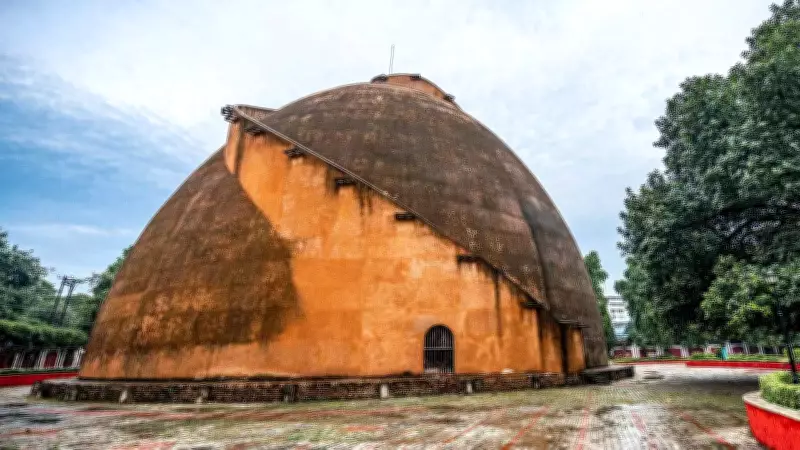
Gol Ghar: Patna's Colonial Granary That Stands as a Silent Storyteller
Patna does not hurry to captivate visitors. Its character unfolds gradually through narrow lanes, bustling markets, gentle river breezes, and unexpected historical fragments nestled between contemporary structures. Among these treasures stands Gol Ghar, an architectural anomaly that feels almost surreal in its setting.
A Monument Born from Tragedy: The 1770 Famine
Gol Ghar was never intended as an aesthetic marvel. Its origins trace back to the catastrophic famine of 1770 that ravaged Bihar and Bengal, claiming millions of lives. In response to this humanitarian disaster, British Governor-General Warren Hastings commissioned the construction of a massive granary to prevent future food shortages. British engineer Captain John Garstin designed the distinctive dome in 1786 with an ambitious goal: to store approximately 140,000 tons of grain for emergency situations.
Interestingly, a critical design flaw meant the granary likely never fulfilled its primary purpose. The inward-opening doors made unloading grain practically impossible, rendering the storage function largely theoretical. Despite this, the structure endured, transforming from a failed utilitarian project into a lasting historical monument.

Architectural Marvel: The Pillarless Dome
The building rises approximately 29 meters high with a diameter spanning 32 to 35 meters. Its stupa-like silhouette evokes a spiritual atmosphere, though its conception was purely functional. Constructed entirely from brick and lime mortar, the dome stands without a single interior pillar or supporting beam—a remarkable feat of colonial engineering that continues to impress architects and historians.
Visitors ascend 145 gently winding steps that circle the dome, passing small windows originally used for grain loading. At the summit, a circular opening ventilates the hollow chamber below while offering panoramic views of Patna—old rooftops, vibrant streets, and the distant Ganges River unfolding beneath.
From Historical Relic to Vibrant Public Space
Today, Gol Ghar serves more as a community gathering place than a static historical artifact. Families stroll through the surrounding gardens while children play around the fountain. The well-maintained lawns provide a serene green oasis amidst urban chaos, creating a peaceful retreat for residents and tourists alike.
The monument comes alive after dark with a light and sound show that narrates its history through colorful projections, music, and voiceovers. Lasting about thirty minutes, the presentation often leaves visitors lingering afterward, savoring the night breeze and the illuminated structure.
Nearby street food vendors add another dimension to the experience, offering local delicacies like dahi bhalla and dahi vada that complement the cultural immersion.
Patna's Historical Tapestry
Gol Ghar rarely appears alone in travel itineraries. A short distance away, the Patna Museum houses artifacts that trace Bihar's layered past—sculptures, coins, fossils, and relics that provide broader historical context. Together, these sites reveal how colonial history, architectural innovation, and contemporary city life intertwine in India's ancient capital.
More than just a monument, Gol Ghar functions as a quiet storyteller, revealing fragments of famine response, colonial ambition, and community resilience through its silent stone presence.