A massive surge of tourists descending upon Goa's popular Calangute-Candolim coastal belt for the final weekend of the year has brought traffic to a near-standstill, exacerbating existing congestion caused by prolonged infrastructure work.
Gridlock Grips Key Tourist Corridors
The overwhelming rush of visitors created severe bottlenecks on Saturday, choking practically all major access roads. The congestion stretched from the O'Coqueiro junction in Porvorim, all along the Chogm Road leading to Calangute, and extended further up to Sinquerim. Additionally, the crucial connecting roads from Pilerne to Porvorim and the Nerul-Candolim route were also jammed with vehicles.
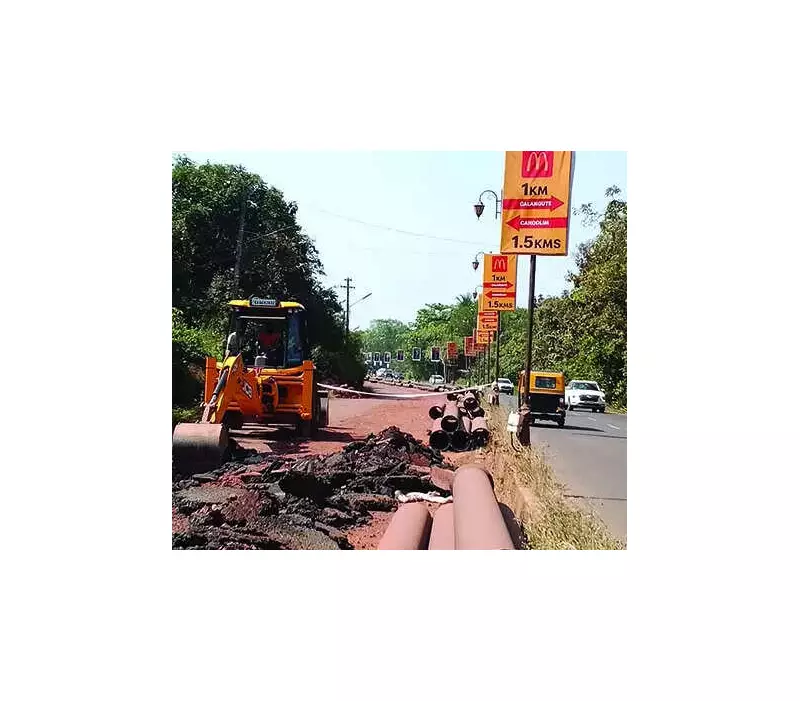
The situation was critically worsened by ongoing civic work. Digging on the Poriat ground road for the construction of two major sewerage chambers has left only a single lane open, severely disrupting the smooth flow of traffic. Local residents expressed deep frustration over the timing and duration of this project.

Local Outcry Over 12-Year Sewerage Project
Anger is brewing among the community and business stakeholders. Workers from the Calangute Congress block voiced strong criticism on Saturday, stating that the sewerage work has been dragging on for an astonishing 12 years. They alleged that the decision to dig up the road in the middle of the peak tourist season appears deliberate, aimed at crippling local business.
A local explained a key contributor to the chaos: "Tourists relying on Google Maps for navigation are directed to this road as a shortcut to the beach. When they arrive from the Candolim side and find it closed, they are forced to divert, causing heavy congestion on the road from the market side."
Perfect Storm of Congestion Ahead of New Year
The traffic nightmare is a result of multiple concurrent factors. Beyond the Poriat road work, lanes are also closed due to digging on the Chogm Road from Saligao to Calangute. The ongoing construction of an elevated corridor in Porvorim adds another layer of complexity.
Tourism stakeholders observed that while roads were relatively clear on Christmas Day, vehicle numbers skyrocketed from Saturday. They predict the influx will intensify in the days leading up to New Year's Eve. John Lobo, General Secretary of the Shack Owners Welfare Society, noted, "The pattern has been consistent in recent years. The crowd is smaller during Christmas but swells significantly by the New Year."
Compounding the traffic are large groups of out-of-state taxis from neighbouring districts of Maharashtra and Karnataka, ferrying visitors on day trips. Manuel Cardozo, President of the Traditional Shack Owners Association, identified these as "picnic tourists" who typically arrive in the morning and leave by evening, often bringing their own food and coming primarily for drinks.
Despite the overwhelming number of vehicles, traffic police were deployed at most major junctions, managing to keep vehicles moving, however slowly. The coming days will test the resilience of the region's infrastructure as the New Year's rush reaches its peak.