The Enduring Allure of Ireland's Blarney Stone
Each year, a remarkable ritual unfolds at a medieval castle in Southern Ireland, drawing hundreds of thousands of intrepid travelers. They ascend narrow stone steps, lean backwards over a breathtaking drop, and plant a kiss on a block of limestone embedded in the wall. This unusual practice, centered on the legendary Blarney Stone, has become one of Ireland's most iconic and memorable travel experiences, captivating visitors from across the globe with its promise of eloquence and charm.
A Medieval Fortress with a Magical Secret
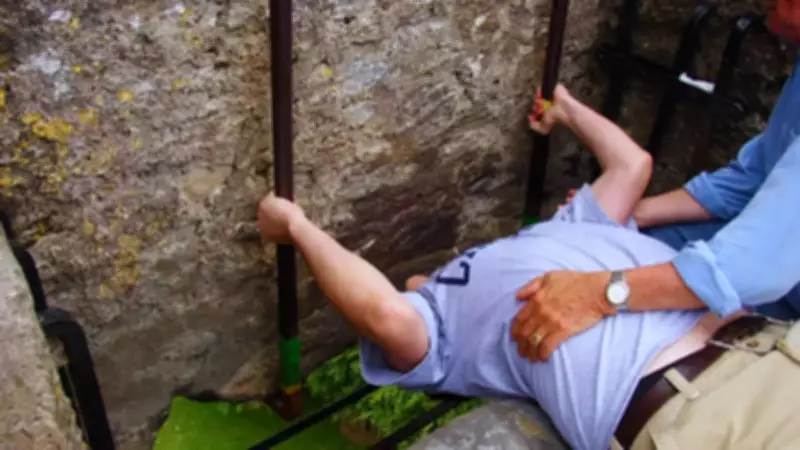
The history of the Blarney Stone is deeply intertwined with Blarney Castle, a structure built in 1446 by Cormac MacCarthy, the King of Munster and leader of the MacCarthy clan. Originally a significant stronghold in medieval Ireland, the castle's fame has shifted over centuries from military might to the mystical powers attributed to the stone within its walls. The Blarney Stone is situated near the top of the castle tower, requiring visitors to navigate a steep spiral staircase. Upon reaching the summit, participants must lie on their backs and lean over the edge while gripping iron rails, assisted by an attendant—a thrilling and slightly nerve-wracking part of the adventure.
The Legend of the "Gift of the Gab"
At the heart of this tradition lies the "gift of the gab," an Irish phrase describing a natural talent for persuasive, witty, and charming speech. Kissing the Blarney Stone is believed to bestow this ability, a fanciful legend that has evolved into one of Ireland's most celebrated myths. The origins of the stone's magical properties are shrouded in mystery, with several unverified tales adding to its allure. One popular story suggests it was a gift from Robert the Bruce, King of Scotland, to the MacCarthy clan for their aid in the 1314 Battle of Bannockburn. Others claim it was part of the Stone of Scone, used in Scottish coronations, or that it was blessed by a witch saved from drowning by the clan. As with many Irish legends, the truth likely blends fact and folklore.

The Etymology of "Blarney" and Historical Significance
The term "blarney" itself has a fascinating background, now synonymous with clever flattery delivered charmingly. It is said to have originated in the 16th century during conflicts between English monarchs and Irish lords. Historical accounts recount Queen Elizabeth I repeatedly demanding the MacCarthy clan surrender their castle, only to receive letters filled with excuses and explanations. Frustrated, the queen reportedly dismissed these as "all blarney," a phrase that may have contributed to the stone's legendary reputation for bestowing persuasive speech.
Global Appeal and Notable Visitors
Over the years, the Blarney Stone has attracted a diverse array of visitors, including prominent political leaders, writers, and celebrities. One of the most famous historical figures to partake in the ritual was Winston Churchill, who visited in 1912 long before his tenure as British Prime Minister during World War II. Known for his compelling oratory, Churchill's experience adds an intriguing layer to the stone's lore, hinting at its perceived influence on eloquence.
Modern-Day Tourism and Accessibility
Today, the Blarney Stone stands as one of Ireland's premier tourist attractions, with over 400,000 visitors annually embarking on the climb to participate in the kissing ritual. Located just outside Cork City and approximately a three-hour drive from Dublin, it offers an accessible day trip for those exploring Ireland's rich cultural heritage. The castle's grounds and history provide a comprehensive experience beyond the stone itself, making it a must-visit destination for travelers seeking both adventure and tradition.