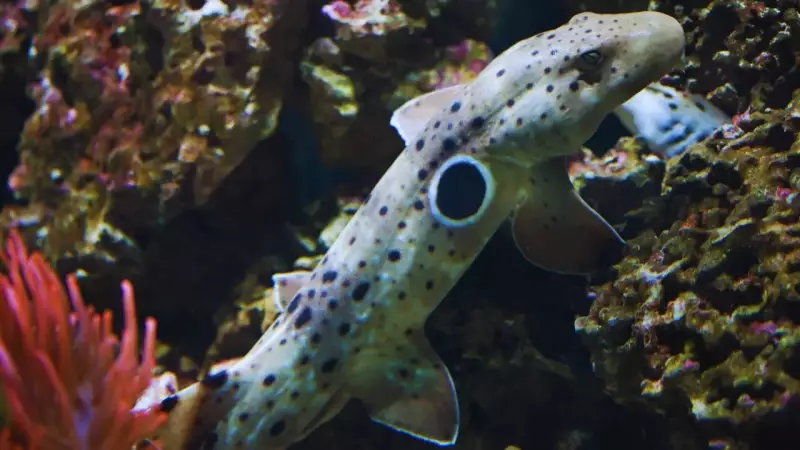
Australia's Walking Sharks Captivate Divers and Scientists
Along the shallow reefs and tidal flats of Australia's northeastern coast lives one of the ocean's most unusual residents. The epaulette shark, small and spotted, fascinates divers, marine biologists, and wildlife travelers exploring the Great Barrier Reef and nearby reef systems. This remarkable shark famously uses its fins to "walk" across the seafloor.
Recent Study Reveals Shark's Unique Biology
A very recent study published in the reputable peer-reviewed journal 'Biology Open' provides new insights into this already fascinating species. The research highlights why encountering epaulette sharks remains a lifetime highlight for anyone exploring Australian waters.
Epaulette sharks frequently appear in Queensland's shallow coral cays, reef flats, and lagoons. Unlike most sharks that require continuous movement to breathe, these creatures thrive in environments where water levels and oxygenation change dramatically.

Walking Behavior Creates Memorable Wildlife Encounters
At low tide, when pools shrink and oxygen drops, epaulette sharks employ their strong, flexible fins to move across reef surfaces. They sometimes venture briefly out of water to reach new pools. For snorkelers and divers, witnessing this behavior creates one of Australia's most memorable wildlife experiences.
The recent study focused on Queensland's epaulette sharks and examined how they manage energy requirements throughout their lives. While highlighting reproductive traits, the research carries broader implications for conservation and climate adaptation.
Energy Efficiency Supports Long-Term Survival
Findings clearly indicate epaulette sharks possess unique biological systems enabling normal reproduction without increased energy expenditure. This efficiency likely explains their long-term survival on coral reefs throughout evolutionary history.
From a traveler's perspective, this resilience makes epaulette sharks powerful symbols of Australian marine ecosystems. These sharks prefer shallow reefs often visited during snorkeling around islands and reef systems.
Accessible Wildlife Viewing Opportunities
Epaulette sharks typically inhabit areas of the Great Barrier Reef, the Capricorn and Bunker Group, and reef systems along Queensland's coast. Their shallow water habitat means divers don't need extensive skills to spot them. Observers might see an epaulette shark resting on the ocean bottom or slowly crossing reef rubble.
These sharks pose no threat to humans and generally behave docilely around divers. Their non-aggressive nature enhances the viewing experience.
Broader Implications for Coral Reef Conservation
The study's findings carry wider significance for travelers concerned about coral reef futures. Sharks serve as crucial ecosystem components, regulating marine life populations. Shark loss would create cascading effects on reef fish and biodiversity.
Epaulette sharks' adaptability offers a silver lining for reef systems struggling with global warming impacts. This matters significantly since the Great Barrier Reef represents both a natural habitat and major tourism destination. Shark presence directly influences reef quality.
Transforming Snorkeling into Educational Experience
For tourists considering Queensland trips, epaulette sharks enhance the overall experience. They transform basic snorkeling into educational opportunities about evolution, adaptation, and living organisms' roles.
These "walking sharks" remind us that Australia's reefs host some of the world's most extraordinary fauna. For travelers seeking experiences combining natural wonder, science, and conservation, few encounters match the quiet remarkable sight of an epaulette shark gliding or walking across Australian coral reefs.