Australia stands as a living museum of evolution, home to some of the planet's most extraordinary creatures found nowhere else. Isolated from other continents for millions of years, this vast island continent has fostered the development of a unique menagerie of wildlife. From iconic hopping marsupials to elusive nocturnal gliders, Australia's endemic animals are a testament to a distinctive evolutionary path shaped by adaptation and persistence. Preserving these species and their habitats is crucial for maintaining this irreplaceable natural heritage for future generations.
Iconic Marsupials: Australia's Most Famous Residents
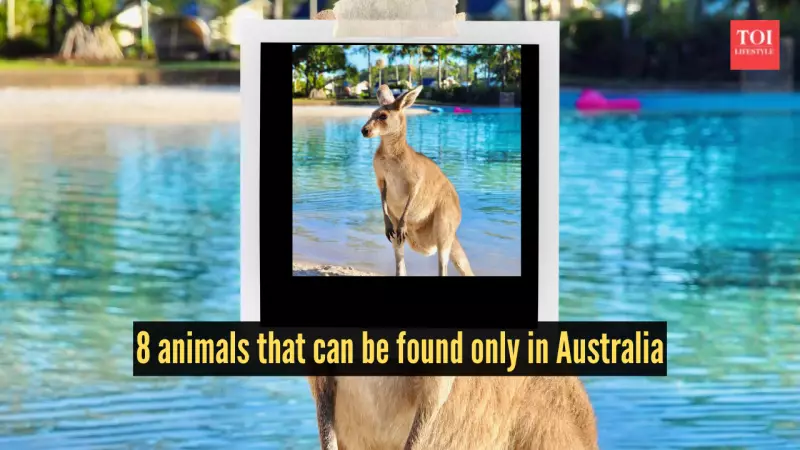
Kangaroos are the undisputed ambassadors of Australian wildlife. With their powerful hind legs and muscular tails, they are perfectly adapted for life across the continent's diverse landscapes. As marsupials, females carry and nurture their young, called joeys, in a distinctive pouch. Species like the majestic red kangaroo and the eastern grey kangaroo are not just national symbols but are endemic to Australia.
Often mistakenly called koala bears, koalas are arboreal marsupials confined to the eucalyptus forests of eastern and southeastern Australia. Their survival hinges on a diet of toxic eucalyptus leaves, which are low in nutrients. To conserve energy for digesting this tough foliage, koalas sleep for up to 20 hours a day.

The stout and powerful wombat is a burrowing expert found in forests and grasslands. A unique adaptation is its backward-facing pouch, which prevents soil from entering while digging. Wombats are also famous for their cube-shaped droppings, which they use to mark territory.
Unique Survivors and Conservation Icons
In the wild, the fierce Tasmanian devil is now found only on the island of Tasmania. Roughly the size of a small dog, it earned the title of the world's largest surviving carnivorous marsupial after the extinction of the thylacine (Tasmanian tiger) in 1936.
Hailing from Rottnest Island and parts of Western Australia, the quokka has earned global fame as the "world's happiest animal." This small, cat-sized macropod is herbivorous and famously friendly, though human interaction is carefully managed for its protection, making it a star of Australian wildlife tourism.
The numbat is a striking, termite-eating marsupial adorned with bold white stripes. Once widespread across southern Australia, its range is now largely restricted to parts of Western Australia. Unlike most marsupials, numbats are active during the day, using their long, sticky tongues to extract termites from logs.
Specialised Adaptations to Australian Habitats
The greater glider is a nocturnal marvel of the eastern Australian forests. It uses a membrane called a patagium stretched between its limbs to glide silently between trees at night. Its large eyes are adapted for night vision, and it feeds almost exclusively on eucalyptus leaves.
Finally, the desert-dwelling bilby is a conservation icon with its rabbit-like ears and silky fur. It survives harsh outback conditions by constructing extensive burrow networks for shelter from heat and predators. Once widespread, bilbies are now primarily found in protected reserves in central and western Australia, where concerted efforts are underway to help their populations recover.
Each of these eight animals—the kangaroo, koala, wombat, Tasmanian devil, quokka, numbat, greater glider, and bilby—represents a unique thread in the ecological tapestry of Australia. Their existence is a powerful reminder of the wonders that can evolve in isolation and the global responsibility to protect them.