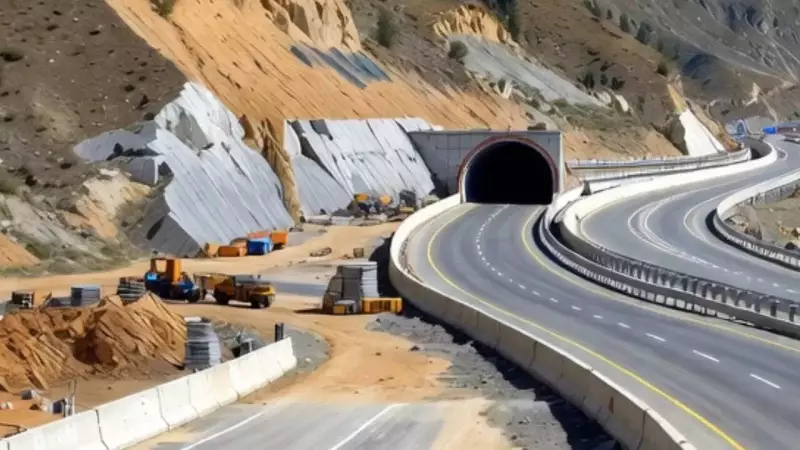
The Indian government has finalized an ambitious plan to construct a 7-kilometer twin-tube tunnel beneath the Himalayan mountains, a project set to dramatically reshape the pilgrimage journey to the sacred shrine of Kedarnath in Uttarakhand. The tunnel will link Chaumasi in the Kalimath Valley near Guptkashi to Sonprayag, aiming to provide a faster, safer, and more reliable route for the millions of devotees who undertake the challenging trek annually.
A Strategic Corridor for Safety and Efficiency
This infrastructure project is designed with dual critical functions. Primarily, it will act as a dedicated traffic corridor, significantly easing the severe congestion that currently plagues the existing route. All vehicles headed for Sonprayag and the further pilgrimage point of Gauri Kund are currently forced to use the single National Highway-107, leading to major bottlenecks, especially during peak seasons. The new tunnel is expected to cut travel time between Chaumasi and Sonprayag substantially.
Beyond mere convenience, the tunnel's second, vital role will be as a lifesaving emergency escape route. The fragile Himalayan terrain is prone to landslides, extreme weather events, and other disasters that can strand pilgrims. This twin-tube design will provide a protected pathway, greatly enhancing overall pilgrim safety during such emergencies.

Integrating with Future Transport Systems
The tunnel's endpoint at Sonprayag is strategically chosen. Sonprayag is designated as the base station for the proposed 12.9-kilometer Sonprayag–Kedarnath ropeway project. Once both projects are complete, they will create a seamless, integrated road-and-ropeway transport system. Pilgrims will be able to travel efficiently by road via the tunnel to Sonprayag and then continue their ascent to Kedarnath via the aerial ropeway, offering a transformative alternative to the traditional trek.
To support the increased traffic flow this new system will generate, the Uttarakhand government will widen the existing one-lane road in the Kalimath Valley to two lanes. This upgrade is essential to handle the projected surge in vehicles.
Planning for Future Demand and Himalayan Challenges
Authorities are proactively planning for future growth. Current daily traffic up to Sonprayag is estimated at 2,500 passenger car units (PCUs). Forecasts suggest this number could nearly double, reaching close to 5,000 PCUs by the year 2040. The new tunnel is considered critical infrastructure to manage this anticipated demand and prevent gridlock.
The government has already initiated detailed surveys and comprehensive feasibility studies for the project. These include rigorous geological assessments to ensure the tunnel's structure can withstand the unique and formidable challenges presented by the Himalayan landscape and its harsh seasonal weather conditions. The goal is to build a resilient and long-lasting piece of infrastructure.
In summary, the 7-km twin-tube tunnel represents a major leap forward in improving the Kedarnath pilgrimage experience. By reducing travel time, alleviating congestion on NH-107, integrating with a future ropeway, and providing a crucial safety buffer, it promises to make the journey to one of India's holiest shrines both more accessible and more secure for generations of devotees to come.