5 Global Destinations Where Animals Gather in Staggering Numbers
Nature puts on some of its most breathtaking shows when animals come together in massive numbers. Across continents and oceans, these gatherings create unforgettable spectacles driven by migration, breeding, or survival instincts. These events reveal how wildlife interacts with climate, geography, and ancient natural rhythms. Beyond their visual appeal, such gatherings play vital roles in maintaining healthy ecosystems.
Bracken Cave Preserve in Texas, USA
Bracken Cave offers a stunning display of mass animal aggregation. During peak summer months, this site hosts an astonishing 15 to 20 million Mexican free-tailed bats. That makes it the largest single gathering of mammals anywhere on Earth. Each evening, these bats pour out of their roost in a huge spiraling formation. The exodus can last for hours and sometimes appears on weather radar systems. Unlike seasonal migrations, Bracken Cave represents a fixed location where enormous numbers of mammals congregate consistently.
Serengeti–Maasai Mara in Tanzania and Kenya
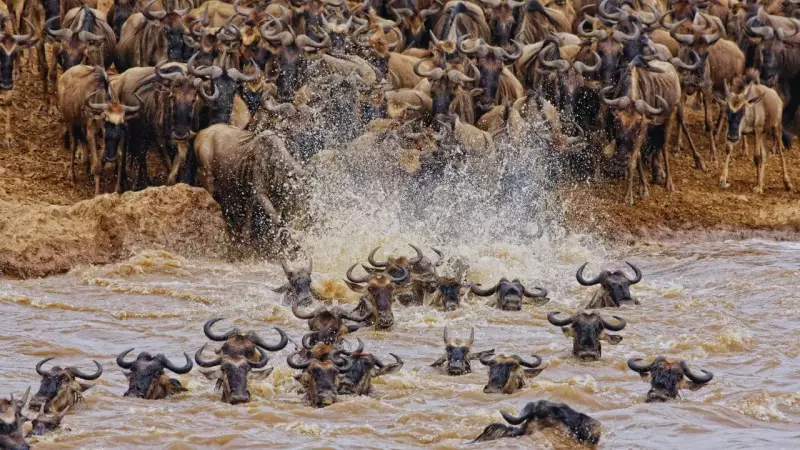
The Great Migration stands as the biggest animal migration on land and one of the planet's most dramatic wildlife events. Every year, over 1.5 million wildebeest join hundreds of thousands of zebras and gazelles on a massive circular journey. They travel between Tanzania's Serengeti plains and Kenya's Maasai Mara savannahs. Rainfall patterns dictate their movement as they seek fresh grazing grounds. River crossings, particularly at the crocodile-infested Mara River, present deadly challenges. Predators await these animals at every turn, making survival a constant struggle.

Christmas Island in Australia
Christmas Island witnesses an extraordinary migration of 40 to 50 million red crabs. These creatures move from the island's forests to the ocean for spawning. Their journey turns the landscape into a shifting red carpet. The migration becomes so intense that authorities must close roads and build special crab bridges. Human activities temporarily adjust to accommodate this wildlife phenomenon. Nearly the entire adult crab population moves simultaneously, creating a remarkable sight. Ecologically, red crabs serve as keystone species. They process leaf litter and shape vegetation patterns, making their migration both spectacular and environmentally significant.
Kasanka National Park in Zambia
Kasanka National Park hosts what might be the largest mammal migration by sheer numbers. Between October and December, an estimated 8 to 10 million straw-coloured fruit bats descend on a small patch of evergreen forest. They feast on seasonal fruits during this period. At dawn and dusk, millions of bats take flight, darkening the sky with an almost supernatural display. These bats perform crucial ecological functions. They disperse seeds and promote forest regeneration across central Africa. Kasanka's gathering remains one of the world's most important yet least crowded wildlife events.
Sardine Run in South Africa
South Africa's sardine run earns the title "The Greatest Shoal on Earth." Trillions of sardines migrate along the coastline, triggering an enormous feeding frenzy. This movement attracts dolphins, sharks, whales, seals, and thousands of seabirds. The event creates a dramatic showcase of marine food chains in action. Predators converge to take advantage of the abundant prey, making it a prime example of nature's raw power and complexity.