When we talk about the driest places on Earth, we refer to locations that receive minuscule amounts of precipitation—often less than 15 mm of rain or snow per year. Some of these hyper-arid regions have gone decades, or even centuries, without a single drop of recorded rainfall. These extreme climates offer a fascinating look at how life adapts to severe stress and present dramatic, otherworldly landscapes that lure intrepid travellers seeking unique adventures. Here are five of the planet's driest places that are surprisingly accessible to visitors.
Atacama Desert: Chile's Mars on Earth
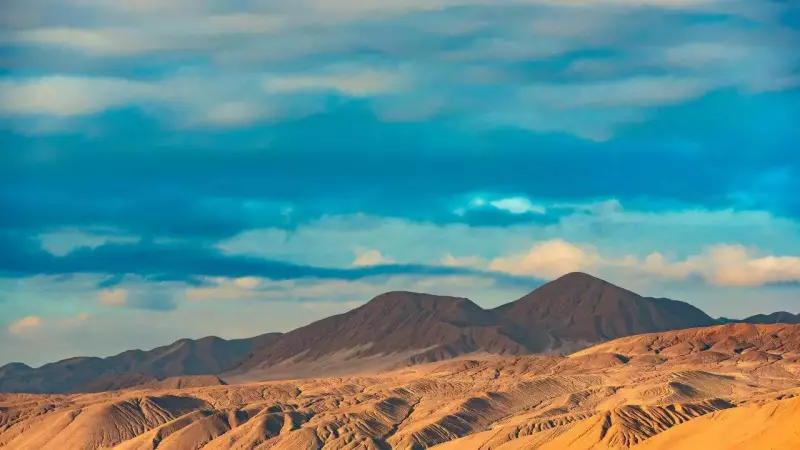
Stretching along the Pacific coast of northern Chile, the Atacama Desert is the very definition of hyper-aridity. Some weather stations in its core have never registered any rainfall, and its driest central sections can go decades without measurable precipitation, averaging less than 1 mm per year. This profound dryness sculpts landscapes that feel supernatural. Visitors can explore the moon-like Valle de la Luna, witness the erupting geysers of El Tatio, and see the shimmering Salar de Atacama salt flats, home to flocks of flamingos. The nearly perpetual cloudless skies also make it one of the world's best spots for stargazing. Notably, NASA has used the Atacama as a testing ground for Mars missions due to its strikingly similar soil conditions.
Arica: The World's Driest City
Where the Atacama meets the ocean lies Arica, a city that holds the record as the driest inhabited place on the planet. Its annual rainfall frequently averages below 1 mm, and it often sees years with no rain at all. Despite this, it is a vibrant home to over 200,000 residents. The city survives not on rain, but on ingenious adaptations like harvesting moisture from the dense coastal sea mist, known locally as camanchaca, using special fog-catching nets. Water also comes from distant rivers and aquifers fed by the Andes mountains.

Namib Desert: Africa's Ancient Arid Wonder
Believed to be one of the oldest deserts in the world at 55-80 million years, Namibia's Namib Desert is a masterpiece of endurance. Its driest core receives a mere 2-5 mm of rain annually. The desert's lifeline is the cold Benguela Current from the Atlantic Ocean, which creates a life-sustaining morning fog that rolls inland. This fog supports a unique ecosystem, including water-harvesting beetles, desert-adapted oryx and elephants, and rare fields of lichen. For travellers, the highlights are the spectacular apricot dunes of Sossusvlei, the haunting dead camel thorn trees, and the shipwreck-strewn Skeleton Coast, offering unparalleled opportunities for photography.
Wadi Halfa and the Nubian Desert: Sudan's Scorching Expanse
In northern Sudan, near the border with Egypt, the region around Wadi Halfa in the Nubian Desert is brutally dry. It receives as little as 2-3 mm of rain per year, with some years recording none at all. Summer temperatures regularly soar above 45 degrees Celsius, and evaporation rates are so high that any rare rainfall vanishes almost instantly. The landscape is a stark expanse of rocky plains, ancient riverbeds, and sun-baked hills. This remote area offers adventurous travellers a glimpse into ancient Nubian culture and access to archaeological sites along the Nile, far from the usual tourist trails.
Lut Desert (Dasht-e Lut): Iran's Land of Extreme Heat
Iran's Lut Desert is notorious for two records: extreme aridity and some of the highest ground temperatures ever recorded. NASA satellite data has repeatedly measured its surface temperatures exceeding a staggering 70 degrees Celsius. Its landscapes are as extreme as its climate, featuring the magnificent Kaluts—vast corridors of wind-sculpted rock formations—immense salt flats, and dunes reaching up to 300 metres in height. The silence here is profound and unsettling. Despite its harshness, the Lut Desert is increasingly drawing adventure travellers, photographers, and geology enthusiasts eager to experience its raw, untouched beauty.

These five destinations prove that Earth's most inhospitable environments can also be its most captivating. They challenge our understanding of life and offer vistas that are truly out of this world, making them ultimate goals for the serious adventurer.