TrendingMother's Day 2026, Mother's Day Gift Ideas, Highest Snake Populations, Anand Mahindra, Mark Twain Quote, Fruit Trees, Hantavirus, Baby Names, Cooperhead Snake, Jabalpur Boat Accident. These are just a few topics capturing attention, but today we delve into the serene world of Europe's UNESCO spa towns.
The Legacy of Europe's Great Spa Towns
Spa towns in Europe were drawing kings, aristocrats, artists, and tourists well before wellness tourism became a global phenomenon. Built around natural thermal and mineral-rich springs believed to cure various ailments, these spas evolved into luxurious destinations with well-developed bathing facilities, promenades, gardens, gambling rooms, and expensive hotels. In other words, these were resorts where visitors came not only for healing but also to relax and participate in cultural events.
According to UNESCO, in 2021, some of these resorts were recognized as "The Great Spa Towns of Europe" due to their influence on medicine, architecture, and the culture of well-being on the continent. Despite their age, these spas remain some of the most beautiful places in Europe to visit and unwind. Below are ten exemplary UNESCO-recognized spa towns.

1. Bath, United Kingdom
Bath is considered one of Europe's most legendary spa cities, perhaps the most renowned thermal spa city apart from ancient Rome. The city developed around natural hot springs that have been utilized for over two thousand years by both the Romans and the Georgian elite. Today, tourists explore the incredibly well-preserved Roman Baths, where mineral-rich steamy water continues to flow beneath the city. Beyond wellness, Bath is known for its honey-colored Georgian architecture, crescents, and connections to author Jane Austen.
2. Karlovy Vary, Czech Republic
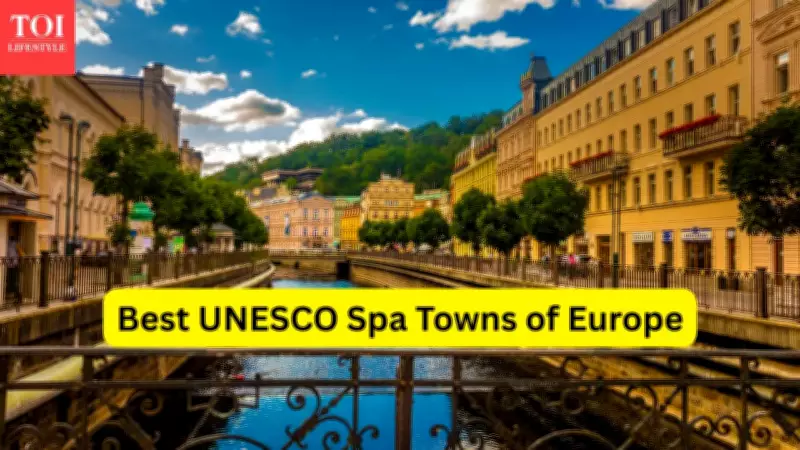
One of Europe's most spectacular spa towns, Karlovy Vary has attracted wellness tourists since the fourteenth century. Nestled among picturesque hillside forests, it is noted for its thermal mineral springs, stunning colonnades, brightly painted buildings, and Belle Époque architecture. Traditionally, European royalty, composers, and intellectuals flocked here for the curative qualities of its waters. A notable feature is drinking mineral water from special porcelain spa cups while walking between the springs.
3. Baden-Baden, Germany
Located near the edge of the Black Forest, Baden-Baden emerged as the epitome of luxury wellness during the 19th century. It became a luxurious getaway for Europe's elite, including emperors, aristocrats, artists, and writers who relaxed in the hot springs. Today, the renowned bathhouses of Friedrichsbad and Caracalla Spa attract visitors seeking hydrotherapy, saunas, thermal baths, and wellness treatments based on the Roman-Irish bathing tradition.
4. Vichy, France
Thanks to its mineral-rich waters, Vichy became an internationally renowned destination for wellness and rich history. During the 19th century, it transformed into a major French spa town, offering elegant boulevards, luxury hotels, bathhouses, and landscaped parks to attract wealthy clients seeking health treatments. For centuries, the hot spring water has been used for digestive and curative purposes.
5. Spa, Belgium
The Belgian town of Spa became so influential in wellness that its name became synonymous with wellness retreats worldwide. Located in the Ardennes Forest, Spa gained fame for its mineral springs, which drew noblemen and wealthy travelers seeking health benefits and relaxation.
6. Mariánské Lázně, Czech Republic
Also called Marienbad, Mariánské Lázně is regarded as one of the most luxurious and elegant spa resorts in Europe. Nestled among hills and forests, the town features beautiful parks, colonnades decorated with sculptures and fountains, and many historical hotels. Its popularity grew in the 19th century when composers and aristocrats came to treat themselves with mineral waters.
7. Bad Ems, Germany
Bad Ems, located next to the River Lahn, served as an internationally renowned resort for health and well-being in Europe during the 19th century. It was famous for its mineral water sources used for respiratory treatments and its numerous bathhouses. Today, it is less crowded than some popular spa towns, offering a quieter experience.

8. Františkovy Lázně, Czech Republic
Františkovy Lázně is a small town characterized by beautiful parks and architecture. Its mineral spas contain significant amounts of carbon dioxide and iron. This resort town remains relatively quiet, making it perfect for prolonged spa stays. It specializes in classical European spa treatments and mud therapy.
9. Montecatini Terme, Italy
Situated in the heart of Tuscany, Montecatini Terme combines Italian luxury with time-tested traditions of therapeutic bathing and spa treatments. It gained international recognition during the Belle Époque period due to its grand spas and beautiful landscape. Today, visitors enjoy hydrotherapy, spa treatments, and wellness holidays paired with Italian food, wine, and rural scenery.
10. Bad Kissingen, Germany
Bad Kissingen earned a reputation as one of Bavaria's leading spa resorts due to its mineral waters and magnificent spa architecture. It became popular among aristocrats and politicians in the 19th century as a restorative spa destination. Nowadays, tourists use its hydrotherapy facilities, mineral baths, spa parks, and riversides.
These UNESCO spa towns offer a unique blend of history, architecture, and wellness, making them ideal destinations for relaxation and healing.