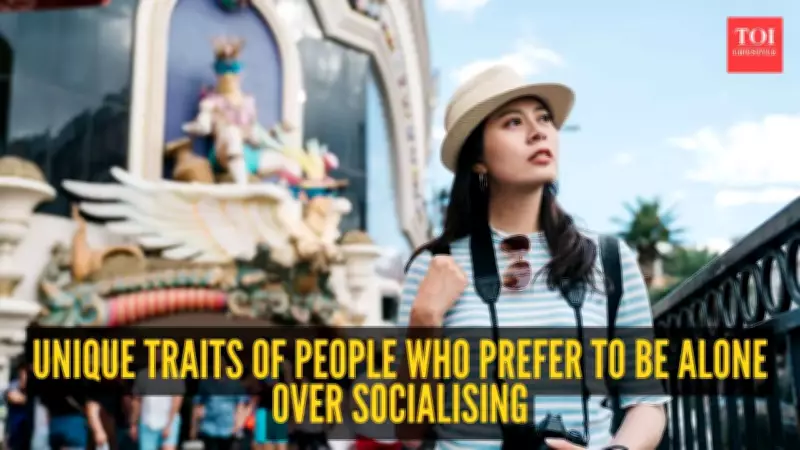
For a long time, if you were the person who preferred a book and a quiet corner to a loud party, people assumed something was 'wrong.' You were labeled antisocial, shy, or just plain 'weird.' But here is the reality: choosing solitude is not about hating people; it is about how you process the world. Some of the most insightful, creative, and grounded people are not the loudest ones in the room. Instead, they are the ones quietly observing from the edges. They do not just sit in silence; they live in it. Here are five personality traits that define those who thrive in their own company.
Feeling Life in 'High Definition'
People who enjoy solitude often have a much higher emotional 'resolution' than the average person. They do not just experience a moment; they dissect it. When someone says something hurtful or a sunset looks particularly beautiful, they feel the weight of it deeply. This is not about being 'sensitive' in a fragile way; it is about high-level emotional intelligence. They process the 'why' behind their feelings. Their time alone acts like an internal laboratory where they filter through the noise of the day to find out what actually matters.
They Are Highly Creative and Deep Thinkers
If you are comfortable being alone, your brain probably feels like a 24/7 movie theater. People who like being alone have rich inner worlds. They do not just 'daydream'—they rehearse, plan, and build entire scenarios in their heads. This is why so many writers and artists are naturally introverted. Their solitude allows them to think about ideas and work on them without distraction.

Skipping the Small Talk
If there is one thing a solitary person usually detests, it is small talk. It feels like a waste of 'social battery.' They would much rather have one intense, two-hour conversation about your deepest fears or your biggest dreams than spend ten minutes talking about the rain. They are not being rude or elitist; they just value authenticity. They are the friends who will skip the pleasantries and ask, 'So, how are you actually doing?' Because they invest their energy selectively, the people they do let in usually feel seen in a way that 'social butterflies' rarely manage.
They Are Highly Self-Aware
Constant social interaction forces you to perform for others. Solitude, however, forces you to look in the mirror. People who thrive alone tend to have a terrifyingly high level of self-awareness. They know exactly what triggers their stress, why they reacted a certain way in a meeting, and what their 'emotional blind spots' are. Instead of running from their mistakes, they sit with them. They ask themselves the hard questions. This makes them incredibly resilient and thoughtful decision-makers because they are not guessing who they are—they have done the work to find out.
The 'Quiet Rebellion' of Being Yourself
There is a massive pressure in our culture to 'fit in' and be loud. Choosing to stand slightly outside the crowd is actually a form of quiet strength. People who enjoy solitude are generally comfortable being 'different' because they get their validation from themselves, not group approval. They do not need to change their personality like a chameleon just to be liked. This independence allows them to stay true to their values even when it is inconvenient.
The bottom line is that solitude is not about isolation; it is about restoration. It is the difference between being 'lonely' and being 'alone.' One is a void; the other is a home. If you are someone who needs that quiet time to recharge, have you ever found it difficult to explain that need to the 'extroverts' in your life without sounding like you are pushing them away?