In today's digital age, our most intimate emotions have become content optimized for social media feeds. Between trending hashtags like #CoupleGoals and #HotGirlSummer, we're constantly reframing our feelings for public consumption, leaving little room for simply being.
The Performance of Singlehood
As author Vaishnawi Sinha discovered after her seven-year relationship ended in early 2024, being single is no longer just a relationship status—it's a brand identity. The internet demands that solitude comes with an aesthetic: you're either in your "healing era" sipping matcha and journaling, embracing "hot girl summer" liberation, or channeling Taylor Swift's "Reputation" phase.
The pressure to romanticize singlehood became overwhelming. "I was supposed to take solo trips, enter my 'healing phase', buy flowers for myself, and 'be a baddie'," Sinha recalls. The expectation wasn't just about self-empowerment—it came with a predefined moodboard and narrative.

Love as Content Strategy
Meanwhile, being in a relationship has transformed into a marketing campaign with clear metrics and stages. Couples progress through the "soft launch" teaser phase, the official "hard launch" reveal, and eventually the wedding as the ultimate success story.
Influencers capitalizing on their relationships notice how couple content generates more engagement—likes, comments, and saves. The algorithm rewards those who share their affection publicly, making love visible proof of stability, desirability, and normalcy in the online world.
The Algorithm's Emotional Dictatorship
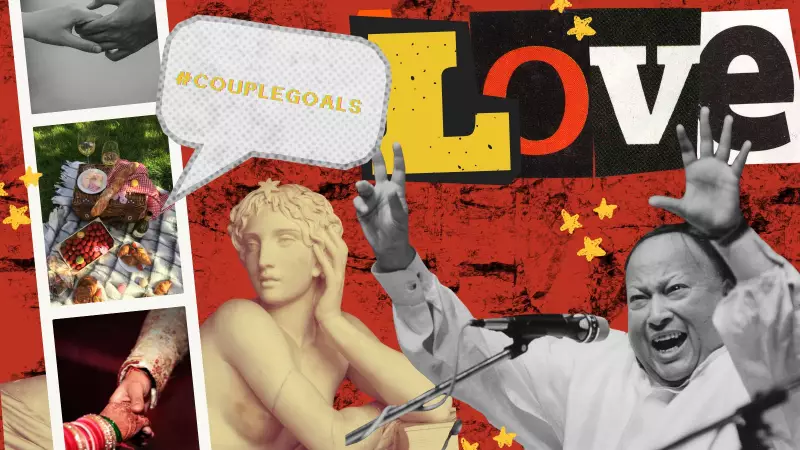
Social media platforms have become emotional surveillance systems. After her breakup, Sinha noticed how every scroll felt like being monitored, with her single status standing out "like bad lighting." Friends shared perfectly color-graded reels of couples with gingham picnic blankets, followed by wistful "me and who" captions.
Messy feelings that don't resolve into empowerment rarely go viral. Algorithms prefer emotional clarity that fits neatly into 15-second videos, leaving little space for the complicated, unresolved emotions that characterize real human experience.
The internet's "sad girl" culture—listening to Lana Del Rey or posting Nusrat Fateh Ali Khan qawalis—romanticizes melancholy so effectively that it becomes just another filter. Even loneliness requires the right aesthetic presentation.
The Quiet Rebellion of Being
After trying all the internet-prescribed remedies—journaling, affirmations, soft girl aesthetics, revenge eras, and online dating—Sinha realized none of it addressed her actual feelings. "Healing became another thing I was supposed to be good at," she notes.
The breakthrough came when she stopped performing. "I stopped romanticizing my singlehood and just lived it, all the boring and the brilliant parts." This meant going out when she felt like it, staying in when she didn't, and not turning every experience into a "core memory."
The real challenge isn't being single or taken—it's resisting the pressure to perform either state for public consumption. As Sinha concludes, "Perhaps the real glow-up isn't about being single or taken. It's about being unavailable to the performance altogether."
Published from Delhi on November 7, 2025, this reflection captures the emotional landscape of modern relationships in the age of social media algorithms, where both love and solitude have become curated content rather than authentic experiences.