

At the bustling World Book Fair held in Pragati Maidan, where enthusiastic readers swiftly navigated through numerous stalls and countless new titles vied for attention, one particular book managed to captivate its audience without relying on flashy promotions or grand spectacles. Readers would pause, peruse a few pages, and then remain engrossed—not lured by empty promises, but by a profound sense of recognition and relevance.
Addressing a Silent Transition in Modern Indian Society
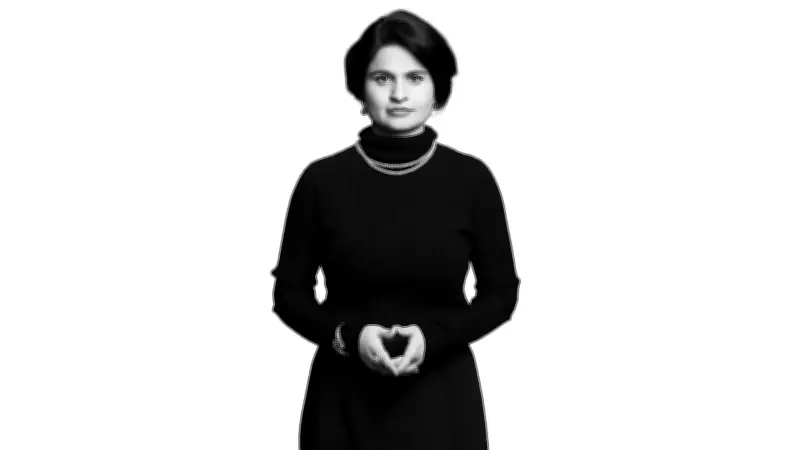
Authored by Harvinder Jain, the book titled Wifed in India delves into a transition that is remarkably common yet seldom openly discussed in public life: the emotional shift that women experience following marriage. While Indian society has undergone rapid modernization in areas such as education, career opportunities, and economic participation, the book posits that the institution of marriage has not kept pace with similar advancements in emotional literacy.
Rather than depicting marital distress as a result of individual shortcomings or personal inadequacies, Wifed in India frames it as a structural gap within the system. Women often enter marriage well-equipped to excel professionally, but they frequently find themselves unprepared for the unspoken hierarchies, implicit expectations, and complex emotional negotiations that exist within family systems. The resulting confusion and turmoil are frequently internalized as personal failures, when in reality, they stem from systemic issues.

Moving Beyond Observation to Practical Solutions
What sets this book apart is its steadfast commitment to moving beyond mere observation and offering tangible, actionable solutions. Drawing from diverse fields such as behavioural science, neuroscience, lived experiences, and Indian cultural thought, Jain introduces the concept of "relationship intelligence." This is positioned not as an innate intuition or instinct, but as a learnable capability that can be developed and honed over time.
The book outlines a clear, structured process for cultivating this intelligence: learning to observe emotional dynamics without falling into self-blame, understanding recurring behavioural and power patterns within relationships, and responding with clarity and intention rather than reacting impulsively. This framework effectively reframes the traditional notion of adjustment in marriage.
Instead of equating adjustment with passive endurance or self-erasure, the book presents it as a conscious alignment—where a woman retains her core identity and autonomy while simultaneously learning to navigate relationships with skill and awareness. This approach empowers individuals to maintain their sense of self while fostering healthier, more balanced partnerships.
Engaging a Diverse Readership at the Fair
At Pragati Maidan, readers engaged deeply with sections that explained how emotional distance can develop when expectations remain implicit and communication is assumed rather than explicitly taught. Interestingly, men were also observed reading the book with keen interest, often remarking that it articulated household dynamics they recognized intuitively but had never examined closely or critically.
Importantly, Wifed in India avoids taking polarised or extreme positions. It does not dismiss marriage as an outdated institution, nor does it glorify suffering within marriage as a virtue. Instead, it treats marriage as a dynamic system that requires ongoing emotional education and conscious effort, rather than blind endurance or passive acceptance.
The book argues that stability and fulfillment in relationships are more likely when individuals are taught how to observe power dynamics, articulate personal boundaries, and engage with clarity and confidence rather than confusion and doubt. This perspective fosters a more constructive and humane approach to marital relationships.
Validation and Measured Discourse
Several readers at the fair described the book as validating rather than provocative. One woman shared, "It helped me understand my experience without feeling defective," a sentiment that was echoed repeatedly at the stall. Men also noted that the book provided a language and framework for tensions they had sensed intuitively but never examined consciously or discussed openly.

In a cultural climate where conversations about marriage often swing between idealisation and outright rejection, Wifed in India occupies a measured, balanced middle ground. It neither calls for rebellion nor advocates for resignation. Instead, it proposes that emotional intelligence within marriage must be learned deliberately—much like any other essential life skill—if modern relationships are to remain both functional and humane.
At Pragati Maidan, the book's warm reception suggested a growing appetite for this kind of nuanced discourse: one that respects cultural traditions while insisting on emotional clarity and mutual understanding, and that views marriage not as a static, unchanging institution, but as one capable of thoughtful, positive evolution.
In doing so, Wifed in India effectively moves the conversation forward—from merely questioning what goes wrong in marriage to understanding how it can be navigated better, with dignity, respect, and emotional well-being intact for all involved.





