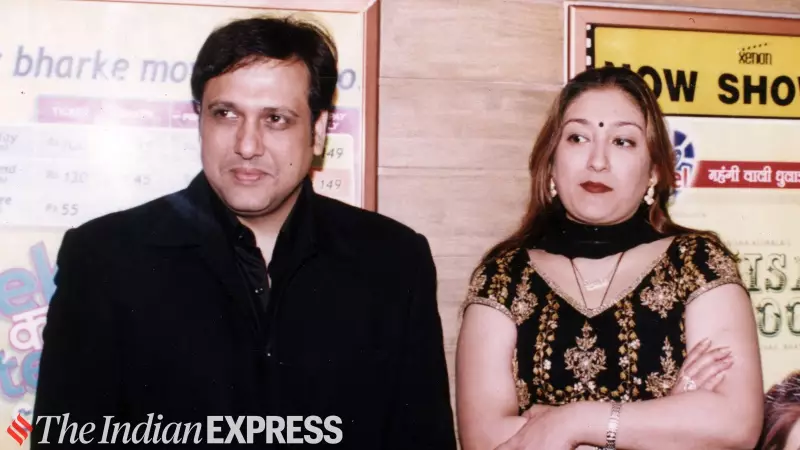
Sunita Ahuja on What Truly Sustains Marriage in Modern Times
In today's world where discussions about divorce and infidelity have become increasingly open, Sunita Ahuja's heartfelt reflections on marriage offer a refreshing perspective rooted in timeless values. Speaking candidly about commitment in contemporary relationships, Ahuja emphasizes that emotional conviction rather than social trends should guide marital bonds.
The Growing Normalization of Divorce and Infidelity
Sunita Ahuja observed that divorce and cheating have become common phenomena in modern society. She expressed her personal stance clearly, stating in Hindi, "Whether it's your husband or your wife, whatever it is, you need to have faith; otherwise, marriages don't last." Her words highlight a fundamental belief that emotional authenticity forms the bedrock of lasting relationships.
Ahuja elaborated on her personal philosophy, explaining, "I am such that if I love, I do it with my heart and if I hate, I do it with my heart." This approach reflects a commitment to emotional honesty that she believes is essential for marital longevity, especially in an era where relationship dissolution has become increasingly normalized.

Choosing Love Over Material Security
Sharing her own relationship journey, Sunita Ahuja recalled falling in love with Govinda when she was just 15 years old and in the 9th standard, while he was completing his BCom. Despite coming from a wealthy family and Govinda's early financial struggles, she chose love over material security.
"I came from a rich family, and Govinda didn't have a house or a car," Ahuja revealed. "I never ran after money in my life; if I had run after money, then I would have gotten married to the person my father wanted me to marry. I wouldn't have married Govinda."
Her decision to marry for love rather than financial security stands in contrast to contemporary trends where practical considerations often dominate relationship decisions. Ahuja noted that modern relationships have changed completely, with people even conducting medical tests before marriage, highlighting how transactional approaches have become more common.
The Psychological Foundation of Lasting Marriages
Dr. Sakshi Mandhyan, psychologist and founder at Mandhyan Care, provides scientific insight into what sustains marriages over time. She explains that trust functions as emotional safety rather than mere loyalty in relationships.
"When partners feel emotionally safe, their nervous system relaxes," Dr. Mandhyan states. "They stop scanning for threats and start investing in connections. This sense of safety allows vulnerability, which deepens intimacy over time."
From an attachment theory perspective, the psychologist emphasizes that trust supports secure bonding, helping partners believe that conflicts won't lead to abandonment. In today's world where alternatives are constantly visible, commitment becomes a daily choice rather than a social obligation.
Early Values as Emotional Blueprints
Dr. Mandhyan further explores how early relationship values impact marital resilience and satisfaction later in life. "I see early values as emotional blueprints," she notes, explaining that when relationships begin with genuine emotional connection, partners learn to rely on communication rather than control.
This foundation builds what psychology terms relational resilience - the ability to adapt during stress without turning against each other. While acknowledging that money and stability matter, Dr. Mandhyan emphasizes that emotional attunement shapes how couples handle challenges like loss, pressure, and disappointment.
"When people feel understood, they recover faster from setbacks," she observes. "They problem-solve instead of personalizing conflict."
Balancing Emotional Intensity with Practical Realities
Addressing how couples can maintain healthy relationships, Dr. Mandhyan encourages partners "to separate intensity from sustainability." While strong emotional feelings create initial connections, she emphasizes that daily life requires emotional regulation and practical management.

Psychologically, balance emerges from shared responsibility and clear expectations. The expert notes, "When roles and needs are discussed openly, resentment reduces. I notice that burnout often appears when one partner becomes the emotional or practical manager of the relationship."
Both Sunita Ahuja's personal reflections and Dr. Mandhyan's professional insights converge on several key points for sustaining marriages:
- Faith and emotional conviction as foundational elements
- Trust as emotional safety that enables vulnerability
- Communication over control in resolving conflicts
- Balancing emotional connection with practical realities
- Making commitment a conscious daily choice
In an era where relationship norms continue to evolve, these perspectives offer valuable guidance for those seeking to build and maintain meaningful, lasting partnerships based on genuine connection rather than social convenience.