How Mumbai's Humidity Sparked a Life-Changing Rule
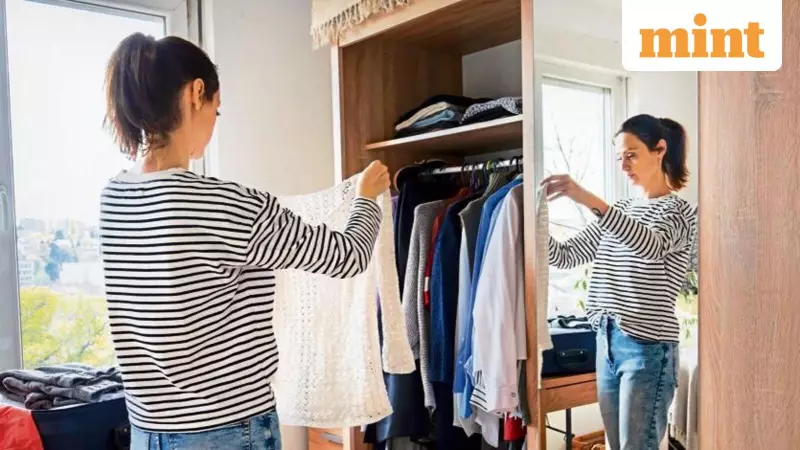
Moving house in Mumbai last year brought an unexpected realization. While unpacking my belongings, I discovered nearly a dozen rusted hangers. The city's notorious humidity had quietly claimed another victim. My immediate thought was to order replacements, but then I looked at the clothes hanging in my closet. Instead of buying new hangers, I decided to give away a dozen garments.
The Birth of a Personal Principle
That moment gave birth to my "no new hangers" principle. I now apply this rule to all areas of material ownership. The core idea is simple: don't buy more things if there isn't space for them. More importantly, don't create new storage space just to accommodate additional stuff.
In a city like Mumbai, where homes are compact and storage space is a luxury, this rule reinforces a truth we often forget. We simply don't need so much stuff in our lives.

Putting the Principle into Practice
In December 2024, I made an impulse purchase that tested my new rule. I bought an air fryer because it seemed like the trendy thing to do. Over the next year, I used it only four or five times. When I needed space for crockery, my first thought was to build another cabinet. Instead, I remembered my principle and gave the air fryer away last week.
The Emotional Challenge of Books
Books have presented the toughest challenge for applying this principle. Parting with books is never just about the physical object. It means letting go of tangible memories of who you were when you first read them. I don't give books away mindlessly. Each one goes to someone who will truly appreciate it.
I've even found justification for passing along dog-eared copies. If all art involves seeing the world through someone else's perspective, then a well-loved book becomes a matryoshka of gazes layered into a single reading experience.
The Science Behind Decluttering
Research supports this approach to material ownership. A 2018 peer-reviewed article in Psychology Today, an international publication on mental health and behavioral science, found that decluttering offers multiple benefits. It reduces anxiety, creates confidence and self-efficacy, allows for mind wandering, and often helps people rediscover lost treasures.
There's also ample data linking decluttering to smaller carbon footprints and more sustainable living. While these neurological and ecological benefits are valuable, they're not my primary motivation.
Intentional Living in Practice
For me, this principle is about being intentional with what enters your home and, by extension, your life. It involves recognizing the difference between what you need and what is merely nice to have. More crucially, it means understanding how much physical and mental space you should allow the latter to occupy.
When discussing this new life mantra with colleagues, one mentioned her friend's extreme approach: refusing all birthday gifts to avoid clutter entirely.
Contrasting with Modern Catchphrases
Interestingly, "no new hangers" stands in direct contrast to another popular phrase of our time: "no new friends." This phrase entered mainstream culture nearly a decade ago after DJ Khaled and rapper Drake used it in their 2013 song. It conveys emotional self-preservation, suggesting we should nurture existing relationships rather than cultivating new ones due to limited bandwidth.
While I'm careful about material accumulation, I've realized I'm far more open to welcoming new people into my life. Perhaps "no new hangers" isn't just about resisting excess. It's about creating enough space so the heart can feel truly full.