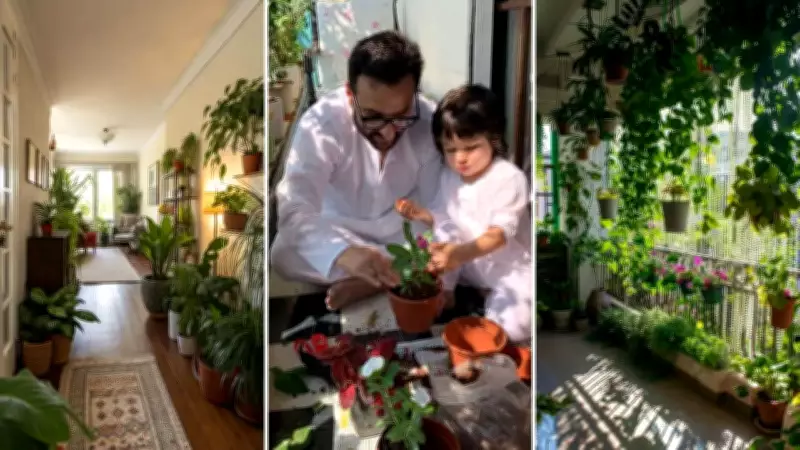
Indoor Gardening Revolution: From Pandemic Hobby to Urban Lifestyle Essential
Over the past few years, indoor gardening has catalyzed a profound transformation in urban living environments. What initially emerged as a pandemic-era pastime has now firmly entrenched itself into the daily rhythms of city dwellers. On National Gardening Day, we examine how indoor plants rank among the fastest-growing lifestyle choices in contemporary society.
The Wellness Connection: Plants as Mindfulness Practice
Interior designer Punam Kalra observes that modern luxury is being redefined through well-being principles. "Indoor plants fundamentally enhance how people experience their living spaces today," she explains. "They help establish daily routines, remind us to practice care, and gently encourage us to pause and decelerate amidst the relentless urban hustle."
Clinical psychologist Suchita Srivastava reinforces this perspective, noting that gardening has evolved into a legitimate mindfulness practice. "When engaging with plants, the mind stops dwelling on past regrets or future anxieties, becoming fully present in the moment. This activity naturally slows our nervous system, cultivating a calmer psychological state," she elaborates.

Digital Identity and the Rise of 'Plant Parents'
In our digitally-driven era where online presentation matters significantly, plants have become integral to personal identity curation. From minimalist interior backdrops to lush balcony forests, meticulously arranged green spaces now populate social media feeds, signaling carefully chosen lifestyles.
"Plants have become embedded within Instagram and Pinterest culture," notes Suchita Srivastava. "Increasingly, we associate personal identity with domestic aesthetics—adopting labels like 'plant parent' and showcasing curated botanical spaces. Historically, plants served functional purposes, but that dynamic has substantially shifted."
However, not all plant enthusiasts view their greenery as self-expression. "I don't want my plants to represent my identity. I simply desire my space to feel vibrantly alive," shares Mahak. For Surbhi, the connection runs deeper: "Caring for plants helps me disconnect from digital noise. It fosters a more intimate connection with myself."
Designer Shalini believes this movement transcends temporary trend status. "Our relationship with nature is instinctual, and contemporary design is consciously acknowledging this reality," she observes. "This isn't about imposing greenery but returning to more enduring spatial values that honor our biological connections."
From Affordable Decor to Luxury Statement
"Plants originated as accessible, economical decoration elements, but they've decisively entered luxury territory today," explains Punam Kalra. "The focus has expanded beyond mere plants to encompass styling, designer planters, and strategic placement within interiors."
While basic plants remain cost-effective, curated botanical arrangements are increasingly perceived as worthwhile investments. Shalini confirms this evolution: "The proliferation of rare species, artisanal planters, and professionally styled indoor landscapes has elevated plants into premium design territory."
Plant-First Interior Design Philosophy
Architects and interior designers report growing client demand for plant-inclusive layouts, with homeowners prioritizing sunlight exposure, ventilation quality, and dedicated green corners during planning stages.
Architect Shalini Chandrashekhar explains: "Similar to material selections or furniture arrangements, plants contribute crucial layers of texture, light modulation, and sensory experience." "They introduce organic softness, subtle movement, and delicate fragrances that fundamentally shape spatial atmospheres."
Punam Kalra adds practical perspective: "Given their psychological benefits and air-purifying capabilities, plants sometimes feel more essential than furniture—particularly in compact urban homes that risk feeling cluttered."

For numerous plant enthusiasts, greenery transcends aesthetic considerations to create genuine homeliness. Marketing professional Mahak Rajgarhia shares: "When we relocated to Bengaluru, our rental apartment felt disjointed. Plants unified the space and infused vitality. Now rooms feel refreshed rather than dreary."
Indoor Wellness Revolution
With limited outdoor areas characterizing urban residences, indoor plants increasingly substitute traditional gardens while offering simpler maintenance. Punam identifies this as part of broader lifestyle evolution.
"Choosing plants over excessive storage or material possessions reflects movement beyond minimalism," she analyzes. "It signals transition toward softer, more grounded living characterized by earthy tones, tactile textures, and gentle silhouettes."
Shalini concurs: "Domestic greenery often indicates intentional prioritization of calmness, stillness, and mindful spatial inhabitation."
Social media consultant Surbhi Aggarwal highlights practical adaptability: "Plants don't demand extensive space. They thrive everywhere from balconies to kitchens to living areas. Simply rotating their positions can instantly revitalize home aesthetics."
The Reality of Plant Burnout
Despite widespread enthusiasm, maintenance challenges frequently emerge. "Initial nurturing excitement often yields to practical fatigue—especially when plants struggle due to insufficient light or hectic schedules," cautions Punam Kalra, advocating for low-maintenance selections and realistic approaches.
"Burnout typically occurs when aspirations outpace practical considerations," observes Shalini. Limited sunlight, irregular care routines, and unfamiliarity with botanical needs can rapidly lead to neglect. She emphasizes thoughtful plant selection and incorporating low-maintenance systems to ensure long-term viability.
This indoor gardening revolution demonstrates how urban residents are creatively integrating nature into daily life, blending wellness practices, design aesthetics, and personal identity in innovative ways that promise enduring cultural impact.