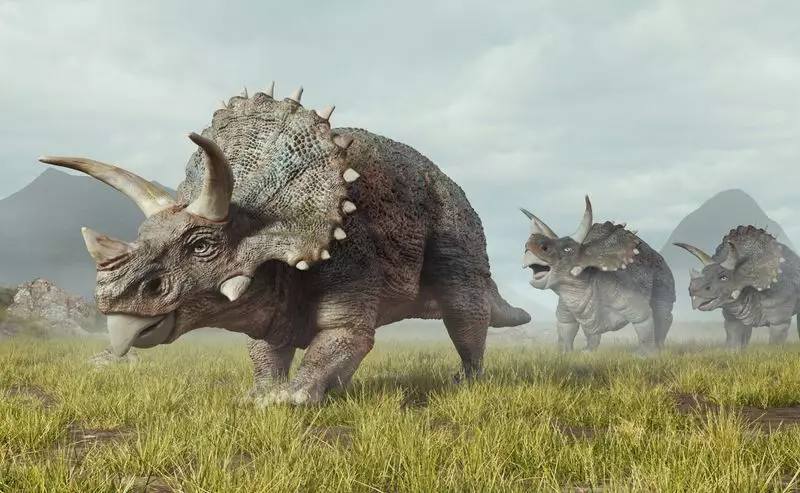
In a remarkable discovery that has sent shockwaves through the scientific community, researchers have unearthed what appears to be a fossil of the legendary Triceratops dinosaur in Uttar Pradesh's Saharanpur district. This extraordinary find could potentially rewrite the paleontological history of the Indian subcontinent.
Groundbreaking Discovery in Northern India
The fossil was discovered during routine excavation work in the region, immediately catching the attention of paleontologists and researchers. The specimen shows clear characteristics of the three-horned dinosaur species that roamed the Earth approximately 68 million years ago during the Late Cretaceous period.
Local authorities and archaeological experts were quickly alerted to the site after construction workers noticed unusual bone-like structures embedded in the earth. The area was immediately secured to prevent any damage to what could be one of the most significant paleontological finds in recent Indian history.

Scientific Significance and Identification Process
Paleontologists working at the site have identified several distinctive features that strongly suggest the fossil belongs to a Triceratops. The most telling evidence includes the characteristic three horns and large bony frill that made this dinosaur species instantly recognizable. The fossil preservation appears remarkable given the geological conditions of the region.
Dr. Rajesh Kumar, the lead paleontologist examining the discovery, expressed his excitement about the find. "This is potentially a landmark moment for Indian paleontology. While we need to conduct further analysis to confirm the species definitively, the initial evidence strongly points toward Triceratops, a dinosaur species not previously documented in the Indian subcontinent."
The research team has begun the meticulous process of carefully extracting the fossil from its surrounding rock matrix. This delicate operation requires specialized tools and expertise to ensure the specimen remains intact during removal and transportation to a proper research facility.
Potential Impact on Understanding Dinosaur Distribution
This discovery challenges existing theories about the geographical distribution of ceratopsid dinosaurs, which were previously thought to be primarily confined to North America. The Saharanpur finding could revolutionize our understanding of dinosaur migration patterns and continental connections during the Mesozoic Era.
Scientists are particularly intrigued by how this discovery might relate to the ancient supercontinent of Gondwana and the subsequent separation of land masses that formed modern-day India. The presence of a Triceratops relative in what is now Uttar Pradesh suggests previously unknown land bridges or migration routes existed between continents.
The Geological Survey of India has been notified about the discovery and is expected to join the investigation. International paleontologists have also expressed interest in collaborating on the research, recognizing the global significance of this unexpected find.
Local authorities have cordoned off the discovery site and increased security to protect the valuable fossil from potential damage or unauthorized access. The Uttar Pradesh government has announced plans to provide necessary support for the excavation and subsequent research activities.
This extraordinary discovery in Saharanpur not only adds a new chapter to India's rich paleontological record but also demonstrates how much remains to be discovered about our planet's ancient inhabitants. As research continues, scientists hope this Triceratops fossil will provide crucial insights into the evolutionary history of dinosaurs and their global distribution.