The World's Most Expensive Luxury Cars and Their Insane Interior Details
Step into the exclusive realm of ultra-luxury automobiles where conventional price tags become meaningless. In this rarefied world, seven-figure sums are commonplace, while eight-figure price points barely raise eyebrows. These vehicles transcend traditional automotive metrics like lap times or fuel efficiency—they represent mobile declarations of power, heritage, and uncompromising obsession. Designed for collectors who already possess everything imaginable, these machines distinguish themselves through philosophy rather than mere price.
Commissioned Creations: Beyond Ordinary Luxury
What truly separates these extraordinary vehicles from standard luxury cars is their creation process. Rather than being purchased from showrooms, they are meticulously commissioned through months or even years of dialogue between buyer and manufacturer. Materials are sourced with the precision of jewelers selecting diamonds, while interiors are crafted as private lounges or art installations. Beneath their hoods may reside thousands of horsepower, but the interior spectacle reveals itself more subtly through exquisite stitching, hand-polished veneers, meticulously finished metals, and details so extravagant they border on surreal.
Rolls-Royce Boat Tail: A Yacht on Wheels
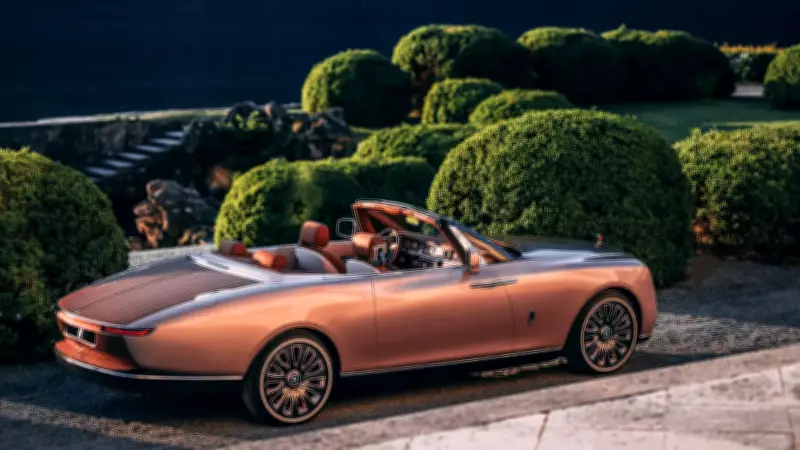
Frequently mentioned among the most expensive new cars ever produced, the Rolls-Royce Boat Tail reportedly commands prices exceeding $25 million. With only a handful in existence, each example is tailored to its owner with near-mythical precision. The rear deck draws inspiration from vintage luxury yachts, opening in a butterfly motion to reveal a complete hosting suite. This includes bespoke picnic tables, a parasol, and dedicated compartments for silver cutlery and crystal champagne flutes—all custom-made to match the car's specific color palette. One version even features a champagne cooler calibrated to maintain the owner's preferred vintage temperature.

Inside, the leather undergoes custom dyeing to achieve a client-selected shade, while wood veneers are book-matched and hand-finished over weeks. Even the dashboard clock is a unique timepiece designed exclusively for that particular vehicle. This represents not mere transportation, but engineered lifestyle.
Bugatti La Voiture Noire: Perfected Darkness
When Bugatti unveiled La Voiture Noire—"The Black Car"—it astonished even seasoned collectors. With a reported price tag of approximately $18–19 million, this one-off hypercar reimagines a legendary 1930s Bugatti lost to history. Externally, it presents as a sculpture in gloss black carbon fiber, with every curve flowing seamlessly and every vent integrated into the bodywork.
Opening the door transforms the atmosphere from menacing to couture. Fine leather, aluminum milled from single blocks, and subtle carbon-fiber patterns create an interior resembling a minimalist gallery more than a traditional cockpit. Bugatti's attention to detail approaches the pathological—switchgear is weighted for tactile perfection, stitching aligns to the millimeter, and even pedals and footrests receive jewelry-like finishing on components most drivers rarely notice.
Pagani Zonda HP Barchetta: Handcrafted Madness
Pagani's Zonda HP Barchetta, produced in a limited run of three units, represents another eight-figure automotive masterpiece. With its half-open roof, exposed blue-tinted carbon weave, and partially covered rear wheels reminiscent of vintage racers, it appears more like a fever dream than a showroom vehicle.
Inside, Pagani embraces artisanal excess. Aluminum knobs undergo individual machining rather than stamping, while exposed linkages and polished bolts remain deliberately visible to celebrate mechanical beauty. Hand-stitched leather and complex carbon-fiber patterns that shift under light complete the experience. This is luxury that doesn't conceal its engineering—it glorifies it, transforming the cabin into a mechanical cathedral.

The True Drivers of Astronomical Prices
While horsepower figures capture headlines, they don't propel values into the stratosphere. Scarcity serves as the primary ingredient, with many models limited to one, two, or three examples worldwide. Labor constitutes the second crucial factor—hundreds of hours dedicated to a single seat, dashboard, or wood inlay. Clients select colors after studying swatches under various lighting conditions, with some requesting materials connected to personal history, such as wood from a family yacht or leather dyed to match a favorite watch strap.
Provenance completes the equation. These cars are destined for private collections, climate-controlled garages, and future auction catalogues. Their manufacturers design them not merely as vehicles, but as future legends.
Interiors as Private Worlds
Entering these machines reveals their true priorities. Sound insulation is tuned so doors close with a hushed, vault-like thud. Lambswool carpets feel more appropriate for a penthouse than a garage. Custom fragrances are sometimes infused into cabin materials, while lighting adjusts according to mood rather than necessity.
Some bespoke Rolls-Royces feature starlight headliners with thousands of fiber-optic "stars" arranged to replicate specific night skies—perhaps commemorating a wedding or birth date. Others conceal refrigerators, cigar humidors, or safes behind veneered panels that glide open silently at a button press. The true insanity lies not in any single feature, but in their cumulative effect: the unmistakable sense that no expense has been spared and no surface remains ordinary.
Why These Automotive Masterpieces Matter
A common thread connects these extraordinary vehicles: their creators' refusal to compromise. They represent rolling statements of ultimate craftsmanship, where every detail receives obsessive attention. These cars look at luxury without illusion, creating experiences that feel intimate, searching, and unmistakably exclusive. They redefine what money can achieve in automotive engineering and personal expression, standing as testaments to human ingenuity and artistic vision nearly a century after the automobile's invention.