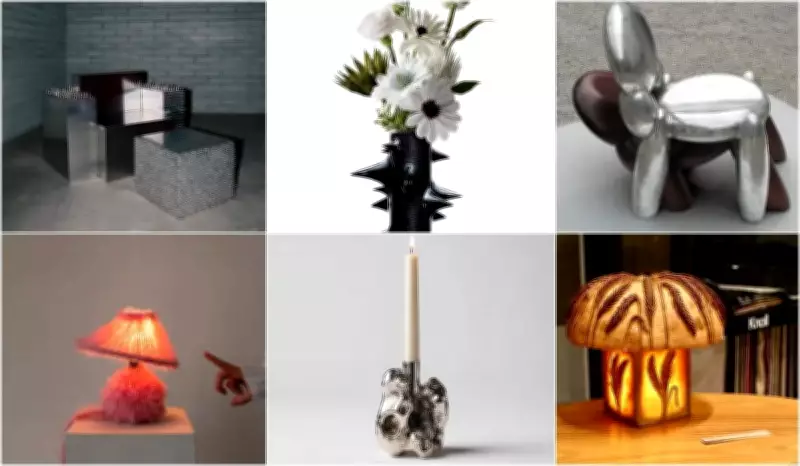
Last month's Milan Design Week made one thing clear: luxury interiors are no longer about playing safe. The exhibition showcased a louder, moodier side of design, featuring spiky metals, rubber finishes, and sculptural forms. According to experts, while 'quiet luxury' isn't disappearing, it is evolving into something more expressive and personal.
The Rise of 'Loud Whisper' Luxury
Referencing trends seen at Milan Design Week, experts say quiet luxury is not fading but evolving. "In the past, luxury was about being understated. Now, it is about being bold and owning your personal style," says Anchal Routh, a visual merchandiser at Furniselan. She adds, "Quality, craftsmanship, and timelessness still matter, but the expression today is more like a 'loud whisper.'" Design is also becoming more tactile. "We are seeing suede-finish metals, soft-touch rubber, brushed concrete, and liquid-like resin surfaces," she says. "Pairing materials like stone with industrial rubber creates a strong sensory experience."
From Visual to Experiential Luxury
As seen at Milan Design Week, experts say luxury homes are moving from being just visually appealing to more immersive and experience-led. "Homes today are not just about looking good; they are about how they make you feel," says Shivangi Shekhawat, collection curator at Kalyanam Furniture. "There is a 40–50% rise in the use of deeper, moodier colours like oxblood, forest green, and charcoal." She adds, "Design is becoming more emotional, with a focus on how light interacts with materials and how textures create a sensory response." There is also a shift in how spaces are planned. "Homeowners are now more open to creating standout spaces that reflect personality, like a sculptural living corner or a dramatic dining area," she says.

Bold Materials, But with Balance
Metallics and experimental materials are trending, but experts say they should be used carefully. "Metal finishes should ideally cover only 10–15% of the visual space," says Shekhawat. "Use them in accents like a console or sculptural light rather than across the room." Another growing trend is aged finishes. She adds, "Aged metallics like oxidised brass are gaining popularity. They reduce shine, add nearly 30% more depth, and minimise glare. Homeowners now prefer surfaces that feel layered and subtle rather than overly shiny." Designers are also embracing 'controlled chaos.' "Nearly 60% of designs combine multiple materials, with pairings like rubber and marble or glass and metal," she says. "Luxury is no longer about uniformity."
Statement Pieces That Don't Overwhelm
While bold design is in, experts stress the importance of balance. "Sculptural furniture and textured metal are being seen more often. These may feel experimental now, but when used correctly, they can become the main focal point," says Shashi Jhala, a product stylist at Wooden Street. Routh says restraint is crucial. "A room should feel balanced and have breathing space. A sculptural sofa or chair can act as the main artwork." Jhala adds, "Choose one eye-catching piece and support it with subtle elements like muted walls and soft accents so it stands out."
Where Most Homes Go Wrong
- Adding too many bold elements can make the space feel cluttered. One strong, high-quality piece looks more refined than many loud elements.
- A textured wall, fancy lighting, and metal decor together can feel too much.
- Quality should not be compromised to make something look bold.
Design is becoming more experimental with combinations like fluted glass with lacquer and leather finishes. Pairing materials like stone or porcelain with industrial rubber creates a strong sensory experience. Homes are now being designed as 'living systems' where texture plays a key role, says Anchal Routh.