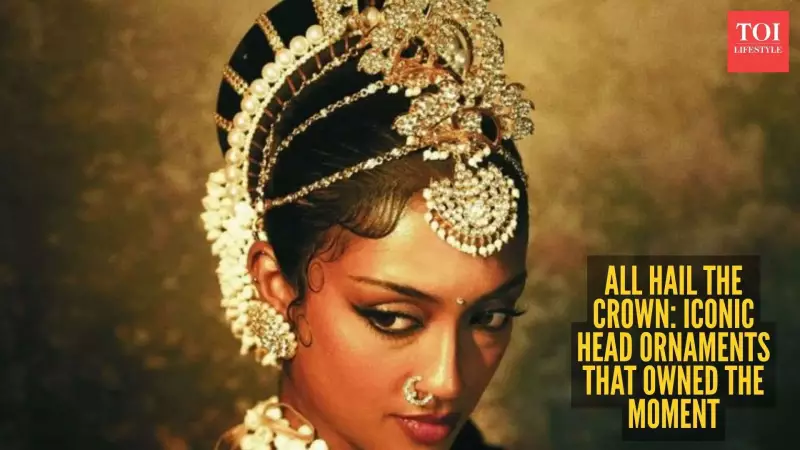
Far more than mere adornments for a majestic look in royal durbars, the head ornaments of India's erstwhile royal families were potent symbols of righteousness, victory, triumph, and absolute power. The weight and opulence of these pieces directly correlated with the wearer's rank and wealth, effectively creating a visual social hierarchy. Crafted from precious metals like gold and studded with diamonds, rubies, emeralds, and pearls, these artefacts were statements of sovereignty. Let's delve into the vaults to explore some of the most magnificent head ornaments that truly owned their moment in history.
The Gem-Studded Turbans of the Sikh Empire
The majestic Sikh Empire, forged under the leadership of Maharaja Ranjit Singh, known as Sher-e-Punjab (Lion of Punjab), had a distinct style of royal adornment. Maharaja Ranjit Singh was famously known to wear the Koh-i-Noor diamond as an armband and the famed Timur Ruby. The warrior kings of the empire decorated their turbans with unique gemstones like rubies, sapphires, and diamonds, creating a surreal and magnificent appearance in historical portraits. These ornaments were not exclusive to the Maharajas; Maharanis also wore them as brooches. Following India's independence, a significant portion of these jewels, including a 19th-century gouache set on a silver ivory brooch, belonged to Maharani Jind Kaur.
European Grandeur: The Maharaja of Kapurthala's Tiara
HH Maharaja Jagatjit Singh of Kapurthala, who ascended the throne at the tender age of five and received the title of Maharaja in 1911, was a figure of refined taste. He was often seen wearing the illustrious Kapurthala State Tiara, also known as the Hamilton Tiara. This piece was notable for its strands of natural pearls, which added to its royal allure. His ceremonial tiara was commissioned from the legendary house of Cartier and featured large emeralds with platinum detailing and white diamonds, all set in a distinct European style.

A Peacock's Splendour: The Aigrette of Anita Delgado
Maharaja Jagatjit Singh was a great connoisseur of French art and culture, which made him a prized client for jewellery houses on Paris's Place Vendôme. Seeking a piece worthy of a royal wedding he was to attend, he requested a magnificent enamel and diamond peacock aigrette from Mellerio in 1905. This masterpiece brilliantly blended Indian influence with Western design. The Maharaja wore it on his turban for the wedding, and it was later passed to his wife, who used it as a stunning hair ornament.
The Ruby-Set Sarpech of Patiala
The legacy of jewels from the first Maharaja of Patiala, Baba Ala Singh, passed down to the last ruling Maharaja, Yadavindra Singh. One standout piece was a spectacular ruby-set gold sarpech adorning his white turban. This ornament was adorned with 133 diamonds, 15 Burmese rubies, and a large natural pearl from the collection of Maharaja Bhupinder Singh. The back of the sarpech showcased exquisite craftsmanship with red foliate motifs and green-blue enamel detailing. This iconic piece eventually found its way to auction and was sold at Christie's in 1999.
The Dazzling Collection of the Nawab of Rampur
The Nawab of Rampur possessed a jewellery collection whose value was believed to rival the Baroda Jewels and was estimated to be thrice that of the Maharaja of Jaipur's collection. Nawab Raza Ali Khan commissioned a crown of diamonds and pearls for himself and enlisted world-renowned jewellers like Cartier, Chaumet, Mellerio, and Boucheron to create precious, intricate designs. His Begum, Rajmata Rafat Jamani, was also adorned in spectacular pieces, including a diamond tiara and necklace studded with gold and large diamonds, worn traditionally as a head passa or jhoomar.
These head ornaments transcend their roles as jewellery; they are historical documents in gem and metal, narrating tales of empire, artistry, and an elaborate code of power that defined Indian royalty for centuries. Their legacy continues to captivate historians and jewellery enthusiasts alike, offering a glittering glimpse into a regal past.