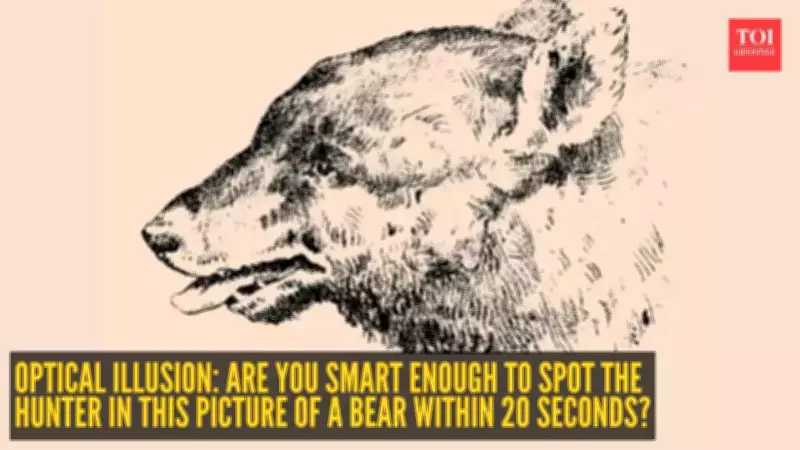
1880s Bear Optical Illusion Baffles Modern Internet Users
Optical illusions continue to captivate the internet, serving as mind-bending visual puzzles that reveal how our brains interpret colors, shadows, and shapes. While some illusions test personality traits and others challenge reaction speed, one particular vintage gem from the 1880s is currently driving even experienced puzzle enthusiasts to frustration.
The Historical Origins of the Tricky Bear Sketch
Originally created as a children's advertising gimmick on trade cards during the Victorian era, this clever illustration dared young participants to find a hidden man's face within a sketchy bear drawing for potential prizes. Fast-forward to the digital age, and Jenny Grisham's Playbuzz version has garnered over 1,500 attempts, with contemporary adults consistently failing where Victorian children once triumphed effortlessly.
The core challenge remains unchanged: participants must spot what's described as the "bear's master" within mere seconds. This isn't merely entertainment—it's a fascinating demonstration of how our eyes and brain collaborate (and sometimes stumble) during visual perception processes.

Decoding the Visual Trickery
At first glance, this black-and-white drawing appears to depict a fuzzy bear with perked ears, forward-facing eyes, and scribbly fur texture. However, the hidden secret emerges when viewers squint between the bear's eyes and left ear (which appears on the viewer's right side). A man's distinct profile materializes, facing toward the bear's neck base with his back to the animal's gaze.
Tilting one's head slightly to the right often provides the complete revelation: the man's nose, mouth, and chin artfully blend into the bear's fur patterns. Dating back to 1880s promotional materials, this clever illustration successfully tricked Victorian children into prolonged staring contests. Yet this deceptive image proves surprisingly difficult for many modern adults to solve—often because they overcomplicate what children perceive with instinctual simplicity.
This represents camouflage genius at work: vague lines deliberately fool our outline recognition systems, teaching our brains to fill visual gaps automatically. Those who successfully identify the hidden face within just 20 seconds demonstrate particularly sharp visual processing abilities.
Why Adults Struggle While Children Excel
Shadows and perspective frequently manipulate our cognitive processes in optical illusions. Most viewers instinctively prioritize the bear's "obvious" form within the image, inadvertently ignoring the subtler human contours embedded in the same visual space. The illusion expertly exploits Gestalt psychology principles: our brains naturally group lines into coherent wholes (perceiving the bear first).
When no clear edges distinguish between elements, the human brain defaults to recognizing animal forms over human facial features. Playbuzz promotional materials claim this puzzle is "so easy a child could find it," yet adult participants consistently falter, proving how life experience can complicate instinctual visual processing.
Following the popularity of Among Us-style brainteasers, this vintage visual hit continues to hook social media scrollers seeking quick cognitive victories. Those who spot the hidden face rapidly demonstrate strong visual processing skills, while those still searching should relax—optical illusions primarily reveal fascinating perception quirks rather than measuring intelligence quotients.
The Broader Implications for Brain Science
Next time an optical illusion appears in your social media feed, remember this fundamental truth: these puzzles represent both your brain's visual superpowers and its occasional glitches simultaneously at work. Regularly training your perception with such challenges can enhance visual processing capabilities—your eyes will genuinely appreciate the exercise.
This 1880s bear illusion serves as a timeless reminder that sometimes, the simplest solutions require us to see the world through a child's eyes rather than an adult's overanalyzing mind.