Privacy in your backyard is one of those things you don't realize how much you need until you really need it. Maybe you've just bought your first house, or perhaps the new neighbors have moved in, and your patio suddenly feels strangely exposed. Some sort of wooden fence is the obvious solution, but it's also the boring one. Fruit trees do the same job, look infinitely better, and bear fruit.
Gardeners and landscape designers are increasingly recommending fruit trees as multi-purpose privacy solutions. They grow tall and dense, and as a bonus, drop real food. With more Americans seriously considering sustainable living, edible landscaping, and getting the most out of their outdoor spaces, this feels like the right idea at the perfect time. Here are the trees worth planting this season.
The Ones That Grow Tall and Move Out of Your Way
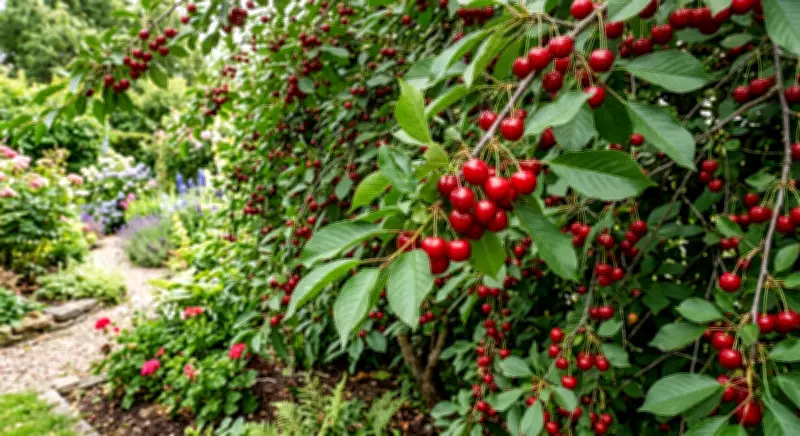
If low maintenance is your love language, start with the Seckel pear. It creates a dense, upright canopy. It is a natural wall that explodes in white blooms each spring and delivers sweet fruit by fall. It's about 15 to 20 feet tall, works in most American backyards, and looks good doing it. Another good choice is the Montmorency cherry. You've probably seen these at farmers' markets: the bright red kind. It is a tree which makes a rounded, dense canopy and feels like a soft enclosure without making your yard feel claustrophobic. Bonus: Birds will love it.

The Ones That Build a Wall
In the language of landscape designers, the American plum is a living boundary. It spreads on its own, creating a wild, intentional layered edge, and bursts into bloom in spring with white flowers that pollinators love. The fruit is tart and small, great for jam and also great for wildlife. For something a little more organized, a grouping of Smokehouse apple trees offers a classic orchard look that has become truly aspirational aesthetics on social media. Plant a few in a row, let them spread their broad canopies, and you have made a room outdoors. Unlike a fence, this one blooms in spring, attracts pollinators, and hands you fruit by summer.
The Ones That Feel Like They Belong on a West Coast Patio
The pineapple guava is having a quiet moment. It's evergreen, so it provides year-round cover, which is a plus in states where deciduous trees go bald in November, and it has silvery green foliage that looks effortlessly cool. The flowers are edible, the fruit has a touch of a tropical scent, and the whole vibe is Mediterranean courtyard. If you're looking for something a bit more dramatic, it's hard to beat fig trees. With their wide canopy and giant leaves, they can transform a corner of your yard into a truly cozy nook.
A 2018 study in Frontiers in Psychology found that edible green spaces, such as fruit trees, food-producing gardens, and layered plantings, offer something ornamental landscaping doesn't: compounding benefits that overlap and grow over time. Food production, biodiversity, climate regulation, and psychological restoration all in one square foot. Your fig tree is not just shade. It's doing a lot of quiet work.
The One You Least Expect: Vine
Technically, passionfruit isn't a tree. It is a climbing vine, but it belongs on this list. You can train it up a fence or pergola for one of the most dramatic and productive privacy screens you can grow. One mature vine will yield a full bucket of fruit in a season. It's a talking point, it's a snack, and it makes your outdoor space look great.
So, What's the Move?
Your yard can do more for you. Privacy doesn't have to mean sterile fencing or expensive landscaping bills. Research published in Discover Public Health found that home gardens reconnect us with nature in ways that measurably decrease stress, improve emotional stability, and support mental health, moving gardening out of the hobby realm and into the health realm. This context is important for a generation dealing with burnout, rising prices, and the chaos of adulthood.