Understanding Why Your Concrete Floor Feels Cold in Winter
A morning start on an unheated floor can instantly shatter the cozy mood of the season. Even when the temperature gauge reads high and radiators are running at full throttle, the ground often remains cold to the touch. It feels as if the cold is seeping into the very foundation of your home, and in essence, that is exactly what is happening. When considering home insulation, many people focus solely on walls, but the floor plays a crucial role in thermal comfort.
The Science Behind Concrete Slab Heat Loss
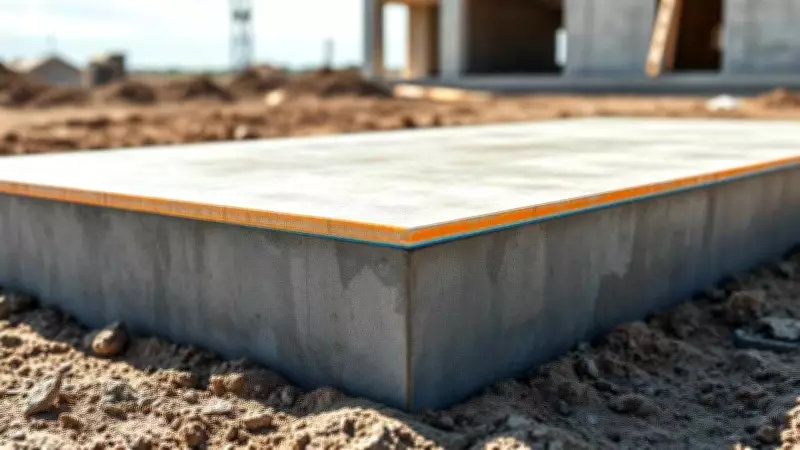
Modern homes frequently rest on concrete slabs using the slab-on-grade construction method. While concrete is a durable and robust material, it has a significant drawback: it tends to absorb heat rather than retain it within the structure. Unlike traditional building materials that hold warmth effectively, concrete absorbs heat and transfers it directly into the cold soil beneath. This phenomenon is known as ground-coupled heat loss, and it can account for a major portion of your monthly energy expenditure. If you have ever wondered why your feet feel chilly while the upper part of your body stays warm despite heating, your concrete slab floor is likely to blame.
Why Your Home's Edges Drain Away Heat
In building physics, heat dissipation does not occur evenly across the entire floor slab surface. Research indicates that most heat loss happens at the edges of the building, similar to how a hot drink poured into a cold mug loses heat fastest at its perimeter. The center of the floor retains temperature longer due to less direct contact with the exterior environment. Essentially, the area of greatest heat transfer activity is the perimeter of the floor slab.

According to a detailed study published in the journal Energy and Buildings, researchers found that thermal exchange at the edges and corners of a slab is significantly higher than in the middle. This means that even if the center of your living room floor feels acceptable, areas near exterior walls act as thermal bridges, pulling down the temperature of the entire slab. Adding rigid insulation, such as extruded polystyrene, at the perimeter can reduce heat loss by more than 20 percent during usage. For those focused on energy savings and comfort, this represents a substantial improvement. You do not need to excavate your entire floor to see benefits; concentrating on perimeter areas can stabilize interior surface temperatures and enhance comfort levels.
The Link Between Warm Floors and Cognitive Functioning
Having a warm floor is not just about preventing cold sensations; it also plays a role in improving cognitive functioning. Recent studies highlight a strong connection between environmental factors and cognitive performance. For instance, cold feet trigger the body to allocate resources toward maintaining internal temperature stability, leading to physiological stress that can impair focus and productivity.
A study in the journal Building and Environment explored this link using multilevel structural equation modeling. Researchers discovered that radiant warmth at floor level significantly increases foot skin temperature, which in turn boosts thermal comfort and concentration levels. Participants performed better on demanding cognitive tests when the floor environment was optimized. Therefore, if you work remotely, ensuring floor warmth can improve both mood and productivity. While installing an underfloor heating system with circulating warm water is optimal, it may be challenging to implement in existing homes.
Quick Fixes to Restore Warmth Without Major Renovations
If major renovations are not feasible, you can adopt simple behavioral and practical changes to enhance warmth. Modern building research reveals that heavy furniture, such as sofas and cupboards placed directly on the floor, can obstruct heat flow across a room. In radiant heating setups, these items act as lids, preventing heat from rising into upper areas.

For conventional slabs, a tried-and-tested solution is strategic rug placement. Laying carpets or runners along the periphery of a space adds an extra layer of insulation, slowing down heat transfer from the air to the cold floor slab. While heat may still escape through slab edges, this approach can significantly improve foot comfort. Combining these small adjustments with effective edge insulation creates a comprehensive plan for winter warmth. Heat behaves like water, seeking the path of least resistance, so sealing gaps and optimizing insulation at critical points is key. Whether through modern systems or simple rugs, maintaining warmth at foot level is vital for a comfortable winter experience.