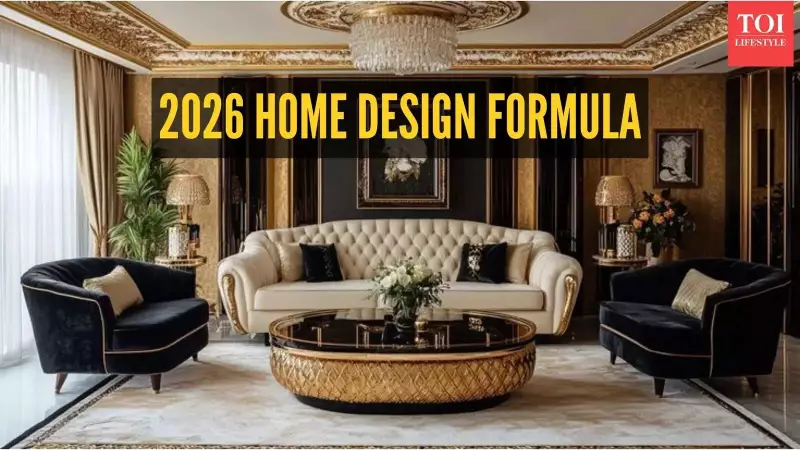
The definition of a dream home in India is undergoing a quiet but profound transformation. As we step into 2026, homeowners are shifting their focus from properties that merely look impressive to spaces that genuinely enhance daily living through warmth, effortless functionality, and unwavering reliability.
The New Blueprint: Thoughtful Design Over Mere Opulence
In an exclusive conversation with the Times of India, Santosh Shah, Managing Director at VYNA Electric, highlighted this significant change in consumer mindset. He stated that the contemporary homeowner prioritizes a home that feels inviting, operates smoothly, and remains dependable across all seasons. While comfort remains paramount, it is now inseparable from consistent performance. The ideal home, according to Shah, works silently in the background, allowing life to flow without interruption or hassle.
This philosophy is manifesting in five key electrical and design elements that are becoming standard in modern Indian households planning new constructions or upgrades.

1. Ambient Lighting That Sets the Mood
Lighting has evolved from a pure utility to a central element of interior styling and emotional well-being. The trend of harsh, singular-tone white lights is rapidly declining. Homeowners are now embracing layered lighting schemes. They seek warmer, softer illumination for creating a cozy atmosphere in living rooms, bedrooms, and for highlighting art, while ensuring task areas have adequate brightness.
Compact COB downlighters are gaining popularity for their ability to sculpt ambiance without visually cluttering a space. Shah emphasizes that factors like superior optics, stable light output, and longevity have surpassed raw brightness as the primary criteria. The goal is for lighting to complement and elevate a room's mood, not dominate it.
2. Discreet Switchboards That Blend Seamlessly
As Indian interiors embrace cleaner lines, lighter palettes, and minimalist aesthetics, electrical fittings are expected to follow suit. Switchboards are no longer meant to stand out but to visually recede into the wall. Slim profiles, subtle matte or metallic finishes, and smooth tactile operation are now as critical as fundamental electrical safety.
However, aesthetics are just one part of the equation. Shah notes that informed homeowners are increasingly curious about the components inside the board. They demand fixtures that manage heat effectively, endure years of frequent use, and provide robust protection for expensive appliances. In 2026, beauty and intrinsic safety are a unified expectation.
3. Proactive and Comprehensive Electrical Planning
One of the most significant shifts is occurring behind the walls. The ad-hoc approach of adding sockets and circuits later is being replaced by meticulous, forward-looking electrical planning from the very first day of design.
Families are now pre-planning for dedicated charging points near beds, additional kitchen sockets for appliances, separate lines for air conditioners, whole-home surge protection for electronics, and neatly organized distribution boards. Shah explains that such thoughtful planning results in a home that feels inherently more organized, safer, and adaptable to future technological needs. This is now considered a core component of intelligent interior design, not just a technical afterthought.
4. Intuitive Smart Upgrades, Not Overwhelming Automation
The concept of the smart home is being recalibrated for practicality. Instead of installing complex, all-encompassing automation systems, families are opting for selective, intuitive upgrades that blend naturally into daily routines.
These include dimmers for evening relaxation, motion-sensor lighting for corridors and staircases, sleek touch switches in common areas, and voice control for a few key circuits. The principle, as Shah observes, is to achieve enhanced comfort without introducing complication. True smartness should feel like supportive assistance, not a demanding system that requires constant management.
5. Durability Engineered for Indian Conditions
Product durability has become a decisive purchasing factor. Indian homes present unique challenges with intense heat, dust, humidity, and rigorous daily use, which place constant stress on electrical systems.

Consequently, buyers are scrutinizing build quality more than ever. They prefer lighting with excellent heat dissipation, switches with robust internal mechanisms, and safety devices that respond with precision during electrical faults. A home truly feels secure when the products within it are built to withstand real-world living conditions, not just ideal laboratory environments.
The Bottom Line: Thoughtfulness as the Ultimate Luxury
In conclusion, the perfect home in 2026 is not defined by opulent materials alone but by deliberate intention. As Santosh Shah succinctly puts it, thoughtfulness is the new luxury. The aspiration is for a space that remains consistently comfortable, looks refined, and performs its duties without demanding attention. When the foundational electrical choices are correct, the entire home simply feels right.
In an increasingly noisy world, the most successful homes will be those that facilitate life effortlessly. The future of Indian home design lies in this essential balance—where aesthetics are matched by intelligence, and where comfort is underpinned by systems engineered to last.