Beyond Colors: The Surprising Tradition of Meat in Holi Celebrations Across India
While Holi is widely associated with vibrant colors, sweet gujiyas, and refreshing thandai, a lesser-known culinary tradition thrives across many parts of India: the consumption of meat during the festival. Contrary to popular perception, hearty non-vegetarian feasts are integral to Holi celebrations in regions like Uttar Pradesh, Bihar, West Bengal, Maharashtra, and parts of Northeast India. This practice reflects deep-rooted regional histories, agricultural cycles, and community traditions rather than contradiction.
The Seasonal and Historical Context
At its core, Holi marks a significant transition—the end of winter and the arrival of spring. Historically, festivals tied to seasonal changes were moments of abundance, when families prepared richer meals after months of colder weather and limited agricultural variety. For livestock-rearing communities, meat dishes became a celebration of renewal, prosperity, and shared joy. Food during Holi was meant to feel generous and festive, with slow-cooked meat curries or grilled preparations naturally emerging as centerpieces of communal meals.
Community Gatherings and Shared Feasts
In many North Indian households, Holi celebrations extend beyond a single day. Friends and relatives visit throughout the afternoon, and elaborate lunches or evening gatherings follow the color play. Unlike delicate festive sweets, these dishes are robust, warming, and ideal for long conversations that stretch into the evening.

For numerous families, cooking meat during Holi is less about indulgence and more about gathering. Recipes are passed down through generations, cooked in large pots, and shared among neighbors and guests. The aroma of slow-simmering spices becomes part of the festival’s sensory memory, just as much as colors and music.
Regional Traditions Shaping Holi Food Culture
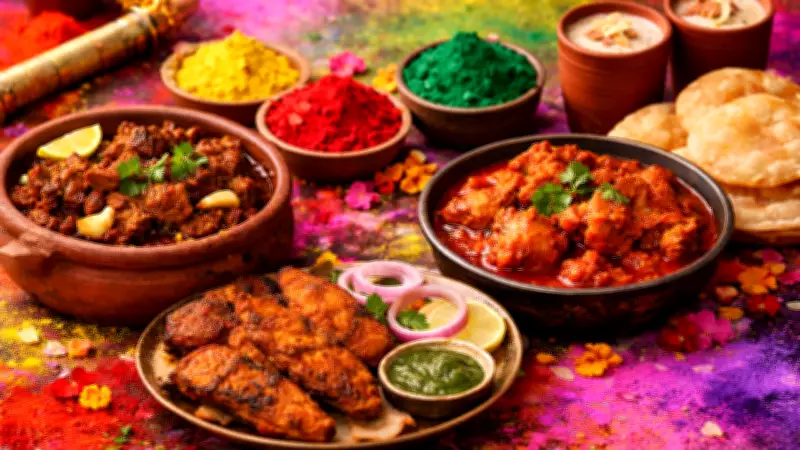
Regional culture plays a pivotal role in shaping Holi menus. In eastern India, particularly in Bihar, Jharkhand, and West Bengal, Holi overlaps with local culinary traditions where meat consumption is already common during celebrations. In Bengal, kosha mangsho (slow-cooked mutton) often appears on festive menus, while in parts of Uttar Pradesh, spicy chicken or mutton preparations accompany puris and festive snacks. Maharashtra celebrates Rang Panchami with community meals that frequently include meat dishes, symbolizing hospitality and abundance.
The Mughal Influence
Holi was celebrated with great pomp and show by Mughal emperors like Akbar and Shah Jahan. It is believed that dishes like gujiya, which has roots in Central Asia, and indulgent meat preparations eventually became part of the celebrations. Importantly, Holi food traditions vary widely across India. Some communities observe strictly vegetarian meals due to religious customs, while others embrace non-vegetarian cooking as part of cultural identity. This diversity reflects the festival’s inclusive nature; Holi adapts to local traditions rather than following a single culinary rulebook, allowing every region to celebrate it through its own distinct flavors.
Climate, Appetite, and Festive Balance
There is also a practical explanation rooted in climate and appetite. Holi falls at a time when temperatures begin rising but evenings remain pleasant, making richly spiced foods enjoyable without feeling overly heavy. Strong spices such as black pepper, cloves, and garam masala, commonly used in meat preparations, were traditionally believed to aid digestion, especially after festive indulgence in sweets and fried snacks. The essence of the celebration lies not in specific ingredients but in sharing food, laughter, and togetherness, and in many regions, meat dishes simply became part of that shared experience.
Three Festive Meat Recipes to Try at Home
Holi Special Chicken Curry
Ingredients:
- 500 g chicken (bone-in)
- 2 onions (finely sliced)
- 2 tomatoes (chopped)
- 2 tbsp yogurt
- Ginger-garlic paste
- Turmeric, red chilli powder, coriander powder, garam masala, salt
- Oil
- Fresh coriander
How to make:

- Heat oil in a pan and sauté onions until golden.
- Add ginger-garlic paste and cook briefly, then add tomatoes and spices, cooking until the oil separates.
- Stir in yogurt to form a thick masala.
- Add chicken pieces, coat well, and cook covered for 12–15 minutes until tender.
- Finish with garam masala and coriander leaves, and serve hot with puri or rice.
Champaran Mutton (Ahuna Meat)
Ingredients:
- 500 g mutton (bone-in)
- 3 onions (finely chopped)
- 2 tbsp mustard oil
- 2 tbsp garlic paste
- 1 tbsp ginger paste
- 2–3 green chillies (slit)
- Turmeric powder, red chilli powder, coriander powder, cumin powder
- Whole garam masala (bay leaf, cinnamon, cloves, cardamom)
- 1 tbsp whole garlic cloves
- Salt
- Fresh coriander
- Juice of half a lemon
How to make:
- In a heavy-bottomed pot or traditional handi, combine raw mutton with mustard oil, onions, ginger, garlic paste, whole spices, green chillies, and all powdered spices.
- Mix thoroughly using your hands so the meat absorbs the masala evenly—this step is key to the dish’s deep flavor.
- Add salt and a splash of water, then seal the lid tightly (traditionally with dough) to trap steam.
- Cook on low heat for 45–60 minutes, occasionally shaking the pot instead of stirring, allowing the meat to cook slowly in its own juices.
- The slow dum-style cooking creates a rich, smoky gravy that clings to the mutton.
- Finish with lemon juice and fresh coriander before serving.
Champaran mutton, also known as ahuna meat, comes from Bihar’s Champaran region and is deeply tied to community-style cooking. Traditionally prepared during gatherings and celebrations, the dish reflects the spirit of Holi itself—slow cooking, shared anticipation, and food meant to be eaten together straight from the handi with roti or rice.
Masala Fried Fish
Ingredients:
- 500 g fish fillets (rohu or surmai)
- Turmeric, red chilli powder, ginger-garlic paste, lemon juice, salt
- Rice flour or semolina
- Mustard oil
How to make:
- Marinate fish with turmeric, chilli powder, salt, ginger-garlic paste, and lemon juice for 10 minutes.
- Lightly coat with rice flour or semolina for crispiness.
- Heat mustard oil and shallow-fry the fish until golden on both sides.
- Serve hot with onion rings and mint chutney for a quick festive starter.
A Celebration Shaped by Diversity
Holi’s food traditions remind us that festivals evolve through geography, climate, and community memory. Whether vegetarian or non-vegetarian, every table reflects local stories and shared heritage. In many parts of India, meat dishes add another layer to the celebration—hearty, flavorful meals meant to be shared long after the colors fade, but the warmth of togetherness remains.