From Battlefield to Food Stall: A Soldier's Culinary Dream
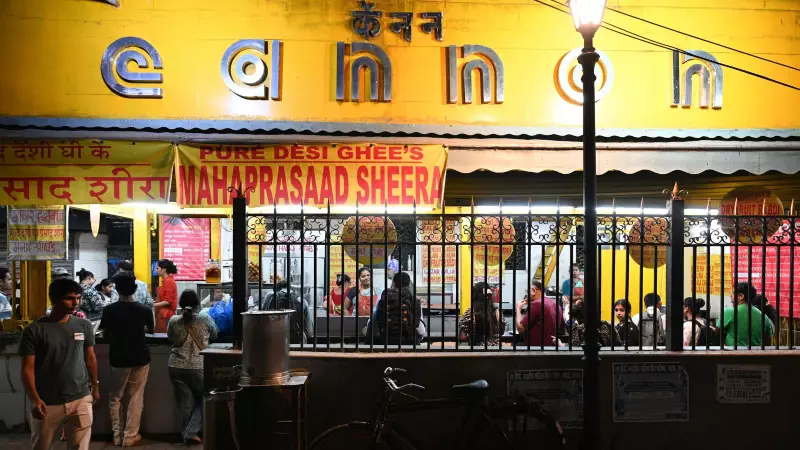
In the bustling heart of Mumbai, just opposite the historic CST station, stands Cannon—a modest eatery that has become synonymous with delicious pav bhaji. Few know that this beloved spot traces its roots to a 1965 war veteran who turned adversity into opportunity.
The Soldier's Foundation
Parshuram Dandekar, now 87 years old, served in the Indian Army during the 1965 war against Pakistan. He sustained serious injuries during combat, including head trauma that later triggered epileptic seizures and a compound fracture in his right leg. These wounds did not break his spirit.
When the District Soldier Board offered plots to injured servicemen, Dandekar applied immediately. He received a 120-square-metre plot opposite Victoria Terminus, now known as CST station. With no financial assistance from the government, he invested his own savings to build a small food stall.

"I spent my own money, turned the plot into a small eatery, and decided to name it Cannonball," Dandekar recalls with a smile. Interestingly, the painter accidentally wrote "Cannon" instead of "Cannonball" on the signboard. Friends convinced him to keep the shorter name, noting that a cannon represents all three defense forces—Army, Navy, and Air Force.
Discipline Meets Business
The stall's inauguration in the 1970s saw then Mumbai police commissioner M G Mugwe cutting the ribbon. Mugwe praised Dandekar, saying he was pleased to see Army discipline flowing into business. However, Lieutenant General M L Naidu offered different advice, urging Dandekar to learn to live among civilians while protecting his military reputation.
These words shaped Dandekar's approach. He insisted on collecting payment from everyone, including policemen, maintaining strict integrity. This principle extended to a long legal battle for his food license, which he finally obtained in 2023—nearly five decades after starting the eatery in 1975.
The Evolution of Cannon's Menu
Dandekar entered the food business with no prior experience. Initially, he stocked cold drinks under an exclusive contract with a major beverage company. Today, he sells only lassi, buttermilk, and water, having moved away from aerated drinks entirely.
For food, he turned to his mother, Kamla Bai, who suggested serving batata vada. Dandekar had specific requirements: the vadas should be larger than a table tennis ball but smaller than a tennis ball, with thin, crisp batter holding ample filling. His mother explained the recipe, which he carefully documented.
For years, batata vada remained the sole menu item, served hot with coconut and pudina chutney. Samosas joined the lineup in 1982. Then, in 1985, pav bhaji made its debut, transforming Cannon's destiny.
The Pav Bhaji Breakthrough
Initially, Cannon displayed boiled vegetables, allowing customers to choose their preferences for customized bhaji. This process took at least five minutes per order. Dandekar, ever observant, asked his staff which vegetables were most popular and combined them into a single, standard bhaji.
To promote this new dish, he devised a clever marketing tactic. During a Test match at Wankhede Stadium, he installed a television at the stall. As crowds gathered, he melted multiple 500-gram packs of Amul butter on the tawa, creating a buttery spectacle. He then sliced pav, soaked it generously in butter, and laid it out attractively.
"People had already eaten with their eyes," Dandekar laughs. "Now they wanted to taste it." The pav bhaji became an instant hit, soon becoming Cannon's signature dish.
Cannon Today: A Legacy of Flavor
Decades later, Cannon retains its no-frills charm. The eatery has no chairs or tables. Customers line up along a four-foot peripheral wall topped with a marble slab that serves as a standing counter. Service remains quick and efficient, with a well-coordinated team.
Two older women clear plates and wipe surfaces, while Pooja, a young staffer, takes orders and assembles plates. Kuldeep Singh, a trusted employee, prepares the bhaji with practiced skill, creating an aromatic pool of Amul butter at the center of a warm tawa and lining butter-soaked pav around it—a sight unchanged from Cannon's early days.

Commitment to Quality
Dandekar emphasizes quality ingredients. Cannon uses no artificial colors or flavors. "We are hardcore pav bhaji walas," he declares proudly. Spices come from APMC Vashi, while potatoes are sourced from Indore or Uttar Pradesh—avoiding Gujarat or Maharashtra varieties that he finds too sweet.
Only Amul butter is used, and pav comes exclusively from Yazdani and UP Bakery. Many vegetables now arrive from a horticulture farm in Talegaon. The menu remains deliberately limited, featuring:
- Pav bhaji
- Dahi vada
- Sabudana khichdi
- Halwa (sheera)
- Rabdi
- Gulab jamun
- Sattu ladoo
- Peanut ladoo
- Lassi and buttermilk
Dandekar points to the gulab jamuns, priced at Rs 30 each, noting their generous size. All ladoos use jaggery instead of sugar, reflecting his focus on healthier options.
Family and Future
Dandekar still visits Cannon daily with his wife Manisha, 78, who co-owns the eatery. They typically spend a couple of hours there each day. When asked about the future, Dandekar expresses uncertainty.
"There is good money here, I won't deny that, but you need that drive," he says. His son shows no interest in taking over, and his daughters are well settled. Kuldeep Singh, whose father served in the Navy, is eligible to retain the business, but plans remain undecided.
For now, Cannon continues to serve its legendary pav bhaji, a testament to one soldier's perseverance and passion. From war injuries to culinary fame, Parshuram Dandekar's journey inspires both food lovers and entrepreneurs across Mumbai.