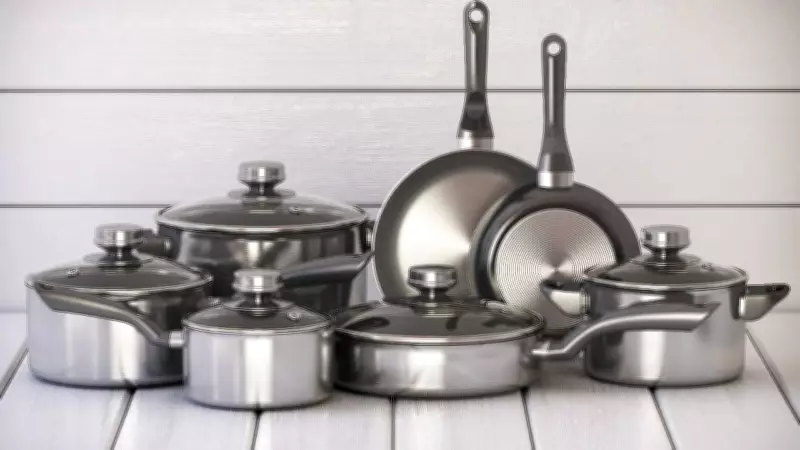
Health and hygiene begin at home. From the cookware, plates, and containers we use to the materials that come into contact with our food each day, every seemingly innocuous household object quietly influences our well-being over a lifetime. Against this backdrop, let us talk about cooking in stainless steel cookware, which has become increasingly popular among home cooks and professional chefs alike due to its durability, versatility, and non-reactive nature. But if you think that all steel utensils are safe for cooking, then this piece of information is for you. Scroll down to read the details.
What Does the Expert Say?
In a post on Instagram, Leema Mahajan, hormone health and weight loss specialist warned, "Stop wasting money on steel utensils if you don't know these important things." She explained not to use steel utensils to cook food with at least 304, 18x18, or 306 grading. Acidic and salty food contact has caused corrosion and heavy metal leaching into the food, making it toxic for human health.
Secondly, she suggests choosing SS304 grade for your water bottles as well. She adds, "Water stays in your water bottles throughout the day. Many times we take juices, tea, coffee, and even buttermilk, and this one is safe for all of that." And if SS204 is mentioned in the container, you can use it for dry food storage, she adds. She warns, "Don't store things with water content for a long time. Stop wasting money on cheap steel and save this deal for next time."

What Is Food-Grade Stainless Steel and How to Use
SS 316 – When making food-quality stainless steel containers, SS grade 316 is typically a preferable option for everyday cooking for smaller families. When dealing with salt and stronger acids like lemon or tomato juice, 316 SS is more chemically resistant. It is typically used in a range of applications. It has a chromium content of 18% and nickel of more than 10%, making it highly rust resistant.
SS 304 – The more popular kind of stainless steel, SS grade 304 is frequently seen in industrial settings, hospitals, and kitchen appliances. It has excellent corrosion resistance to numerous chemical corrodents, and has a chromium and nickel content of 18% and 8%, respectively.
SS 430 – Due to its relatively low cost, appealing polish, and improved resistance to specific forms of corrosion, SS grade 430 is commonly used in cooking for larger gatherings. Being corrosion resistant, SS grade 430 is widely used in industrial kitchen and catering equipment. It has a chromium content of 18% but no nickel, which makes it more economical while still qualifying as food grade SS.
What Are the Benefits of Cooking in Steel?
One of the main advantages of cooking with stainless steel is that it is a non-reactive material, meaning it won't leach harmful chemicals into your food. This is especially important when compared to coated cookware that may contain toxic substances like PFAS, which have been linked to various health issues. Also, stainless steel cookware is known for its durability and resistance to scratches, stains, and corrosion. This means that your pots and pans will last for years, and they can be used for a variety of cooking methods, from searing and sautéing to simmering and braising, and more.
A Quick Guide
- SS202/SS204: These are best for dry storage like atta, rice, dal, and pantry containers.
- SS304 (18/8): This steel is best for water bottles, lunch boxes, tea infusers, cookware, and everyday food-contact products.
- SS316: These are premium options with even better corrosion resistance, especially in coastal and humid environments.
How to Make Steel Utensils Last Longer
- Dry utensils after washing.
- Avoid storing salty or acidic foods for very long periods.
- Avoid deep scratches from harsh scrubbers.
- Replace utensils if you notice rust, pitting, or cracks.
Things to Look for While Buying Steel Utensils
When shopping, look for steel utensils with SS304 (18/8) and (18/10) SS316.

What Does the Government Say?
According to a PIB release on conformity to Bureau of Indian Standards (BIS) mandatory for stainless steel, stainless steel utensils have long been favored in kitchens worldwide for their durability, versatility, and sleek appearance. Comprising an alloy of steel with chromium and other metals such as nickel, molybdenum, and manganese, stainless steel is renowned for its enhanced corrosion resistance and robust mechanical properties. The BIS has codified these attributes in the Indian Standard IS 14756:2022, which specifies the requirements for various types of utensils used in cooking, serving, dining, and storage.
The IS 14756:2022 standard encompasses:
- Material Requirements: Ensuring the safe composition of materials used in manufacturing.
- Shapes and Dimensions: Providing uniformity and practicality in utensil design.
- Workmanship and Finish: Mandating high-quality craftsmanship and aesthetic appeal.
- Performance Parameters: Including tests like the staining test, mechanical shock test, thermal shock test, dry heat test, coating thickness test, nominal capacity test, flame stability test, and specific tests for utensils with tempered glass lids.