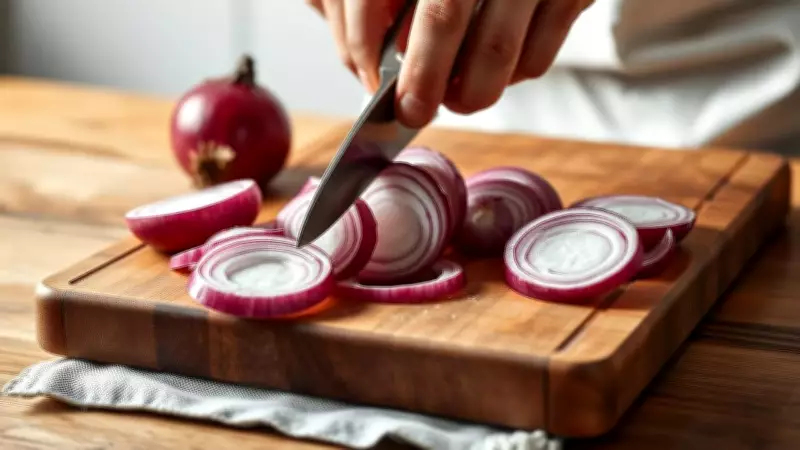
The Hidden Danger in Every Kitchen: Unstable Cutting Boards
You have just sliced into a pile of onions for your Sunday evening curry when, in a split second, your cutting board slides perilously toward the edge of the countertop. This heart-stopping moment is all too familiar to home chefs everywhere. We invest in premium stainless steel knives and select organic produce, yet often overlook the most hazardous aspect of cooking: an unsteady workspace. Surprisingly, the solution isn't found in expensive gadgets but in a humble, scientifically-backed method.
The Ingenious Damp Towel Technique
Securing your cutting board with a damp kitchen towel might seem simplistic, but it is remarkably effective. This technique ensures your board stays firmly in place during any food preparation, thanks to fundamental principles of physics. The key lies in friction and surface tension, which transform a basic towel into a reliable anchor.
Understanding the Science: Friction and Surface Tension
The ability of a wet cloth to stabilize a cutting board stems from its interaction with surfaces. Dry wooden or plastic boards on polished countertops have minimal friction, making slippage common. However, a damp towel significantly increases friction because water creates surface tension between the board and the counter. This not only prevents accidents but also addresses challenges posed by different surface types.

For instance, research in the Evaluation of different types of vegetable chopping boards highlights how surface texture and porosity affect board functionality. Wooden boards, while aesthetically pleasing, can warp if exposed to standing water. A damp towel prevents this deformation by providing a stable, moisture-controlled base. This method is cost-effective and scientifically validated, working equally well for both wooden and plastic boards.
Enhancing Hygiene and Preventing Cross-Contamination
Stability is crucial for kitchen hygiene, as emphasized in the Food Safety in Home Kitchens synthesis. A firmly fixed board reduces the risk of cross-contamination by preventing food debris from scattering or knives from accidentally contacting other ingredients. With a secure board, your cutting motions become more precise, maintaining high hygiene standards and making cooking safer and more professional.
Choosing Between Wood and Plastic Boards
The debate between wooden and plastic cutting boards continues, but a damp towel serves as an ideal anchor for both. Wood naturally inhibits bacterial growth, though its porous nature can absorb liquids and microbes. Studies like Microbial Safety of Wood in Contact with Food show that while wood may harbor bacteria, drying kills these organisms. Using a damp, not dripping, towel helps protect the board from damage.
Plastic boards offer the advantage of dishwasher safety but often have smooth bottoms that increase slippage. Here, a damp towel becomes essential, adding weight and stability during intense chopping sessions. This simple addition makes plastic boards safer and more reliable.
How to Implement This Technique
To prepare, use a thin kitchen towel or layer paper towels to create a large sheet. Briefly rinse it in cold water and wring it out until slightly moist. Lay it flat on your countertop, place the cutting board on top, and press gently to secure. While permanent solutions like silicone mats or rubber-legged boards exist, the towel method stands out for its simplicity, effectiveness, and zero cost. It's a timeless trick, backed by science, that makes cooking safer, faster, and more efficient.
Spending just ten seconds to secure your board can transform your cooking experience, preventing accidents and promoting a cleaner kitchen environment. Embrace this practical, scientifically-proven approach to enhance your culinary practices.