The Frustration of a Clumpy Salt Shaker
Imagine stepping into your kitchen on a damp, rainy day, ready to season a simmering soup or craft a spice blend for the barbecue, only to be met with the all-too-common annoyance: a salt shaker that stubbornly refuses to release its contents. This everyday dilemma plagues many households, leading to wasted time and frustration. While high-end spice stores often promote expensive airtight containers or silicon-lined solutions to combat this issue, a growing number of homemakers are turning to a time-tested, grandmother-approved method that is both simple and effective.
The Simple Solution: Add Raw Rice Grains
The answer lies in adding a few raw rice grains to the container where you store your salt. This isn't just an old wives' tale; it's a practical approach rooted in scientific principles. By incorporating rice, you can prevent clumps from forming, ensuring your salt flows freely whenever you need it. This method leverages the natural properties of rice to manage humidity, offering an eco-friendly and edible alternative to synthetic options.
Understanding the Science: Why Salt Clumps
Salt is a hygroscopic substance, meaning it has a high affinity for water and readily absorbs moisture from the surrounding atmosphere. When humidity levels rise, the surface of salt crystals becomes slightly soft before drying out, leading to the formation of lumps. This process is a natural response to environmental conditions, particularly in humid climates or during rainy seasons. The challenge is to control moisture before it interacts with the salt crystals, and that's where rice comes into play.

How Rice Acts as a Natural Desiccant
Research provides compelling evidence for the effectiveness of rice in this role. A study published in the journal Scientific Reports, titled Impact of dry rice grain packing density and time on the performance of two-stage dehumidifier, highlights how dry rice grains can significantly lower local humidity in contained spaces. Rice acts as a natural desiccant, drawing dampness away from its surroundings due to its structural properties and high capacity for moisture sorption.
When mixed with salt, rice serves as a proactive shield. Because rice has a greater ability to absorb moisture than the surface of a salt crystal, it intercepts water vapor first, preventing it from reaching the salt. This relationship is further supported by another study, Moisture sorption behaviours, water activity-temperature relationships, and physical stability traits of spices, herbs, and seasoning blends containing crystalline and amorphous ingredients, published in Food Research International. The research emphasizes that maintaining constant water activity is crucial to preventing crystalline substances like salt from becoming sticky and forming lumps.
Practical Tips for Using Rice in Your Salt Shaker
To implement this method effectively, it's important to follow a few key guidelines. First, use only raw white rice; avoid rice flour or powders, as processing alters their properties. According to a paper titled Quality Evaluation of Ready-to-Use Various Brown Rice (Oryza sativa) Powder Using Extrusion Process, published in Foods, rice flour can become sticky or develop rancidity when exposed to excessive moisture, potentially damaging your salt. Whole grains, on the other hand, have a stable structure and do not interact negatively with spices.
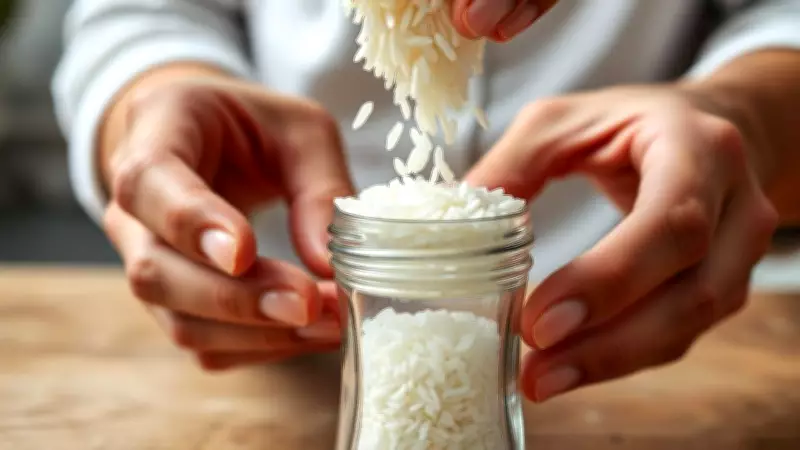
Start with a clean and completely dry shaker. Add a teaspoon of uncooked rice to the bottom before filling it with your preferred salt, whether it's sea salt or table salt. For those living in particularly humid coastal areas or tropical climates, it's advisable to replace the rice grains every few months. Over time, the grains will reach their maximum saturation point and lose their effectiveness. By swapping them out periodically, you ensure that your moisture-wicking shield remains at full strength.

Environmental and Health Benefits
Beyond preserving your salt, this approach promotes a more environmentally friendly kitchen. Instead of relying on artificial silica packets, which may not be food-grade and often end up in landfills, you're utilizing an organic, edible substance that is readily available. This not only reduces waste but also aligns with sustainable living practices.
Conclusion: Embracing Simple Kitchen Wisdom
Sometimes, the most effective solutions are the simplest ones, right before our eyes. By understanding the basic physics of water absorption by grains, you can take control of your kitchen environment and protect pantry items from moisture. The next time you face humidity and a clumpy salt shaker, remember that you don't need to invest in expensive gadgets. Just harness the power of rice—a humble yet powerful tool for maintaining a free-flowing, clump-free salt supply.