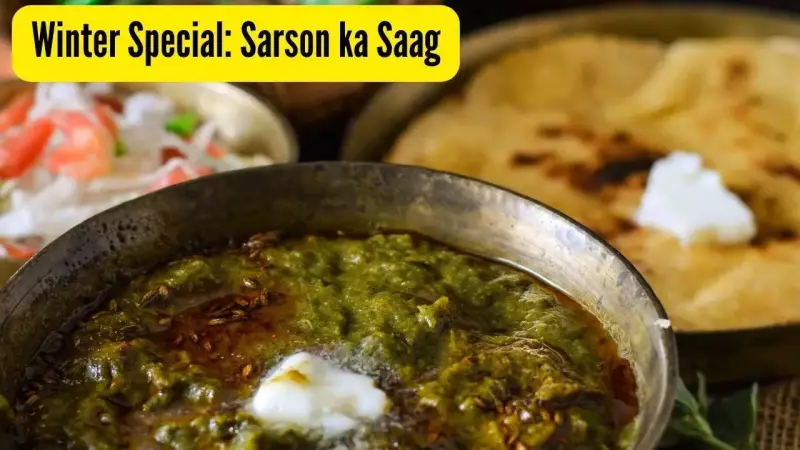
As the chill sets in across North India, a familiar and comforting aroma begins to waft from kitchens, signalling the arrival of winter more potently than the thickest fog. This herald of the cold season is none other than the quintessential Sarson ka Saag, a rustic, earthy, and deeply nourishing dish that reigns supreme as the region's iconic comfort food.
More Than a Dish: A Cultural and Nutritional Pillar
This classic preparation is a beloved staple across North and East India, with delightful regional variations. In Bihar and parts of Uttar Pradesh, it is often prepared as a Bhujia, crisply fried in pungent mustard oil. However, it is in the heartlands of Punjab and Haryana where it achieves its legendary status, slow-cooked for hours into a creamy, lush paste. Here, it is traditionally served with Makke ki Roti (cornmeal flatbread), a generous dollop of white butter, and a piece of jaggery, creating a perfect symphony of flavours and textures.
Primarily made from mustard leaves (sarson), the saag is frequently blended with other winter greens like bathua (chenopodium) and spinach (palak). This combination isn't arbitrary; it represents a deep-seated wisdom of seasonal eating, providing the body with specific nourishment exactly when it needs it the most during the colder months.

The Superfood Credentials of Sarson Ka Saag
This humble dish rightfully earns its 'OG' status and superfood label due to a powerful nutritional profile backed by both tradition and science.
Rooted in Ayurvedic Wisdom: Ayurveda recognises mustard as a warming food, ideal for improving digestion and blood circulation during the vata-aggravating winter season.
A Powerhouse of Iron and Folate: Mustard leaves are an excellent source of iron and folate. This makes the saag particularly beneficial in combating the winter lethargy and low energy levels that many experience. Paired with Makki ki Roti, it becomes a sustaining, slow-energy-releasing meal.
Loaded with Dietary Fibre: The greens are one of the richest sources of dietary fibre, which is crucial for maintaining gut health and steady digestion—often challenged by heavier winter diets.
Immunity Booster: Packed with Vitamin C, antioxidants, and various beneficial plant compounds, sarson ka saag helps strengthen the body's immune defences, offering a crucial advantage during the cold and flu season.
Healthy Fats and Anti-inflammatory Benefits: When prepared with traditional tempering of ghee, garlic, and ginger, the dish delivers fat-soluble nutrients more effectively. This combination also provides notable anti-inflammatory benefits.
Naturally Detoxifying: According to Ayurvedic principles, this saag supports liver function and the body's natural detoxification pathways, helping it process the richer foods commonly consumed in winter.
Bringing Tradition to Your Kitchen: A Quick Recipe
Here is a simplified recipe that captures the traditional taste of this winter marvel.
Ingredients:
- 250 gms mustard leaves (sarson)
- 100 gms spinach leaves (palak)
- 100 gms bathua leaves
- 1 tbsp minced garlic
- 1 tsp minced ginger
- 2 large tomatoes, chopped
- 1 large onion, chopped
- 2 tbsp ghee
- 2 green chillies, chopped
- 1 tbsp makki flour (cornmeal)
- 1 tsp coriander powder
- 1 tsp turmeric powder
- 1 tsp mustard seeds
- 1 tsp cumin seeds
- 1 tsp asafoetida (hing)
- Salt to taste
Method:

- Heat 1 tbsp ghee in a pan. Add asafoetida, mustard seeds, and cumin seeds. Allow them to crackle.
- Add the chopped onion and sauté until lightly browned. Add the tomatoes and makki ka atta. Cook until the tomatoes soften.
- Add the cleaned, washed, and finely chopped mustard, bathua, and spinach leaves. Add salt, cover, and cook until the leaves are tender.
- Once cooled slightly, grind the mixture to a coarse or smooth paste using a mixer or a ladle.
- In another pan, heat the remaining ghee. Add the minced garlic and cook for 2-3 minutes. Add the ginger, green chillies, and the remaining spices (coriander powder, turmeric). Cook on a low flame for 2-3 minutes.
- Add the prepared saag mixture to this tempering. Mix well and simmer for a few minutes. Adjust seasoning.
- Finish with a dollop of fresh butter and serve hot with Makki ki Roti.
Ultimately, sarson ka saag is a profound lesson in traditional nutrition. It demonstrates how simple, seasonal ingredients, transformed through patient, slow cooking, can yield deep flavour and immense health benefits. It's no wonder this dish has survived generations, unchanged and undefeated, as winter's most iconic and nourishing comfort food.