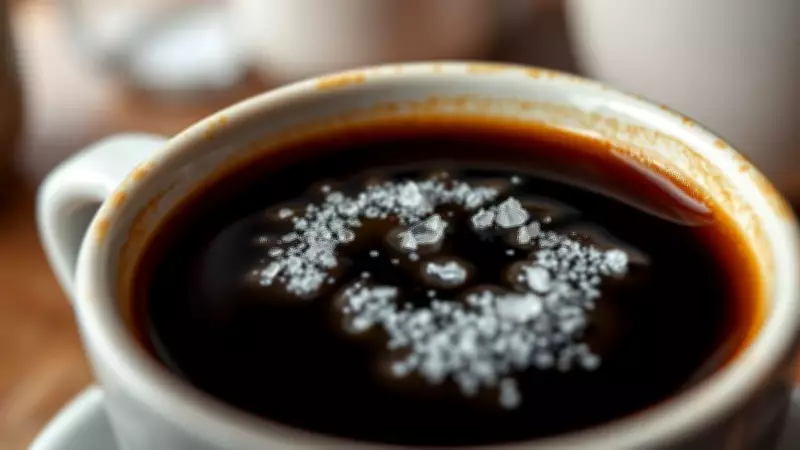
The Science of Salt in Coffee: A Simple Trick to Reduce Bitterness
We all know the familiar morning routine: waking up and craving that perfect cup of coffee, only to be disappointed by a brew that is too strong, bitter, or even burnt. Overextraction can lead to a smoky flavor that ruins the experience. Instead of masking these flaws with excessive sugar or milk, many coffee enthusiasts are turning to a classic and simple solution: adding a small amount of salt to their coffee. This method helps tame the bitter taste, unlocking a new and refined flavor profile.
How Salt Works as a Biological Inhibitor
The effectiveness of this trick lies in the way our taste buds communicate with the brain. While sugar merely overwhelms bitter molecules, salt acts as a true biological inhibitor. A groundbreaking study published in Nature, titled Salt enhances flavour by suppressing bitterness, demonstrated that sodium chloride can selectively inhibit bitter taste responses. By muting these strong flavors, salt makes coffee taste smoother and slightly sweeter, all without the need for artificial sweeteners.
However, this suppression is not universal. Research from the journal Chemical Senses, specifically the study Suppression of bitterness by sodium: variation among bitter taste stimuli, highlights that sodium ions interact differently depending on the specific bitter compounds in your coffee. Some bitter components are easily tamed by salt, while others may be less affected. This means that a pinch of salt can transform a cheap brew into something surprisingly enjoyable, though its impact on a high-quality light roast might be more subtle.

Enhancing Flavor Without Compromising Health
Adding salt to coffee is like gently tuning your palate. Bitterness often masks sweetness, so by reducing the bitter notes, the fruity or chocolaty undertones of the coffee become more pronounced. This makes salt an excellent option for those looking to cut down on sugar without sacrificing flavor. While it doesn't eliminate all bitterness, it offers an instant and refined taste boost without artificial additives. Remember, the key is to use just a tiny amount after brewing for optimal results.
As with any powerful tool, moderation is crucial. Overdoing it can ruin the fresh taste of your coffee. A study titled The clean taste of coffee depends on the sodium content of its extraction water found that while salt is effective at taming bitterness, adding it directly to the brewing water might compromise flavor clarity or introduce unwanted salty notes. For best results at home, sprinkle a pinch of finely crushed salt into your cup after brewing, as it mixes quickly and ensures even distribution.
Health considerations are also important. A review in the journal Foods, Effect of Salt Reduction on Consumer Acceptance and Sensory Quality of Food, emphasizes that while salt is a fantastic flavor enhancer, we should be mindful of overall sodium intake. Since only a microscopic amount is needed for coffee, it remains a relatively safe way to improve your brew. For those avoiding sodium, scientists are exploring natural alternatives, as discussed in a Biomaterials paper on using biopolymers to mask bitterness.
Practical Tips for Perfecting Your Brew
If your coffee is still too acidic, consider adjusting other variables like grind size or water temperature. But for instant results, the salt technique is hard to beat. This method proves that the simplest solutions are often the most effective. By understanding taste perception, you can elevate an ordinary cup of coffee to a gourmet experience using a common pantry item. So next time your coffee tastes too bitter, skip the cream and reach for the salt instead.