Mumbai's Iconic Street Food Culture Faces Existential Threat from LPG Cylinder Shortage
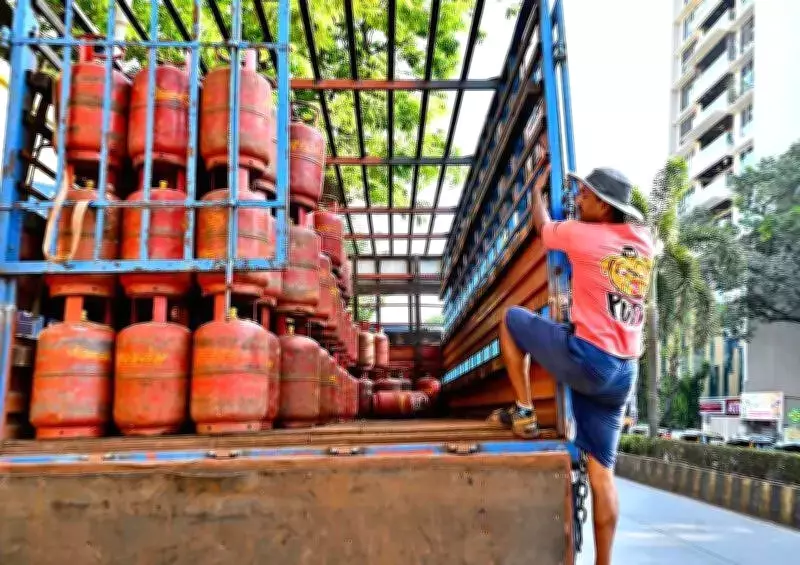
The vibrant street food landscape of Mumbai, a defining characteristic of India's financial capital, has been plunged into a severe crisis due to an acute shortage of commercial LPG cylinders. This disruption threatens the very existence of daily staples that have sustained the city's working class for generations.
Disappearing Delicacies and Black Market Survival
Iconic snacks like vada pav, samosa, and bhajiya—which traditionally satiate the hunger of rickshaw drivers, taxi operators, laborers, and ordinary Mumbaikars—are rapidly vanishing from street corners and small restaurants. The scarcity has forced roadside stall owners into desperate measures, with many purchasing domestic cylinders on the black market for exorbitant prices ranging from Rs 1,300 to Rs 1,800. These illicit cylinders are then concealed under gunny bags to avoid detection by authorities.
Uncertain Operations for Legendary Establishments
The crisis has created daily uncertainty for even the most celebrated street food institutions. At Ladu Samrat in Lalbaug, a crowd favorite for vada pav, operations fluctuate dramatically based on cylinder availability. Owner Kamlakar Rakshe revealed the precarious situation: "Yesterday our outlet was closed. Today we got four cylinders, so we are open. I cannot say about tomorrow."

Similarly, Gulati's in Juhu has stopped taking advance orders for its popular samosas. Owner Vicky Gulati expressed deeper concerns: "We require three or four cylinders every day but have not got a single one. My main concern is how to feed my 100 workers. If the scarcity continues, they may leave and it will be difficult to bring them back months later."
Menu Cuts and Adaptation Strategies
Samrat in Vile Parle, famous for its giant-sized vada pav, has significantly trimmed its menu in response to the crisis. Spokesperson Hasmukh Kumar explained their adaptation strategy: "We are currently managing operations on electrical equipment and diesel. But only gas can accomplish certain tasks—with induction we lose the manual flame control essential for specific cooking techniques."
The cooking gas crisis that began unraveling on Tuesday has already eliminated certain menu items across the city:
- Dosa and tawa items were the first casualties, as these recipes require consistent full flame
- Popular streetside foods like momos, sandwiches, dabeli, and chaat items that use boiled ingredients face imminent discontinuation
- Many establishments fear complete shutdown if the shortage persists beyond one or two weeks
Electrical Equipment Provides Limited Relief
While most traditional street food vendors struggle, some larger operations with electrical infrastructure continue functioning. Both Aram in Fort and the Jumbo King chain citywide rely on electrical equipment including induction stoves. Rajesh Yadav, a Jumbo King franchisee from Malad, noted: "We have been using electrical equipment since launching eight or nine years ago."
The brand's franchise manager Siddharth Aade elaborated on their operational advantage: "We manage well using induction stoves. Our frozen vadas just need to be fried and served, which works with our electrical setup."
This technological divide highlights how Mumbai's street food ecosystem faces uneven impacts, with traditional gas-dependent vendors bearing the brunt of the LPG crisis while electrically-equipped establishments maintain relative stability.